Rough Natural Diamond (Uncut Crystal)
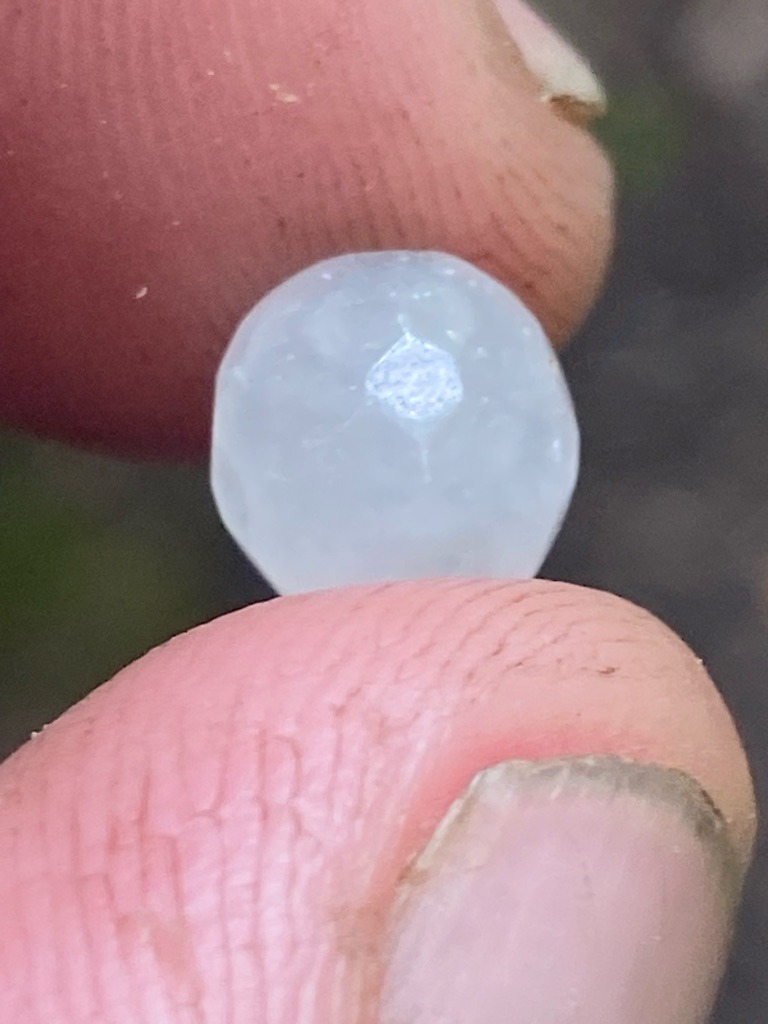
Rough Natural Diamond (Uncut Crystal) · Rounded Octahedron / Dodecahedron with natural crystal faces
Not Applicable (Uncut rough stone; natural crystal form) Cut
Carat
Estimated 0.50 to 0.80 carats based on visual scale against fingers
Color
Estimated near-colorless to light brown/grey tint (Rough surface makes precise GIA color grading difficult)
Clarity
Estimated Included (I1-I3) due to visible internal cloudiness and crystal inclusions
Shape
Rounded Octahedron / Dodecahedron with natural crystal faces
Overall Assessment
This is a fascinating specimen of a natural, uncut rough diamond crystal featuring a single polished window for internal inspection. It represents the raw, unadorned beauty of a diamond before human intervention shapes it into a brilliant gemstone.
Cut Quality
Not Applicable (Uncut rough stone; natural crystal form)
Brilliance
Low brilliance due to frosted/matte natural surface and lack of polished facets
Fire
Minimal to none in current rough state; will display high fire once properly cut and polished
Scintillation
Absent in rough form; requires faceting to create light return patterns
Proportions
Natural rough proportions; high total depth characteristic of unprocessed diamond crystals
Symmetry
Natural crystal symmetry; exhibits curved faces and natural growth features (trigons)
Polish
Natural rough surface texture with frosted or pitted crystal faces (no human polish applied)
Fluorescence
Indeterminate without UV testing (commonly faint to medium blue in natural rough)
Inclusions
Cloud-like internal clusters, feathers, and potential carbon spots typical of rough stones
Blemishes
Natural surface pitting, trigons (growth triangles), and rough skin/natts
Origin
Natural rough diamond, likely from primary kimberlite or secondary alluvial deposits (e.g., Africa, Canada, or Russia)
Treatment Detection
Untreated; completely natural rough crystal directly from the earth
Estimated Value
Varies widely based on internal purity, generally $200 - $600 USD as a raw collector specimen
Certification Estimate
GIA or similar major laboratory would issue a Rough Diamond Report or Certificate of Origin if submitted
Investment Potential
High collectible value for mineral enthusiasts, though less liquid than polished investment stones
Similar Diamonds
Other natural unpolished octahedral and dodecahedral diamond crystal specimens
Setting Suggestions
Best preserved as a raw mineral specimen, or mounted in a bespoke organic-style bezel setting using yellow or white gold
Care & Maintenance
Store separately to avoid scratching other gems; clean gently with warm soapy water and a soft brush
Interesting Facts
The single polished flat facet visible on the surface is a 'window' manually cut and polished by a gemologist to inspect internal clarity