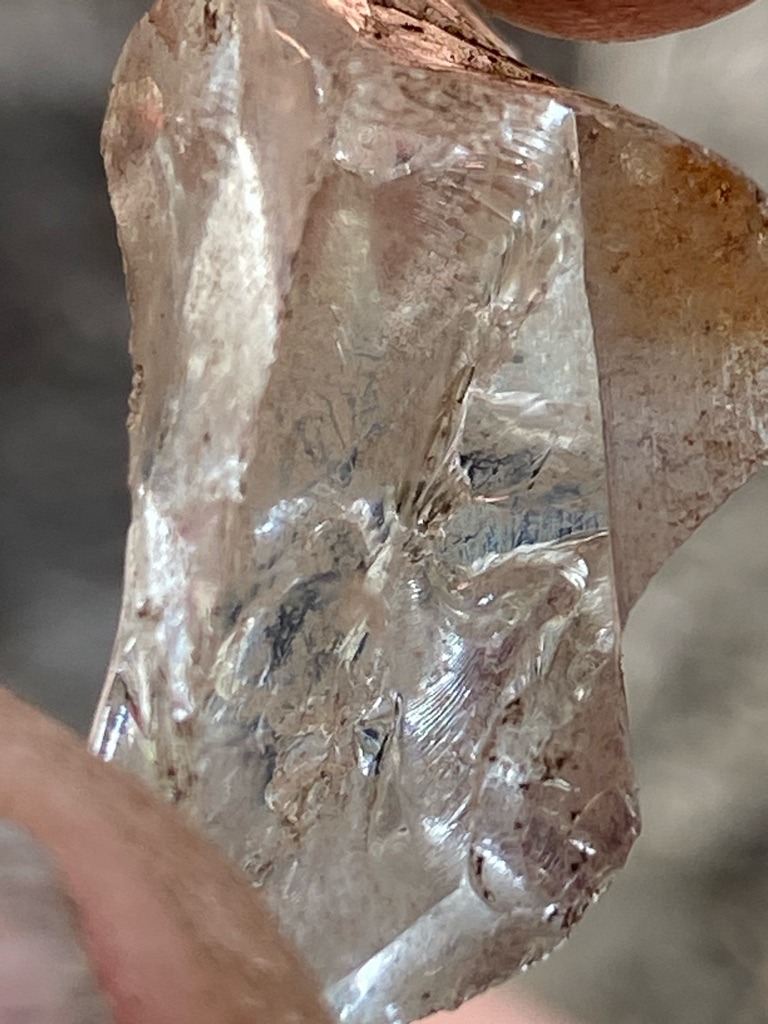
Natural rough crystal / mineral specimen (appears more quartz-like or slag-like in texture, but visually presented as a rough crystalline stone)
Natural rough crystal / mineral specimen (appears more quartz-like or slag-like in texture, but visually presented as a rough crystalline stone) · Rough crystal / Uncut natural form
Not applicable (Rough crystal) Cut
Carat
Estimated 3.0 - 5.0 carats based on visual scale
Color
Light brown / champagne / colorless irregular tint
Clarity
Included / Imperfect (Raw rough state)
Shape
Rough crystal / Uncut natural form
Overall Assessment
An interesting rough crystalline specimen displaying natural geological features and fracture patterns
Cut Quality
Not applicable (Rough crystal)
Brilliance
Low to moderate due to rough, unpolished surface and internal fractures
Fire
Minimal dispersion visible in current rough state
Scintillation
Poor sparkle due to lack of faceted geometry
Proportions
Natural rough morphology, no traditional table or pavilion angles
Symmetry
Asymmetrical natural crystal form
Polish
Raw, unpolished natural crystal surfaces with conchoidal fractures
Fluorescence
Cannot be determined visually without UV testing
Inclusions
Internal fractures, cloudiness, and mineral inclusions visible
Blemishes
Natural surface pitting, striations, and irregular rough textures
Origin
Natural geological formation
Treatment Detection
No obvious signs of artificial treatments, appears entirely natural
Estimated Value
Nominal mineral specimen value depending on exact material identity
Certification Estimate
Requires lab testing (GIA or similar) to confirm precise mineral composition
Investment Potential
Low as an investment stone; primarily of interest as a mineral specimen
Similar Diamonds
Rough industrial or specimen-grade diamond crystals
Setting Suggestions
Wire-wrapped pendant setting to showcase its raw, organic aesthetic
Care & Maintenance
Store separately to avoid scratching softer stones; clean gently with warm soapy water
Interesting Facts
Raw diamond crystals often display curved faces and triangular etch marks called trigons