Natural (Rough Crystal)
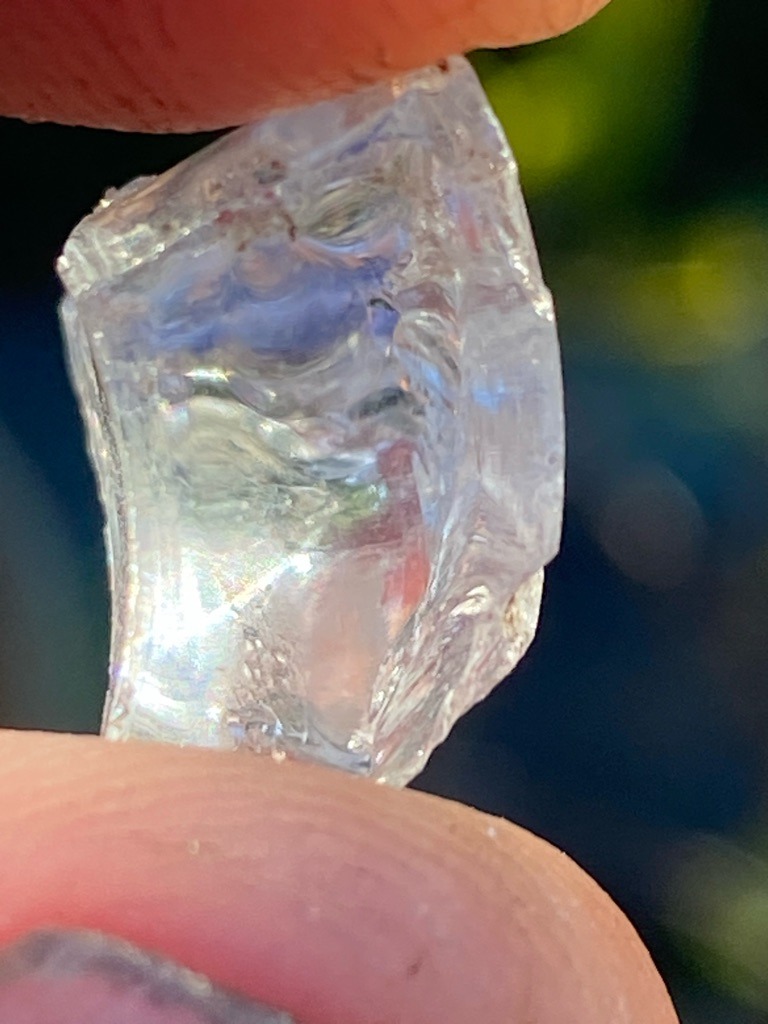
Natural (Rough Crystal) · Uncut / Rough Octahedral Fragment
Not Applicable (Rough Stone) Cut
Carat
Estimated 2.0 - 3.0 carats
Color
Near Colorless (Estimated G-H)
Clarity
Estimated SI1 - SI2 (due to natural surface irregularities and internal clouding)
Shape
Uncut / Rough Octahedral Fragment
Overall Assessment
This is a genuine, untreated natural rough diamond crystal displaying classic crystal growth features. Its ultimate value and beauty depend on whether it is preserved in its organic state or cut and polished into a finished gemstone.
Cut Quality
Not Applicable (Rough Stone)
Brilliance
Low (due to rough, unpolished surface scatter)
Fire
Minimal dispersion visible through raw exterior
Scintillation
Limited, reflecting light off raw crystal faces rather than faceted surfaces
Proportions
Natural rough proportions, deep and irregular
Symmetry
Natural Crystal Symmetry (Asymmetric rough form)
Polish
Unpolished Natural Crystal Faces (Trigons and striations visible)
Fluorescence
Cannot be determined without UV testing (Likely Faint to Medium)
Inclusions
Internal clouds and feather inclusions typical of rough diamond formation
Blemishes
Natural surface etch marks, cavities, and trigons
Origin
Natural primary deposit (Alluvial or Kimberlite pipe, likely African or Canadian origin)
Treatment Detection
No treatments detected; completely untreated natural rough
Estimated Value
$1,000 - $3,000 depending on cutting yield and internal purity after faceting
Certification Estimate
GIA or IGI (Rough Diamond Evaluation / Report)
Investment Potential
Moderate to High, as rough diamonds offer potential value addition upon professional cutting and polishing
Similar Diamonds
Other natural gem-grade rough diamond crystals of comparable weight
Setting Suggestions
Custom organic mounting, raw diamond bezel setting, or re-cut into a standard brilliant shape
Care & Maintenance
Store separately to prevent scratching other stones; clean gently with warm soapy water and a soft brush
Interesting Facts
The curved growth lines and triangular depressions (trigons) on the surface are classic indicators of natural diamond crystal growth under extreme mantle pressure.