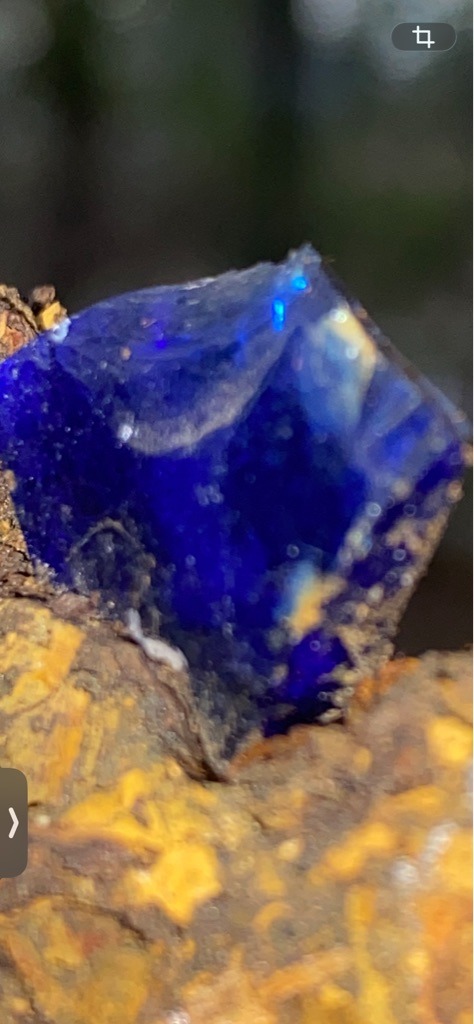
Non-diamond (Likely Raw Glass or Rough Cobalt Spinel/Sapphire)
Non-diamond (Likely Raw Glass or Rough Cobalt Spinel/Sapphire) · Rough/Uncut
Not Applicable (Rough) Cut
Carat
Estimated 5.0 - 15.0 carats (based on scale relative to substrate)
Color
Fancy Intense Deep Blue (Not on D-Z scale)
Clarity
Translucent to Opaque (Rough state prevents standard grading)
Shape
Rough/Uncut
Overall Assessment
This specimen is not a diamond. It lacks the isometric crystal system (octahedral) of diamonds. The visual evidence strongly suggests a piece of decorative cobalt blue glass or a low-quality rough gemstone specimen embedded in a limonitic/iron-rich matrix.
Cut Quality
Not Applicable (Rough)
Brilliance
Low (Sub-vitreous to vitreous surface luster only)
Fire
None visible in rough state
Scintillation
Low (Surface glisten only)
Proportions
Irregular/Natural
Symmetry
Asymmetric (Natural rough structure)
Polish
Unpolished (Natural/Matte surface with conchoidal fractures)
Fluorescence
Inconclusive (Requires UV light testing; surface highlights suggest reflectivity rather than fluorescence)
Inclusions
Visible surface reaching fractures, internal clouding, and matrix adhesion
Blemishes
Surface pitting, heavy iron/earth staining, and impact abrasions
Origin
Likely anthropogenic (Glass) or metamorphic (if natural Spinel/Sapphire)
Treatment Detection
Likely cobalt-doped coloring agent if glass; heat treatment suspected if natural
Estimated Value
$5.00 - $50.00 (Standard for decorative glass or low-grade specimen)
Certification Estimate
GIA Colored Stone Identification Report (likely identified as synthetic glass or blue spinel)
Investment Potential
Low to None (Commercial grade specimen)
Similar Diamonds
None (This specimen does not exhibit diamond crystallography; look to Cobalt Glass or Benitoite for visual similarity)
Setting Suggestions
Drilled pendant or rough specimen wrap in silver or copper
Care & Maintenance
Avoid ultrasonic cleaners; clean with soft brush and lukewarm soapy water to remove earth matrix
Interesting Facts
The intense blue color and conchoidal fracture pattern are classic indicators of man-made 'cullet' or decorative glass often found in landscaping or recycled materials