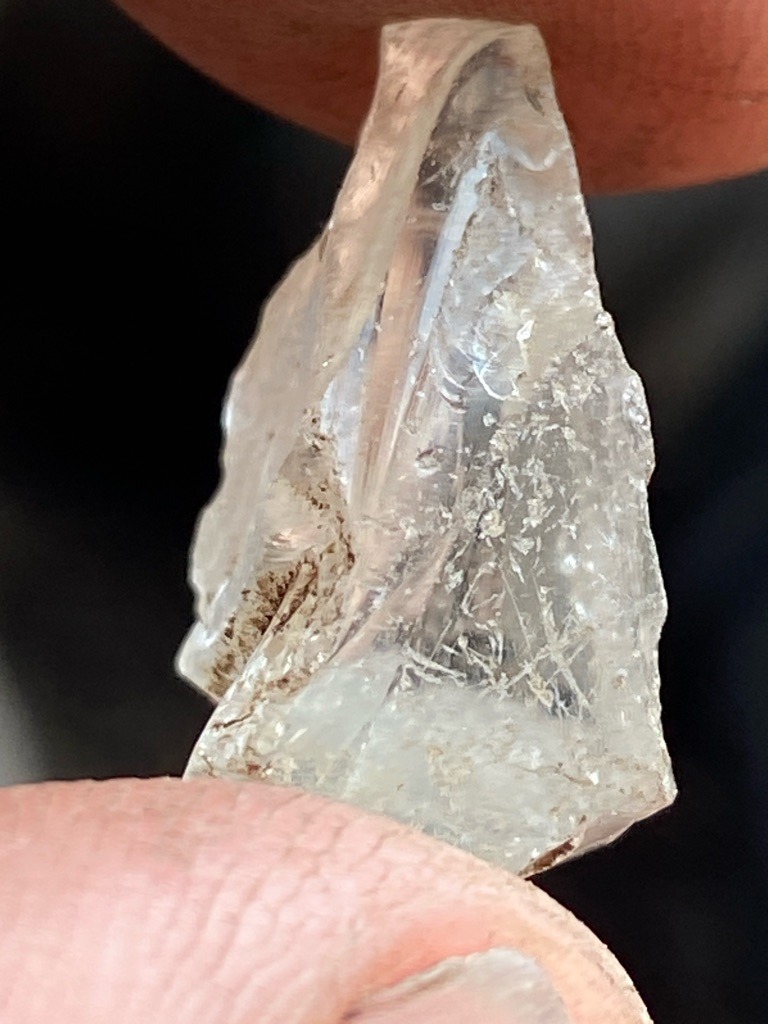
Natural rough diamond specimen
Natural rough diamond specimen · Rough / Uncut irregular shape
Not applicable (Rough, unpolished crystal specimen) Cut
Carat
Estimated 3.5 to 5.0 carats based on visual size relative to human fingers
Color
Near-colorless to light yellow/brown tint (approx. G-J range)
Clarity
I1 to I3 (Included rough with internal fractures and surface irregularities)
Shape
Rough / Uncut irregular shape
Overall Assessment
An interesting and substantial natural rough diamond specimen with visible crystal features, suitable either as a collector's mineral specimen or for professional cutting and polishing
Cut Quality
Not applicable (Rough, unpolished crystal specimen)
Brilliance
Low in rough form, increases significantly once cut and polished
Fire
Minimal in rough state due to lack of standard facet angles
Scintillation
Limited flash effect on raw crystal faces
Proportions
N/A for rough crystal
Symmetry
Natural asymmetrical crystal growth
Polish
Raw natural crystal faces, possibly showing some natural octahedral or irregular strictions
Fluorescence
Unknown without UV testing (typically inert to medium blue in natural rough)
Inclusions
Heavy internal feathering, cloudiness, and crystal inclusions visible
Blemishes
Natural surface etch channels, trigons, and surface pitting typical of rough diamonds
Origin
Likely alluvial or primary kimberlite pipe origin from an established diamond-producing region (e.g., Africa, Canada, Russia, or Australia)
Treatment Detection
No signs of artificial treatment; appears completely untreated and natural
Estimated Value
Varies widely depending on internal purity, recovery yield after cutting, and exact weight; rough diamonds of this size can range from a few hundred to thousands of dollars
Certification Estimate
GIA or similar major gemological lab would grade this as unmounted rough if requested, typically certified after cutting
Investment Potential
Raw specimens hold collectible and intrinsic value, though polished stones generally offer more liquid market potential
Similar Diamonds
Other natural unpolished gem-grade rough diamond crystals
Setting Suggestions
Can be preserved as a raw uncut specimen in a custom organic pendant setting, or cut into a brilliant shape (like Pear or Oval) for traditional jewelry
Care & Maintenance
Store safely in a soft pouch away from other jewelry to prevent scratching softer metals or stones; clean gently with warm soapy water and a soft brush
Interesting Facts
Rough diamonds like this have traveled billions of years from the Earth's mantle before being recovered near the surface