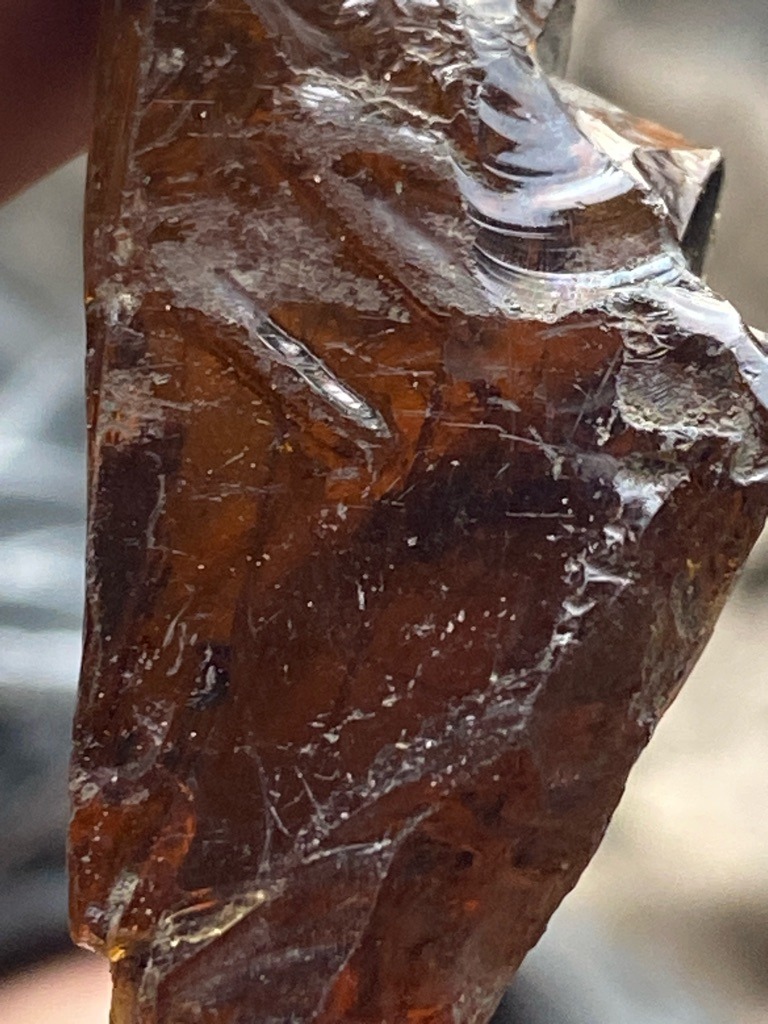
Not a diamond; appears to be industrial slag glass or amber due to conchoidal fracturing and vitreous luster.
Not a diamond; appears to be industrial slag glass or amber due to conchoidal fracturing and vitreous luster. · Rough / Raw Uncut Piece with Conchoidal Fracture
N/A (Uncut rough fragment) Cut
Carat
N/A (Rough non-diamond material)
Color
Deep Brown / Amber
Clarity
Included / Heavily Flawed for gem purposes
Shape
Rough / Raw Uncut Piece with Conchoidal Fracture
Overall Assessment
This specimen is definitively not a diamond. The visible conchoidal fracture lines, surface wear, and deep brown vitreous appearance strongly suggest industrial slag glass or similar vitreous material.
Cut Quality
N/A (Uncut rough fragment)
Brilliance
Low to moderate vitreous reflection
Fire
None
Scintillation
Poor
Proportions
N/A
Symmetry
Asymmetrical rough fragment
Polish
Raw, unpolished surface showing conchoidal fractures
Fluorescence
Unknown without UV testing
Inclusions
Internal bubbles and flow lines typical of glass
Blemishes
Surface scratches, chips, and conchoidal fracture marks
Origin
Man-made slag or natural resin/amber
Treatment Detection
N/A
Estimated Value
Minimal (decorative or industrial waste value)
Certification Estimate
Not eligible for diamond certification (GIA/AGS/IGI would not grade)
Investment Potential
None
Similar Diamonds
None (not a diamond)
Setting Suggestions
Not recommended for fine jewelry settings due to softness and fragility
Care & Maintenance
Keep away from hard impacts as glass is fragile and prone to chipping
Interesting Facts
The smooth, curved fracture patterns (conchoidal fractures) are classic indicators of amorphous materials like glass rather than crystalline minerals like diamond.