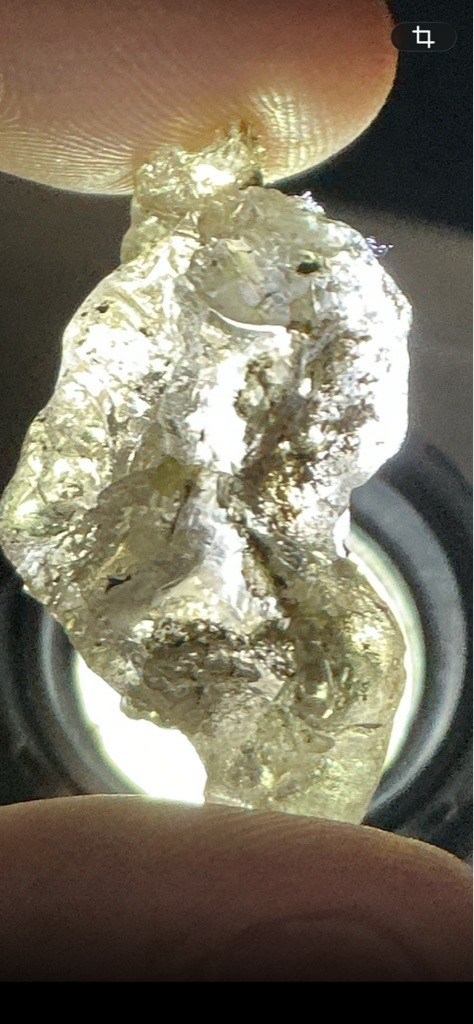
Natural rough diamond crystal
Natural rough diamond crystal · Uncut octahedral/irregular rough crystal
Not applicable (uncut rough stone) Cut
Carat
Estimated 3.5 to 5.0 carats
Color
Light yellow to brownish-white, approximately K-M range
Clarity
Included (I1-I2 equivalent due to heavy internal feathers, clouds, and surface irregularities)
Shape
Uncut octahedral/irregular rough crystal
Overall Assessment
An interesting, substantial natural rough diamond specimen with visible character, ideal for a custom lapidary project or as a raw mineral specimen collector's piece
Cut Quality
Not applicable (uncut rough stone)
Brilliance
Low to moderate due to rough unpolished state and internal inclusions
Fire
Minimal in current rough state, depends on final cut
Scintillation
Poor in rough form, flash-effect only from natural crystal faces
Proportions
Natural rough proportions, requires professional mapping for optimal cutting
Symmetry
Natural distorted crystalline symmetry
Polish
Natural rough crystal faces (trigons and striations visible)
Fluorescence
Indeterminate from visual assessment alone, likely inert to moderate blue
Inclusions
Heavy internal cloudiness, mineral inclusions, and feather fractures
Blemishes
Natural surface pitting, rough skin, and irregular growth lines
Origin
Likely alluvial or primary kimberlite pipe deposit (African or Canadian origin)
Treatment Detection
No treatments detected, appears completely natural and untreated
Estimated Value
$1,500 to $4,000 depending on cutting yield and final polished clarity
Certification Estimate
GIA or EGL, would receive a rough stone report or preliminary grading upon cutting
Investment Potential
Moderate speculatory value as a collector's mineral specimen or custom cut project
Similar Diamonds
Other industrial or lower-gem-quality natural rough diamond specimens
Setting Suggestions
Can be mounted raw in an organic, bespoke wire-wrap or bezel setting using yellow gold
Care & Maintenance
Avoid harsh ultrasonic cleaners until faceted; clean gently with warm soapy water and a soft brush
Interesting Facts
Rough diamonds retain their natural crystal skin and can display geometric growth marks called trigons