Natural Diamond (Estimated)
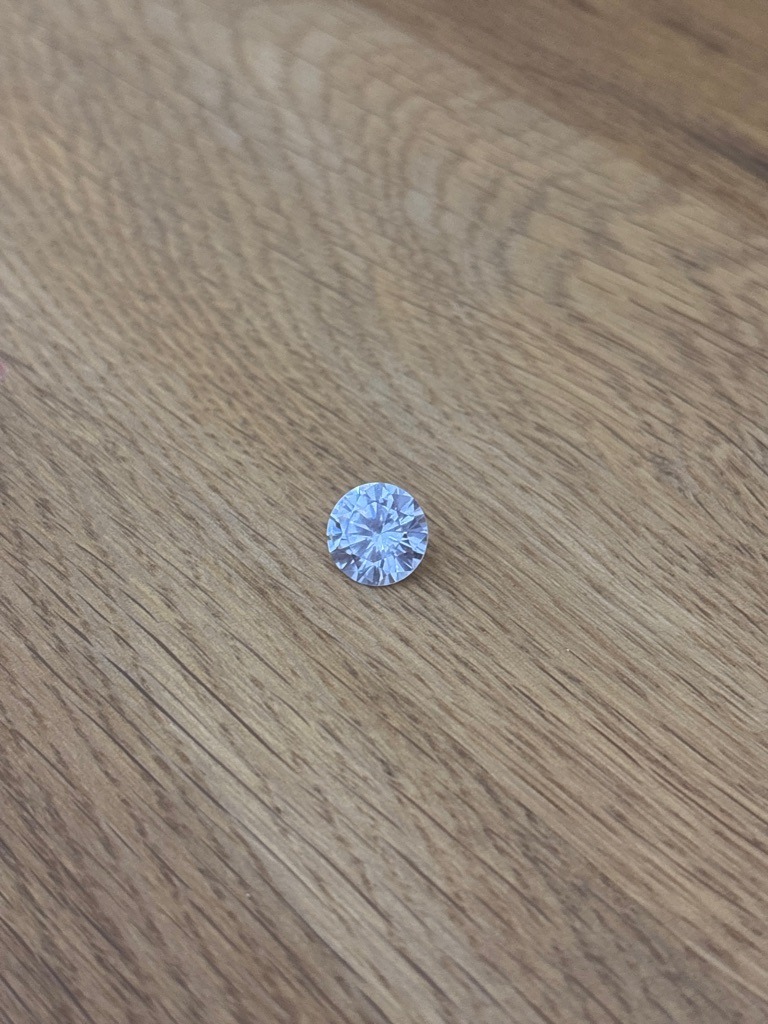
Natural Diamond (Estimated) · Round Brilliant
Very Good to Excellent Cut
Carat
Approximately 0.50 - 0.75 carats
Color
G - H (Near Colorless)
Clarity
VS1 - VS2 (Very Slightly Included)
Shape
Round Brilliant
Overall Assessment
A bright, eye-clean round brilliant diamond of very good commercial quality, highly suitable for a timeless engagement ring or fine jewelry piece
Cut Quality
Very Good to Excellent
Brilliance
High brightness reflecting intense white light from the facets
Fire
Good dispersion showing flashes of spectral colors under direct light
Scintillation
Well-balanced pattern of light and dark areas with lively sparkle when moved
Proportions
Standard modern round brilliant proportions, table around 55-60%, total depth approximately 60-62%
Symmetry
Good to Very Good
Polish
Good
Fluorescence
None to Faint
Inclusions
Minor pinpoints or small crystals visible under high magnification only, clean to the naked eye
Blemishes
Minor surface scratches or natural remnants potentially present under magnification
Origin
Likely mined from natural deposits (e.g., Canada, Russia, or Africa)
Treatment Detection
No obvious signs of enhancement, laser drilling, or fracture filling
Estimated Value
$1,500 - $3,500 USD depending on exact certifiable specs and market conditions
Certification Estimate
GIA or IGI would grade this in the VS1-VS2 clarity and G-H color range
Investment Potential
Moderate store of value; standard commercial diamonds appreciate slowly compared to rare colored or large high-clarity stones
Similar Diamonds
Standard commercial-grade round brilliant natural diamonds with VS clarity and near-colorless grades
Setting Suggestions
Classic 6-prong or 4-prong solitaire in platinum or 18k white gold to maximize white brilliance
Care & Maintenance
Clean with warm soapy water and a soft brush, avoid harsh chemicals, and store separately in a fabric-lined box
Interesting Facts
The round brilliant cut was mathematically optimized in 1919 by Marcel Tolkowsky to maximize light return (brilliance and fire)