Natural rough crystal
Natural rough crystal · Rough / Uncut crystal form
Not applicable (Rough uncut crystal) Cut
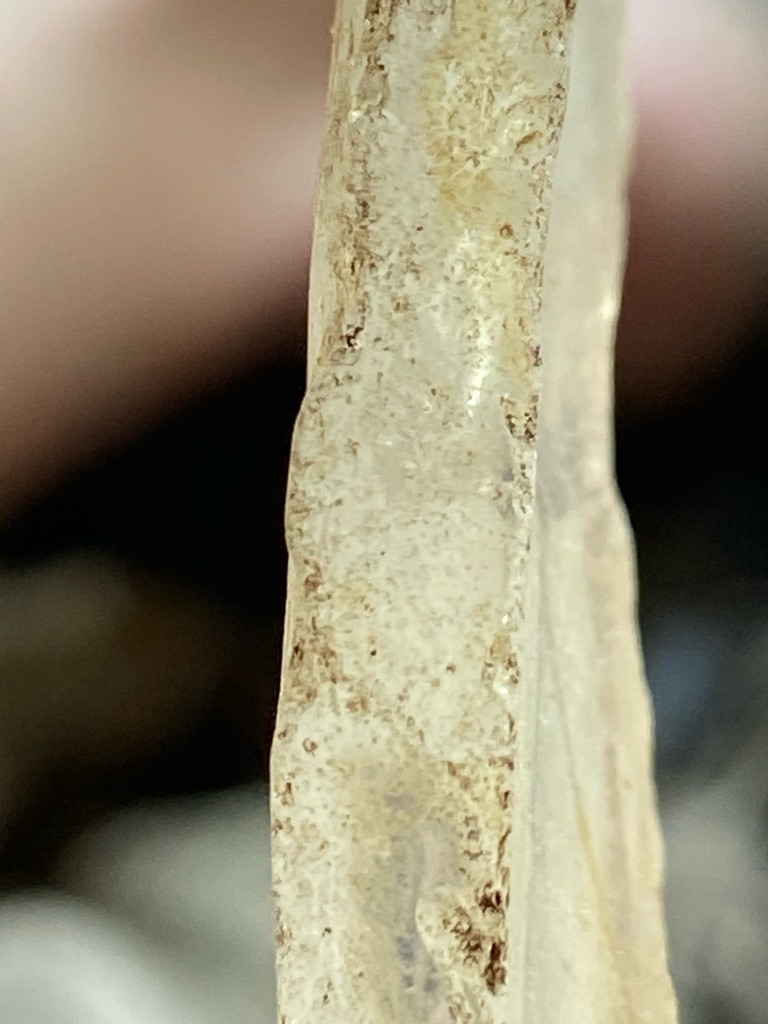
Carat
Estimated 0.50 - 1.00 ct based on macro visual scale
Color
Light brown / yellowish tint
Clarity
Included (I1 - I3 equivalent due to heavy surface spotting and inclusions)
Shape
Rough / Uncut crystal form
Overall Assessment
An interesting natural rough diamond specimen exhibiting characteristic surface textures, heavy inclusions, and irregular form, making it more suitable for mineral collectors or custom organic jewelry rather than standard commercial cutting
Cut Quality
Not applicable (Rough uncut crystal)
Brilliance
Low to none due to lack of faceted optical design and rough exterior
Fire
Minimal to none in current raw state
Scintillation
Absent prior to cutting and faceting
Proportions
Natural uncut proportions with irregular thickness
Symmetry
Natural irregular crystal symmetry
Polish
Raw unpolished surface showing natural growth features and etching
Fluorescence
Cannot be reliably determined without UV light testing (typically inert to faint in natural rough)
Inclusions
Abundant mineral inclusions, cloudiness, and surface-reaching spots
Blemishes
Natural surface etch marks, cavities, and trigons typical of rough diamond faces
Origin
Natural alluvial or primary kimberlite deposit origin
Treatment Detection
No signs of artificial treatment; completely natural state
Estimated Value
$50 - $200 USD depending on industrial versus low-grade gem usage
Certification Estimate
GIA or IGI would classify this as an uncut industrial or lower-gem quality rough diamond
Investment Potential
Low investment potential; primarily valued as a mineral specimen or educational piece rather than an investment gem
Similar Diamonds
Industrial-grade or specimen-grade rough diamond octahedrons and irregular crystals
Setting Suggestions
Best preserved as a raw uncut specimen in a bespoke cage setting or wire-wrapped pendant
Care & Maintenance
Store separately to prevent scratching other materials; clean with mild soapy water and a soft brush
Interesting Facts
Rough diamonds show natural growth markings called trigons on their crystal faces, which are triangular etch pits formed deep within the Earth