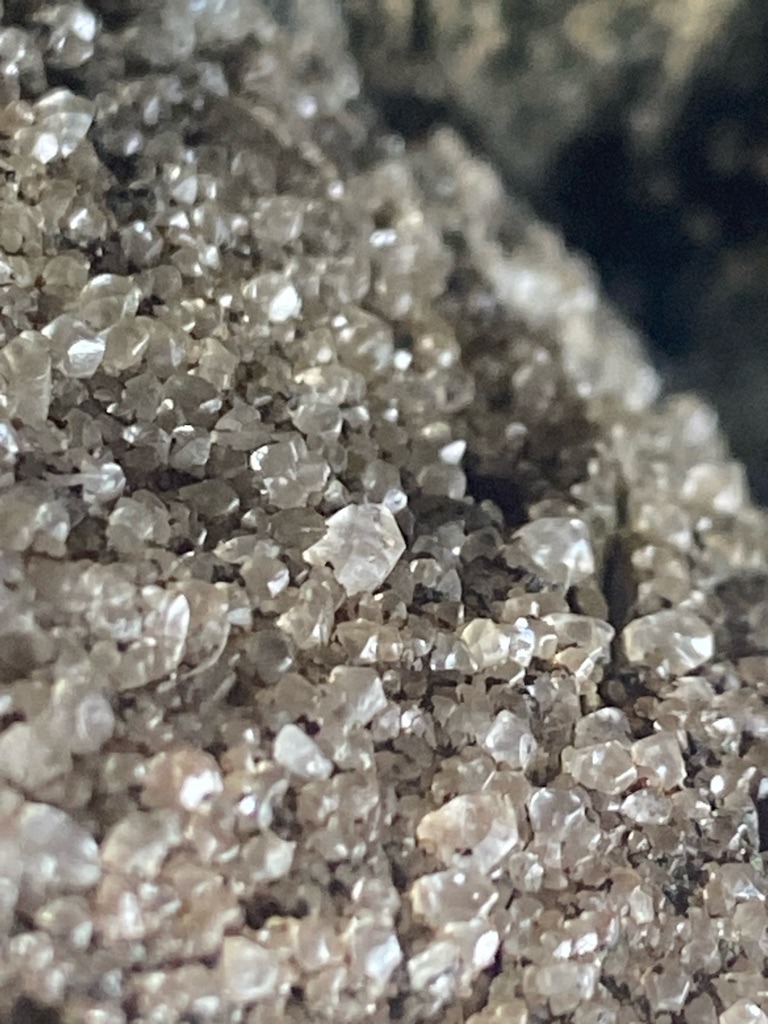
Natural rough microcrystalline aggregate (likely carbonado or diamond-bearing matrix/conglomerate)
Natural rough microcrystalline aggregate (likely carbonado or diamond-bearing matrix/conglomerate) · Rough crystal clusters, octahedral and dodecahedral raw forms
Not applicable (Rough, unpolished natural formation) Cut
Carat
Aggregate total weight difficult to assess visually from a macro matrix shot, individual crystals range from <0.01 ct to ~0.05 ct micro-crystals
Color
Mixed near-colorless to brown/gray (industrial to melee quality rough)
Clarity
Included (I1-I3 equivalent due to numerous natural inclusions, micro-fractures, and cloudiness typical of rough aggregate)
Shape
Rough crystal clusters, octahedral and dodecahedral raw forms
Overall Assessment
A fascinating geological specimen featuring a dense cluster of natural rough diamond micro-crystals embedded in a matrix, highly educational and visually appealing for mineral collectors
Cut Quality
Not applicable (Rough, unpolished natural formation)
Brilliance
Low to moderate due to rough crystal surfaces scattering light rather than refracting internally
Fire
Minimal in rough state due to lack of faceted geometry
Scintillation
Limited, reflecting from tiny natural crystal faces (glitter effect)
Proportions
Natural formation proportions, highly variable across the aggregate cluster
Symmetry
Natural crystalline symmetry (cubic system, octahedral and modified forms)
Polish
Raw, unpolished natural crystal faces and matrix embedding
Fluorescence
Variable/Untested, common in natural rough (some may show blue or yellow fluorescence under UV)
Inclusions
Abundant natural mineral inclusions, carbon spots, and internal feathers typical of rough diamond matrix
Blemishes
Natural surface trigons, rough natural skin, pitting, and matrix attachment points
Origin
Natural alluvial or primary kimberlite/conglomerate deposit matrix
Treatment Detection
Untreated natural rough specimen
Estimated Value
Specimen or industrial value depending on total mass and matrix composition; lower commercial value compared to faceted gem-quality stones
Certification Estimate
Industrial or specimen grade; major labs (GIA/IGI) typically do not issue standard diamond grading reports for rough aggregate clusters without extraction
Investment Potential
Valued primarily as a mineral collector's specimen rather than a traditional liquid financial investment
Similar Diamonds
Alluvial diamond gravels, kimberlite ore samples, carbonado, and diamond-bearing conglomerate specimens
Setting Suggestions
Best preserved as a raw mineral specimen in its natural matrix, or custom organic-style bezel settings if individual micro-crystals are extracted
Care & Maintenance
Keep securely mounted in matrix; avoid harsh ultrasonic cleaners if the host rock/matrix is fragile; clean gently with warm soapy water and a soft brush
Interesting Facts
This specimen showcases diamonds in their pristine, untouched geological state directly embedded in host rock, illustrating how diamonds are naturally found before cutting and polishing