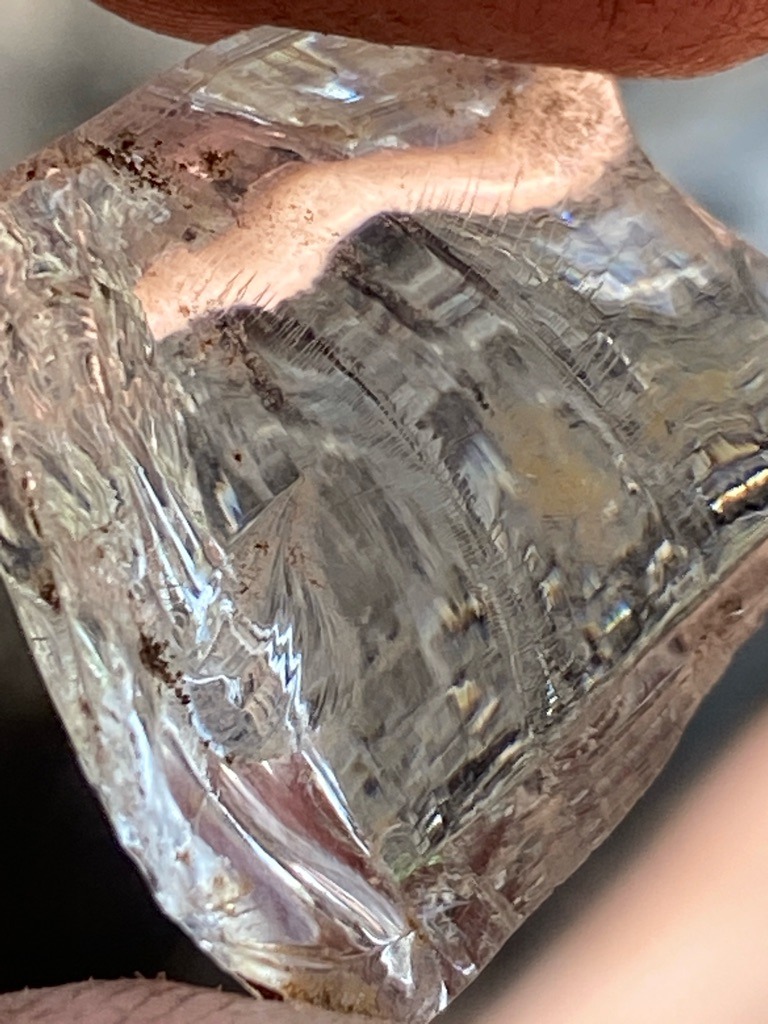
Natural rough diamond crystal
Natural rough diamond crystal · Rough crystal / Uncut octahedron or irregular block
Not applicable (Rough crystal) Cut
Carat
Estimated 5.0 to 8.0 carats based on visual proportions
Color
Near-colorless to faint brown tint
Clarity
Included (I1-I2)
Shape
Rough crystal / Uncut octahedron or irregular block
Overall Assessment
A substantial natural rough diamond crystal displaying classic growth lines and internal characteristics, holding significant potential if cut and polished correctly.
Cut Quality
Not applicable (Rough crystal)
Brilliance
Low due to rough, unpolished state
Fire
Minimal dispersion in its current rough condition
Scintillation
Absent prior to cutting and faceting
Proportions
Natural rough geometry, substantial depth
Symmetry
Natural crystal form, irregular due to natural growth and handling
Polish
Natural crystal faces, showing trigons and striations
Fluorescence
Cannot be determined visually without UV testing
Inclusions
Internal fractures, cloudiness, and mineral spots typical of rough stones
Blemishes
Natural surface etchings, irregular growth lines, and surface graining
Origin
Natural alluvial or primary kimberlite deposit
Treatment Detection
No treatments detected; entirely untreated natural rough
Estimated Value
Varies widely based on final cut yield, estimated $3,000 - $7,000 in rough form
Certification Estimate
GIA or similar major lab if submitted for grading post-cut
Investment Potential
Moderate, highly dependent on the cutter's skill to maximize yield and clarity after faceting
Similar Diamonds
Typical industrial or mid-grade gem-quality rough stones from African or Canadian mines
Setting Suggestions
Can be set raw in organic or bespoke artisan mountings, or cut into a cushion or emerald shape
Care & Maintenance
Store separately to avoid scratching other materials; clean gently with warm soapy water
Interesting Facts
Rough diamonds display natural growth features like striations and triangular etch marks called trigons on their faces