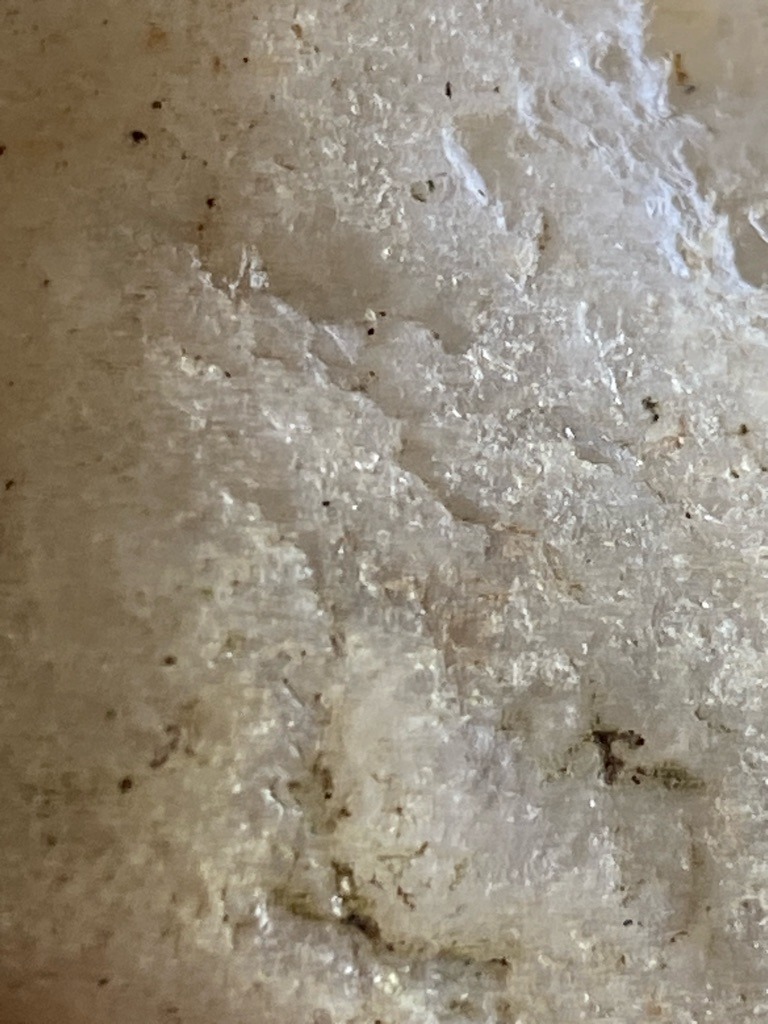
Natural rough mineral matrix, likely quartz or quartzite rather than a cut diamond based on texture and appearance
Natural rough mineral matrix, likely quartz or quartzite rather than a cut diamond based on texture and appearance · Rough unshaped crystalline aggregate
Not applicable (uncut raw specimen) Cut
Carat
Undetermined due to raw, matrix state
Color
Off-white to translucent with earthy inclusions
Clarity
I3 / Heavily included with internal fractures and mineral spots
Shape
Rough unshaped crystalline aggregate
Overall Assessment
The visual evidence indicates a rough, unpolished mineral aggregate (likely quartz or quartzite) rather than a gem-quality diamond. It lacks standard diamond crystal habits, faces, and optical properties.
Cut Quality
Not applicable (uncut raw specimen)
Brilliance
Low to none due to lack of faceting and rough surface
Fire
None
Scintillation
None
Proportions
Not applicable
Symmetry
Not applicable
Polish
Unpolished natural surface texture
Fluorescence
Undetermined without UV testing
Inclusions
Numerous dark mineral specks, internal fractures, and micro-fissures
Blemishes
Surface pitting, rough spots, and uneven texture
Origin
Natural geological formation, specific mine unknown
Treatment Detection
No signs of artificial treatment; appears completely natural
Estimated Value
Minimal ornamental or specimen value
Certification Estimate
Not typically certified by major diamond grading labs in this raw, non-gem state
Investment Potential
None; lacks gem-grade diamond characteristics
Similar Diamonds
None, as this appears to be a raw quartz or silicate matrix rather than diamond rough
Setting Suggestions
Wire-wrapping or bespoke organic bezel setting if used as a raw mineral specimen
Care & Maintenance
Standard gentle cleaning with mild soap and water; avoid harsh chemicals
Interesting Facts
Raw mineral specimens showcase the natural geological crystallization process before human intervention