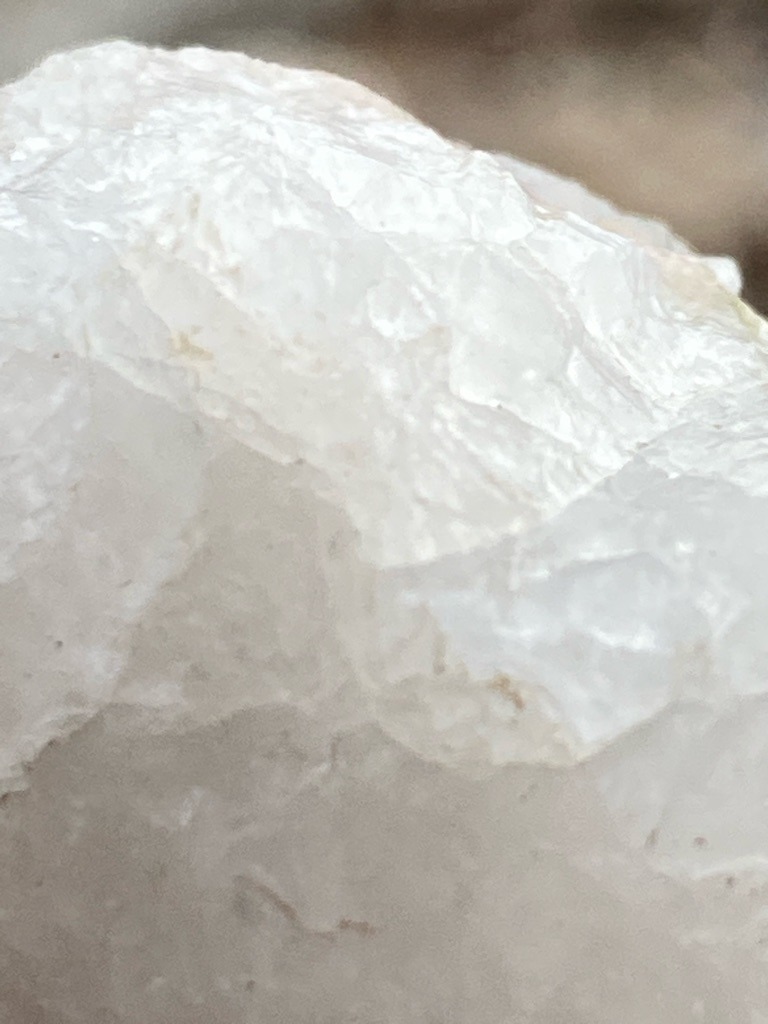
Natural rough mineral specimen, appearing to be quartz or a similar crystalline mineral rather than a gem-quality diamond
Natural rough mineral specimen, appearing to be quartz or a similar crystalline mineral rather than a gem-quality diamond · Uncut rough crystalline form
Not cut or polished Cut
Carat
Not applicable for a rough mineral specimen without precise volumetric or scale measurement
Color
Translucent to milky white
Clarity
Not applicable for rough stones, shows internal inclusions and fractures
Shape
Uncut rough crystalline form
Overall Assessment
The specimen shown is a rough, unworked white crystalline mineral—likely quartz or calcite—rather than a faceted diamond. It lacks the crystal system, adamantine luster, and optical properties characteristic of gem-grade diamonds.
Cut Quality
Not cut or polished
Brilliance
Low due to lack of faceting and rough surface texture
Fire
Minimal to none due to lack of precision cut facets
Scintillation
None
Proportions
Natural uncut proportions
Symmetry
Asymmetrical natural crystal formation
Polish
Unpolished rough surface texture
Fluorescence
Indeterminate from visual assessment alone
Inclusions
Visible natural internal fractures and mineral inclusions
Blemishes
Natural surface irregularities and rough patches
Origin
Natural geological formation
Treatment Detection
No signs of artificial enhancement or treatment observed
Estimated Value
Nominal value as a mineral specimen or raw crystal
Certification Estimate
Not typically certified by major diamond grading labs like GIA as a gemstone; requires mineralogical testing
Investment Potential
Collector value only, no standard gem investment value
Similar Diamonds
None, as this is a rough crystalline mineral specimen rather than a diamond
Setting Suggestions
Wire-wrapped or organic bezel settings if used in raw mineral jewelry
Care & Maintenance
Clean with mild soap and water, protect from hard impacts
Interesting Facts
Rough mineral specimens display the natural growth habits of the crystal structure