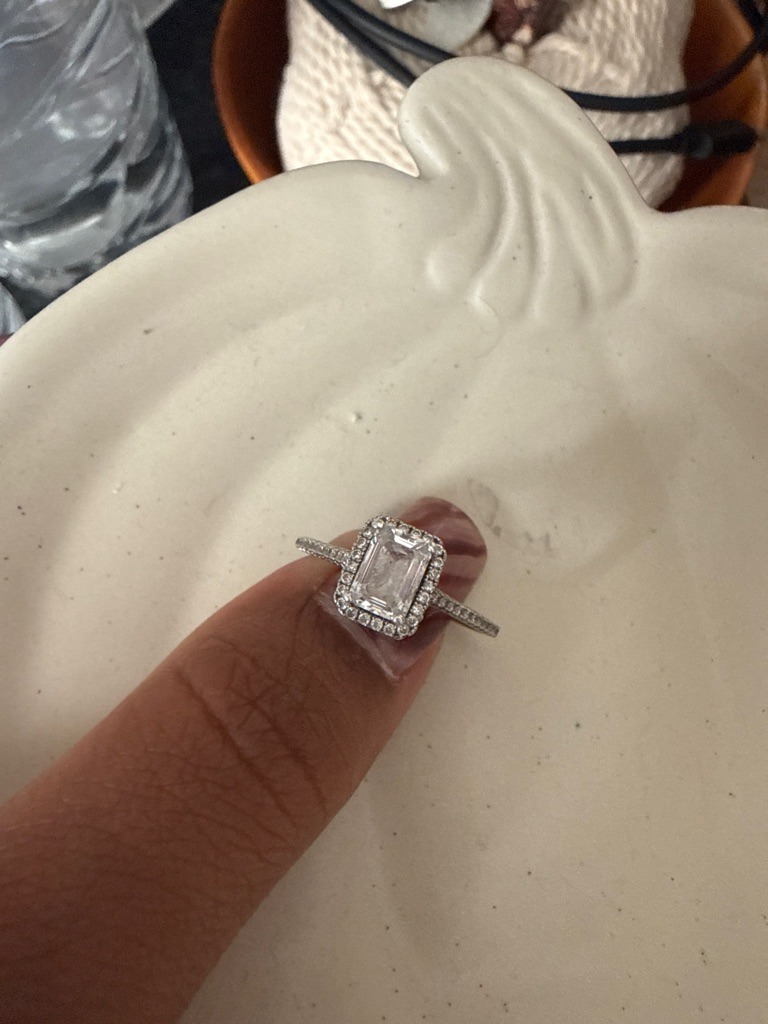
Natural or Lab-Grown Diamond (Visual assessment inconclusive without testing)
Natural or Lab-Grown Diamond (Visual assessment inconclusive without testing) · Emerald Cut
Very Good Cut
Carat
Estimated 1.50 - 2.00 carats (center stone)
Color
Estimated G - H (Near Colorless)
Clarity
Estimated VS1 - VS2 (Very Slightly Included)
Shape
Emerald Cut
Overall Assessment
A sophisticated and elegant emerald-cut diamond ring featuring a prominent center stone enhanced by a delicate halo and pavé band, offering timeless vintage appeal
Cut Quality
Very Good
Brilliance
High brightness with characteristic step-cut flashes
Fire
Moderate to low dispersion, typical of step cuts compared to brilliant cuts
Scintillation
Classic 'hall of mirrors' effect with alternating flashes of light and dark
Proportions
Standard Emerald cut proportions with a medium to slightly thick girdle and a rectangular table
Symmetry
Very Good
Polish
Very Good
Fluorescence
None to Faint
Inclusions
Minor pinpoint inclusions visible under high magnification, typical of VS clarity
Blemishes
No major external blemishes visible
Origin
Indeterminate from visual inspection alone
Treatment Detection
No obvious signs of artificial treatment or clarity enhancement
Estimated Value
$8,000 - $15,000 (depending on natural vs lab-grown origin and exact certification)
Certification Estimate
GIA or IGI grading estimate: Color H, Clarity VS2
Investment Potential
Moderate; natural diamonds retain value steadily, while lab-grown diamonds depreciate faster
Similar Diamonds
Emerald cut center stones with micro-pavé halos in contemporary halo engagement rings
Setting Suggestions
Halo setting with pavé-set accent diamonds in platinum or 14k white gold
Care & Maintenance
Clean with warm soapy water and a soft brush; avoid harsh ultrasonic cleaners if pavé stones are loose
Interesting Facts
Emerald cuts were originally developed for emerald gemstones to prevent chipping during cutting, but their clean lines made them popular for diamonds