Natural rough diamond specimen / mineral crystal
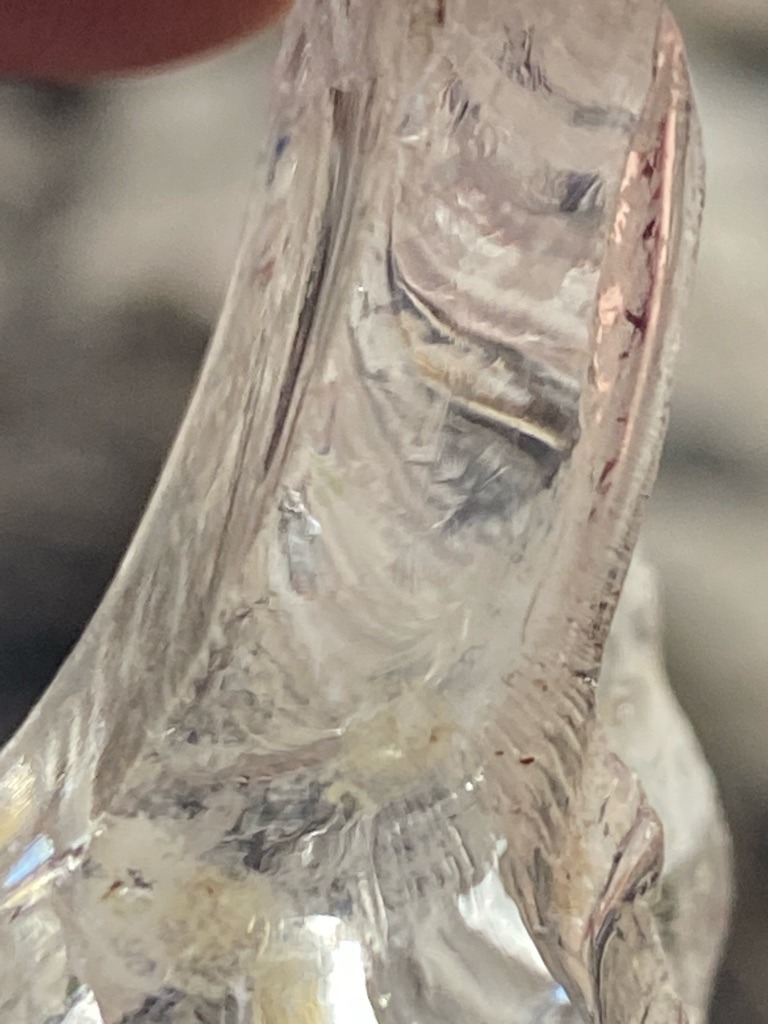
Natural rough diamond specimen / mineral crystal · Rough uncut crystal form (distorted octahedral/irregular habit)
Not applicable (uncut raw crystal) Cut
Carat
Estimated 2.50 to 3.50 carats based on visual volume
Color
Near colorless to faint yellow (approximate G-J range)
Clarity
Included (I1-I3) due to visible internal fracturing and feather structures
Shape
Rough uncut crystal form (distorted octahedral/irregular habit)
Overall Assessment
An interesting raw diamond specimen displaying natural geological formation characteristics, valuable primarily as a collectible or for custom artisan jewelry rather than traditional faceted investment
Cut Quality
Not applicable (uncut raw crystal)
Brilliance
Limited due to raw, unpolished surface and internal fracturing
Fire
Subdued due to lack of faceted optical geometry
Scintillation
Minimal, localized to specific natural reflective crystal faces
Proportions
Natural geological proportions, deeply striated growth lines
Symmetry
Natural asymmetrical growth form typical of rough diamond crystals
Polish
Natural crystal faces (trigons and striations visible rather than human polish)
Fluorescence
Indeterminate visually (typically moderate blue in natural types if present)
Inclusions
Heavy internal feathers, cleavage planes, and localized cloudiness
Blemishes
Natural surface etching, trigons, and irregular surface texture
Origin
Likely alluvial or primary kimberlite deposit origin (African or Canadian source)
Treatment Detection
No treatments detected; appears entirely untreated and natural
Estimated Value
USD $1,500 - $3,500 depending on cutting potential and purity
Certification Estimate
GIA Report as an unmounted rough diamond specimen
Investment Potential
Moderate value retention as a collectible mineral specimen rather than an investment gem
Similar Diamonds
Other natural industrial-to-near-gem grade rough diamond octahedrons and macles
Setting Suggestions
Custom organic wire-wrapped pendant or specialized raw crystal bezel setting
Care & Maintenance
Store separately to prevent scratching other stones; avoid harsh chemical ultrasonic cleaners on fractured rough
Interesting Facts
Raw diamond crystals often display natural triangular growth markings called trigons on their faces