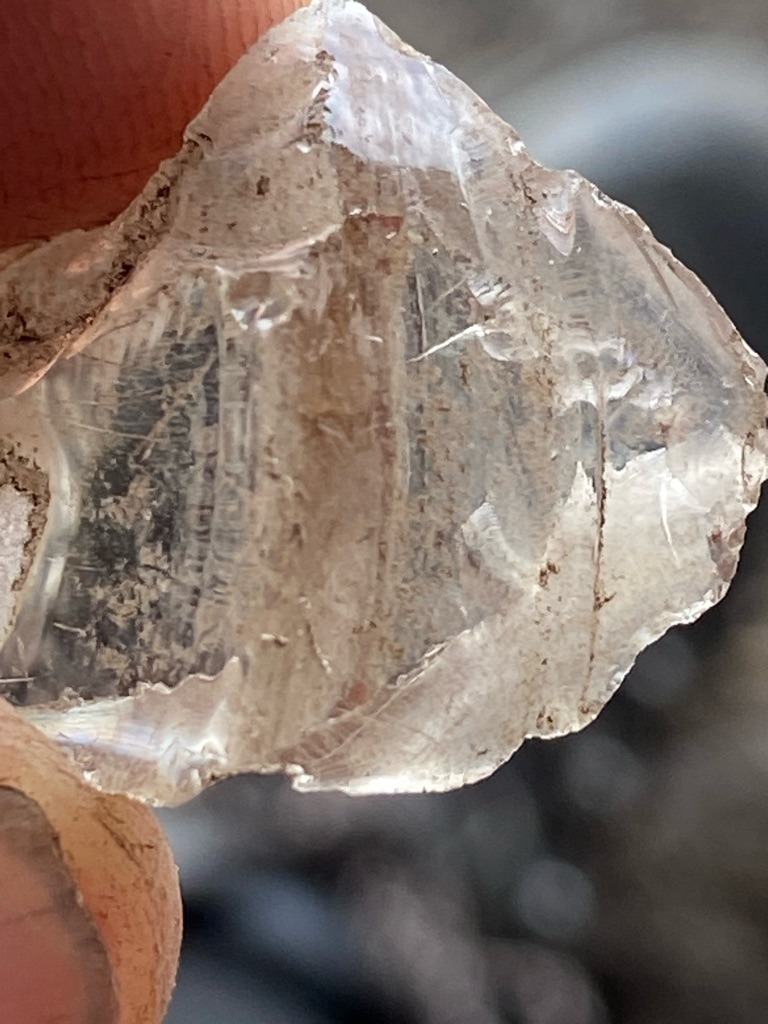
The specimen shown in the image is not a diamond; it appears to be a piece of raw quartz or glass showing conchoidal fracture.
The specimen shown in the image is not a diamond; it appears to be a piece of raw quartz or glass showing conchoidal fracture. · Rough, uncut, irregular crystalline mass
Not applicable (uncut raw mineral) Cut
Carat
Cannot be reliably determined visually, but appears relatively substantial as a rough mineral specimen
Color
Colorless / transparent with surface dirt and inclusions
Clarity
Included / heavily included (Not applicable in standard diamond grading terms)
Shape
Rough, uncut, irregular crystalline mass
Overall Assessment
The specimen presented in the image is a raw, unpolished mineral fragment—likely quartz or glass—showing classic conchoidal fracture patterns rather than a genuine diamond crystal. It holds no gemological diamond value.
Cut Quality
Not applicable (uncut raw mineral)
Brilliance
Poor to fair due to lack of standard facet proportions and surface dirt
Fire
Minimal to none due to absence of proper gemstone cutting
Scintillation
None
Proportions
Not applicable to raw uncut stones
Symmetry
Asymmetrical due to natural or broken formation
Polish
Unpolished, rough fracture surfaces
Fluorescence
Unknown / requires UV testing
Inclusions
Visible internal fractures, fissures, and mineral/dirt inclusions
Blemishes
Rough surface textures, chips, and conchoidal fracture marks
Origin
Natural mineral occurrence (likely quartz or slag glass)
Treatment Detection
No signs of modern gem enhancements; appears entirely natural or as-found
Estimated Value
Minimal (nominal value as a raw mineral specimen, virtually zero as a gemstone)
Certification Estimate
Standard gemological laboratories (like GIA or IGI) would not issue a diamond grading report for this specimen as it is not diamond.
Investment Potential
None as an investment asset
Similar Diamonds
None, as this is a non-diamond material
Setting Suggestions
Not suitable for standard fine jewelry settings unless cut, tumbled, and polished significantly
Care & Maintenance
Standard cleaning with warm soapy water and a soft brush to remove surface dirt
Interesting Facts
The prominent curved ridges visible on the surface are known as conchoidal fractures, which are characteristic of how brittle, amorphous, or cryptocrystalline materials like quartz and glass break.