Likely Diamond Simulant (e.g., Cubic Zirconia or Crystal)
Likely Diamond Simulant (e.g., Cubic Zirconia or Crystal) · Princess or Square Radiant Hybrid
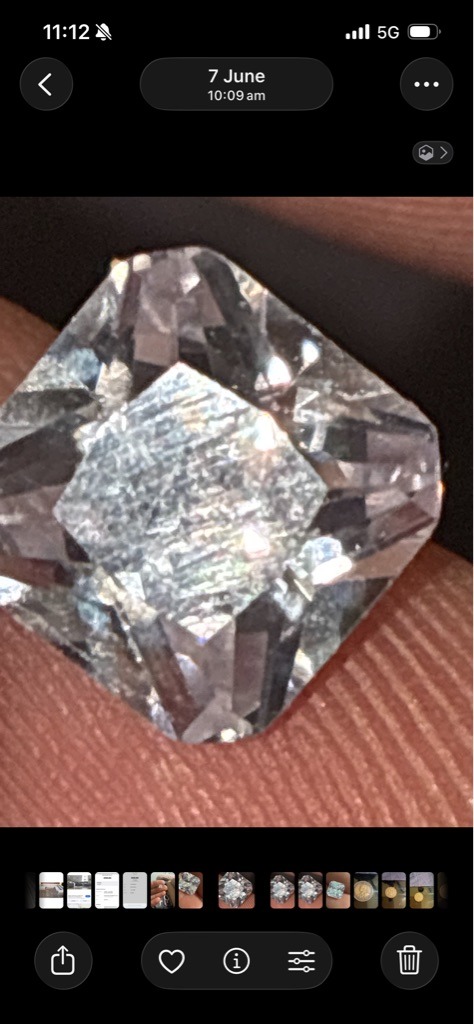
Fair to Poor (Facets lack crispness and geometric precision) Cut
Carat
Estimated 2.50 - 3.50 carats (based on scale against fingers)
Color
Lacks specific diamond color grading; appears near-colorless with strong reflections
Clarity
I (Included) - Heavily fractured/blemished appearance
Shape
Princess or Square Radiant Hybrid
Overall Assessment
The specimen lacks the refractive index and clarity of a gemstone-quality diamond. It is likely a diamond simulant or a highly included mineral specimen.
Cut Quality
Fair to Poor (Facets lack crispness and geometric precision)
Brilliance
Low - Light does not return efficiently through the crown
Fire
Minimal - High dispersion is lost due to internal opacity
Scintillation
Poor - Small, dull flashes of light
Proportions
High table percentage, shallow appearance relative to surface area
Symmetry
Fair - Uneven facet edges and misaligned corners
Polish
Poor - Noticeable surface abrasions and internal haziness
Fluorescence
None visible under current lighting
Inclusions
Heavy internal fracturing, cloudiness, and crystal-like growth patterns
Blemishes
Significant surface scratches and edge chipping visible
Origin
Synthetic manufacture
Treatment Detection
Surface coating or fracture filling unlikely to improve this quality
Estimated Value
Minimal (Under $50 USD if simulant; value based on costume jewelry)
Certification Estimate
Unlikely to be certified by GIA/AGS as a diamond; may be identified as a simulant
Investment Potential
None
Similar Diamonds
Low-grade industrial diamonds or commercial-grade cubic zirconia
Setting Suggestions
Costume jewelry setting or fashion ring mount
Care & Maintenance
Clean with mild soap and water; avoid ultrasonic cleaners due to fractures
Interesting Facts
The appearance of the table shows a needle-like or 'salt and pepper' internal structure common in simulants