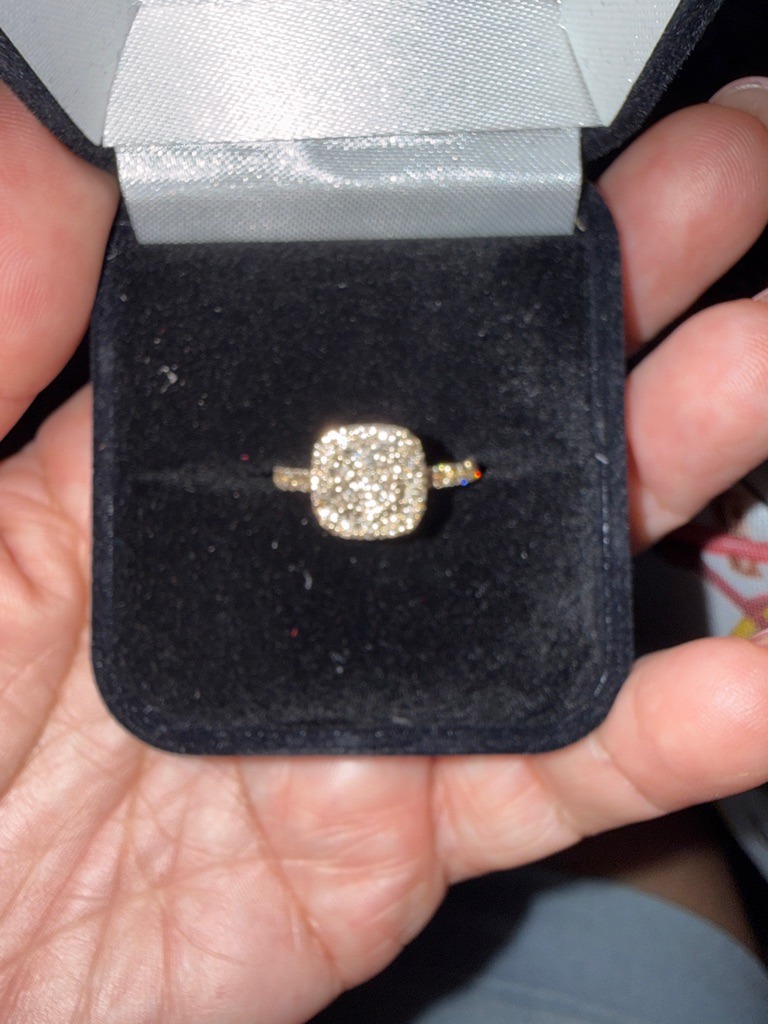
Natural (Cluster Setting / Multi-stone)
Natural (Cluster Setting / Multi-stone) · Cushion / Square Cluster
Good Cut
Carat
Approx. 0.75 - 1.00 ct total weight (cluster aggregate)
Color
G-I (Near Colorless)
Clarity
SI1 - SI2 (Small Inclusions)
Shape
Cushion / Square Cluster
Overall Assessment
An attractive, visually impactful ring that offers the look of a large cushion-cut solitaire at a fraction of the cost by utilizing a tightly packed cluster setting.
Cut Quality
Good
Brilliance
Moderate to High (enhanced by the cluster setting)
Fire
Good dispersion visible across multiple small facets
Scintillation
High flash-effect due to multiple micro-facets in the cluster head
Proportions
Standard commercial melee proportions, shallow depth to maximize face-up area
Symmetry
Good
Polish
Good
Fluorescence
Faint to Medium Blue (typical for commercial goods)
Inclusions
Minor pinpoint inclusions and small feathers visible under 10x magnification
Blemishes
Minor surface scratches typical of everyday wear
Origin
Mixed commercial origin, likely African or Russian rough cut in India
Treatment Detection
No obvious signs of clarity enhancement or unnatural color treatment detected visually
Estimated Value
$800 - $1,500 USD
Certification Estimate
Usually sold with commercial retail certificates or appraisal documents rather than GIA/AGS primary grading reports for each individual stone
Investment Potential
Low; retail cluster jewelry typically carries high markup and depreciates upon purchase
Similar Diamonds
Standard commercial cluster rings found in major retail jewelry chains
Setting Suggestions
Yellow or white gold halo/cluster setting as currently mounted; works well with matching pave bands
Care & Maintenance
Regular ultrasonic cleaning recommended due to the multiple crevices in the cluster setting; professional prong checks every 6 months
Interesting Facts
Cluster rings became extremely popular in the Georgian and Victorian eras as a way to create the visual impact of a large single stone using smaller, more affordable diamonds