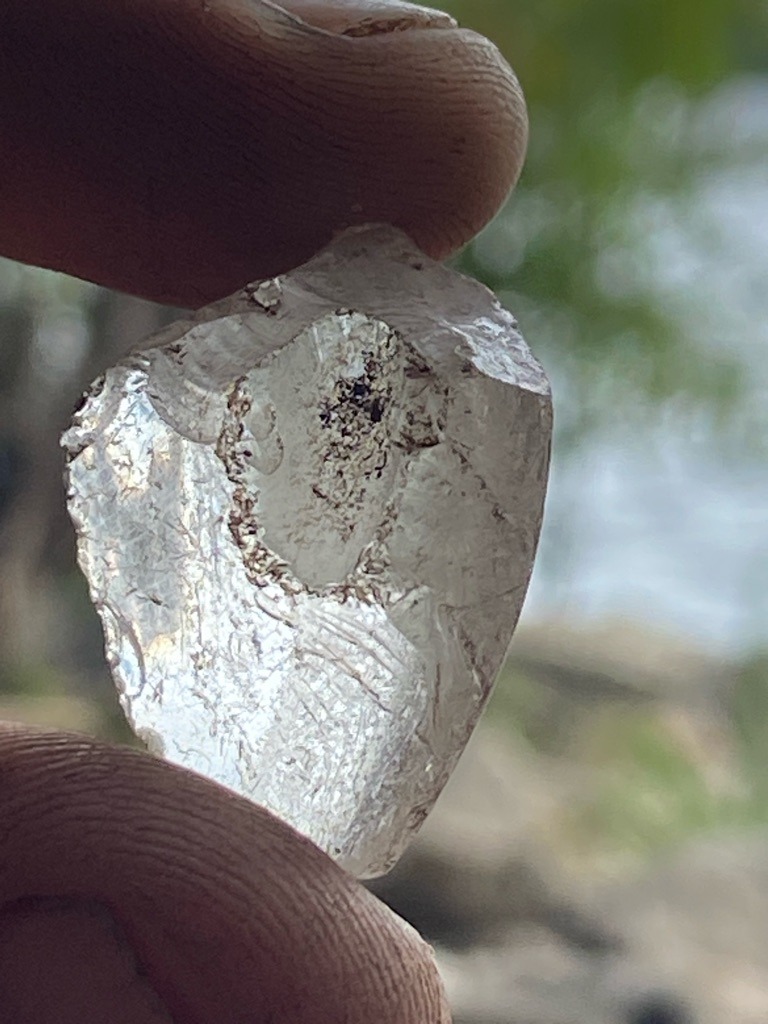
Natural rough diamond crystal
Natural rough diamond crystal · Uncut / Raw crystal form
Not applicable (Rough, uncut stone) Cut
Carat
Estimated 3.5 to 4.5 carats
Color
Near-colorless to light brown tint (K-M range)
Clarity
I2 to I3 due to heavy internal crystal inclusions and feather fractures
Shape
Uncut / Raw crystal form
Overall Assessment
An intriguing, natural rough diamond specimen featuring prominent internal inclusions and raw crystal characteristics, best appreciated as a geological display piece rather than a polished gemstone
Cut Quality
Not applicable (Rough, uncut stone)
Brilliance
Low, restricted by lack of faceted geometry and heavy internal inclusions
Fire
Minimal to none in current raw state
Scintillation
Poor, lacking facets to create return of light patterns
Proportions
Irregular raw crystal geometry; depth and table percentages do not apply
Symmetry
Natural irregular crystal symmetry
Polish
None (Raw crystal surfaces and natural etch channels)
Fluorescence
Cannot be determined without UV testing
Inclusions
Heavy concentration of dark cloud-like internal carbon spots and feather fractures clustered centrally
Blemishes
Natural surface trigons, growth lines, and irregular cleavage planes
Origin
Likely alluvial deposit origin given the smoothed edges, possibly from African or South American mines
Treatment Detection
No signs of artificial treatment; completely natural state
Estimated Value
Low commercial value primarily due to heavy inclusions and lack of gem-quality cutting potential, roughly $100 to $300 as a mineral specimen
Certification Estimate
Basic geological laboratory identification report rather than standard diamond grading report
Investment Potential
Very low investment potential as a gemstone, but modest collectible value as a mineral specimen
Similar Diamonds
Other industrial-grade or specimen-grade raw rough diamonds
Setting Suggestions
Wire-wrapped pendant or rustic prong setting to preserve the raw, organic aesthetic of the natural crystal
Care & Maintenance
Handle with care to avoid extending natural feather fractures; clean gently with warm soapy water and a soft brush
Interesting Facts
Raw diamonds in this state show the natural octahedral growth habits and surface features formed deep within the Earth's mantle before any human shaping