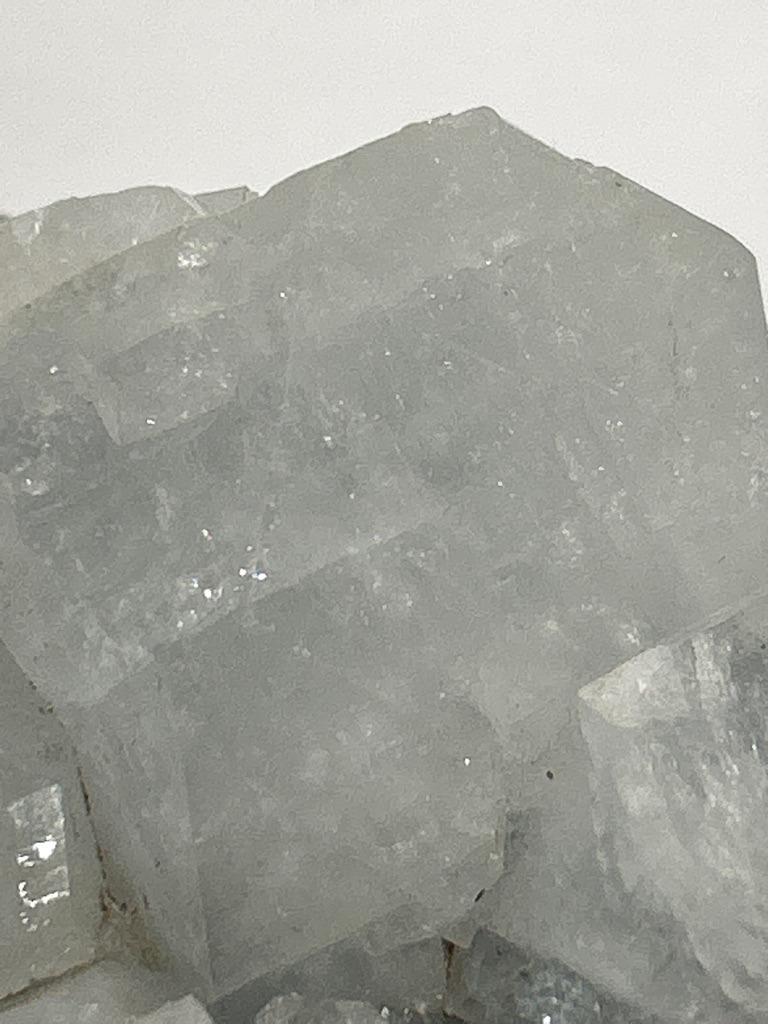
Natural rough mineral crystal aggregate, likely quartz or calcite rather than gemstone diamond due to crystalline habit
Natural rough mineral crystal aggregate, likely quartz or calcite rather than gemstone diamond due to crystalline habit · Rough crystal form with natural faces, unpolished
Not applicable (rough mineral specimen) Cut
Carat
Exceeds standard gem scale; large mineral specimen matrix
Color
Colorless / White translucent
Clarity
Included / Heavily included with internal fracturing and cloudiness
Shape
Rough crystal form with natural faces, unpolished
Overall Assessment
The visual evidence indicates a natural rough crystal aggregate rather than a faceted gem diamond, characterized by cloudy translucency and prominent natural growth planes
Cut Quality
Not applicable (rough mineral specimen)
Brilliance
Low to moderate due to massive and translucent nature
Fire
Minimal dispersion observed in raw state
Scintillation
Limited flash effect from prominent crystal planes
Proportions
Natural crystal growth proportions, not faceted
Symmetry
Natural octahedral/cubic crystal habit symmetry
Polish
None, natural crystal faces
Fluorescence
Indeterminate from visual assessment alone
Inclusions
Abundant internal fractures, feather inclusions, and cloud-like structures
Blemishes
Natural surface etching, growth hillocks, and minor abrasion along edges
Origin
Natural geological formation, specific mine of origin unknown without spectroscopic testing
Treatment Detection
No signs of artificial treatment; appears completely untreated and natural
Estimated Value
Valued as a raw mineral or crystal specimen rather than per-carat gemstone pricing
Certification Estimate
Gemological laboratories would classify this as a mineral specimen rather than a certified diamond
Investment Potential
Collector value depends heavily on mineralogical rarity and aesthetic appeal rather than liquidity as an investment-grade diamond
Similar Diamonds
Comparable to other large rough crystal specimens of quartz, calcite, or low-grade industrial diamond bort
Setting Suggestions
Best displayed as a raw mineral specimen in a custom wire-wrap or custom display mount rather than traditional jewelry
Care & Maintenance
Handle with care to prevent chipping along cleavage or natural fracture planes; clean gently with mild soapy water
Interesting Facts
Raw crystal specimens preserve the original geological growth history and crystal habits of the mineral before human cutting and polishing