Natural Rough Diamond
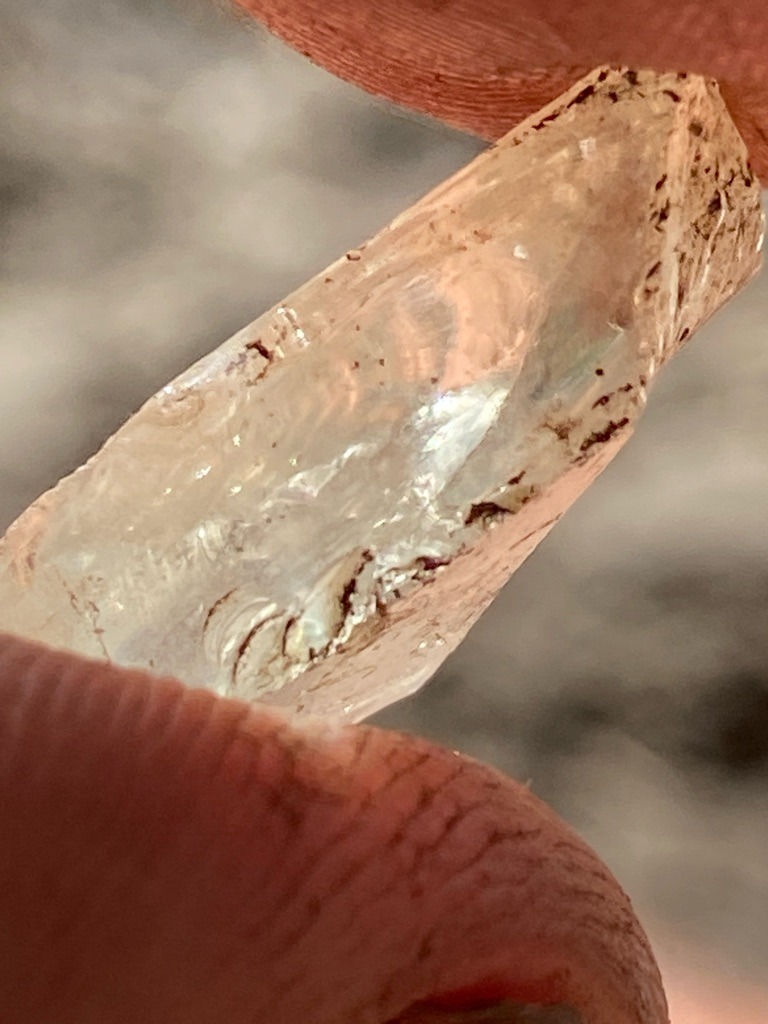
Natural Rough Diamond · Rough Octahedral / Fragment Crystal
Not Applicable (Uncut Rough Specimen) Cut
Carat
Estimated 1.5 to 2.5 carats
Color
Near-Colorless with slight brownish or yellowish tint (G-J range equivalent)
Clarity
Included (I1-I2 equivalent due to visible internal fractures and surface inclusions)
Shape
Rough Octahedral / Fragment Crystal
Overall Assessment
An interesting, natural rough diamond crystal displaying raw geological characteristics, inclusions, and matrix remnants, making it a unique specimen for mineral collectors or custom organic jewelry designs.
Cut Quality
Not Applicable (Uncut Rough Specimen)
Brilliance
Low to Moderate due to uncut nature and surface irregularities
Fire
Subdued due to unpolished crystal faces refracting light diffusely
Scintillation
Minimal play of light compared to a faceted gemstone
Proportions
Natural elongation characteristic of raw crystal formation
Symmetry
Natural Asymmetric Crystal Growth
Polish
Natural Rough Crystal Faces (Trigons and striations likely present)
Fluorescence
Cannot be determined without UV testing (Likely Faint to Medium Blue if fluorescent)
Inclusions
Heavy internal feathering, cleavage planes, and dark mineral inclusions trapped within the crystal matrix
Blemishes
Surface naturals, rough patches, cavities, and adhering matrix minerals
Origin
Alluvial or primary kimberlite pipe deposit (African, Canadian, or Russian origin)
Treatment Detection
No signs of enhancement; strictly untreated natural rough crystal
Estimated Value
Varies widely by weight and industrial vs. gem quality; approximately $200 - $600 USD as a raw collector specimen
Certification Estimate
GIA or EGL (issued as an uncut rough diamond certificate or parcel report)
Investment Potential
Retains value primarily as a mineral specimen or collector's raw crystal rather than an appreciating investment diamond
Similar Diamonds
Other unpolished octahedral or distorted rough diamond crystals of similar size and clarity
Setting Suggestions
Raw mineral jewelry setting utilizing prongs or wire-wrapping in yellow or rose gold to complement the natural earth tones
Care & Maintenance
Store separately to prevent scratching other stones; clean gently with warm soapy water and a soft brush; avoid harsh ultrasonic cleaners due to internal fractures
Interesting Facts
Rough diamonds show natural growth markings called trigons on their crystal faces, which are triangular etch marks formed deep within the Earth's mantle