Natural
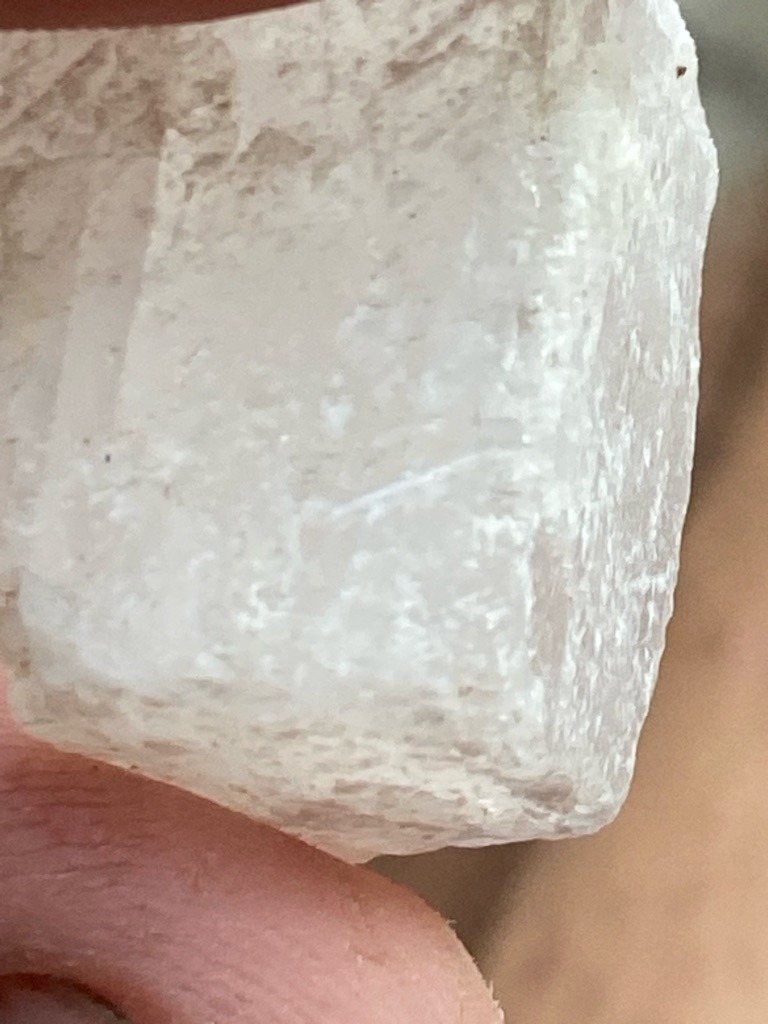
Natural · Rough Crystal (Cubic/Octahedral habit, uncut)
Not Applicable (Uncut Rough) Cut
Carat
Estimated 2.0 to 3.5 carats based on visual dimensions
Color
Estimated H-J range (near colorless, milky or frosted surface appearance)
Clarity
Estimated I1 to I2 (opaque/translucent rough with internal feathers and inclusions)
Shape
Rough Crystal (Cubic/Octahedral habit, uncut)
Overall Assessment
An interesting, natural rough diamond crystal displaying characteristic octahedral/cubic growth features and a frosted surface, suitable for a mineral collection or custom raw-stone jewelry design
Cut Quality
Not Applicable (Uncut Rough)
Brilliance
Low to none in current rough state, requires cutting and polishing to exhibit brilliance
Fire
Absent in rough, uncut state
Scintillation
None visible due to matte, unpolished exterior
Proportions
Not Applicable for rough crystal
Symmetry
Natural crystal symmetry, showing typical distorted growth features
Polish
Raw, unpolished natural crystal face with trigons or striations
Fluorescence
Cannot be determined visually without UV testing (likely Faint to Medium)
Inclusions
Heavy internal cloudiness, feathers, and potential carbon spots typical of industrial or lower-clarity gem rough
Blemishes
Natural surface etching, trigons, and irregular growth lines typical of rough diamond stones
Origin
Likely alluvial or primary kimberlite pipe deposit (African, Canadian, or Russian origin)
Treatment Detection
No signs of treatment; completely natural rough specimen
Estimated Value
Varies significantly by exact weight and industrial vs. near-gem quality; roughly $150 to $500 as rough mineral specimen
Certification Estimate
GIA or EGL, likely graded as Rough Diamond Specimen rather than cut stone
Investment Potential
Moderate as a collector mineral specimen, limited for financial investment compared to certified polished investment stones
Similar Diamonds
Other natural industrial or lower-grade gem-quality rough diamond crystals
Setting Suggestions
Best kept as a raw mineral specimen, or wire-wrapped in platinum, white gold, or yellow gold for an organic jewelry look
Care & Maintenance
Store separately to prevent scratching other gemstones; clean gently with warm soapy water and a soft brush
Interesting Facts
Rough diamonds form deep within the Earth under extreme heat and pressure over billions of years before being brought to the surface by volcanic eruptions