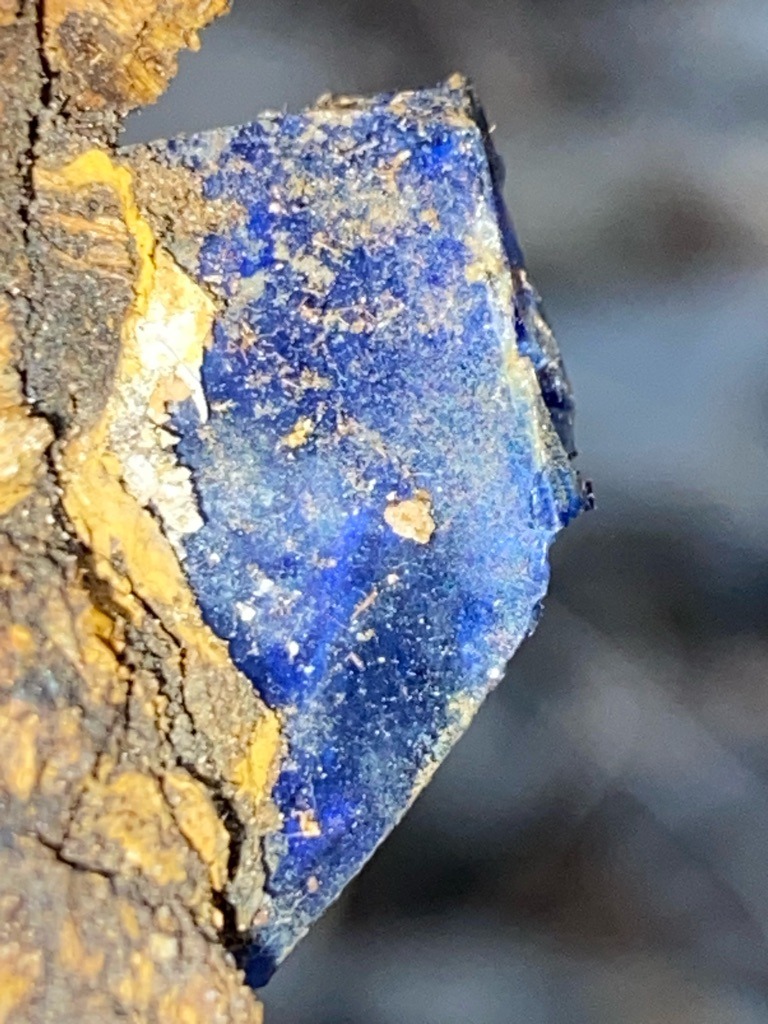
This is not a diamond; it is an opaque blue mineral specimen, likely Lapis Lazuli or Azurite based on the color and host rock.
This is not a diamond; it is an opaque blue mineral specimen, likely Lapis Lazuli or Azurite based on the color and host rock. · Rough / Uncut mineral fragment
None (Natural rough state) Cut
Carat
Estimated 2-5 carats for the visible crystal portion
Color
Deep Ultramarine Blue (Opaque)
Clarity
Opaque (Non-transparent)
Shape
Rough / Uncut mineral fragment
Overall Assessment
The specimen is a deep blue mineral fragment embedded in host rock, exhibiting no diamond-like optical properties.
Cut Quality
None (Natural rough state)
Brilliance
Lustrous/Vitreous in patches but non-refractive
Fire
None
Scintillation
None
Proportions
Irregular natural crystal growth
Symmetry
Not applicable to rough specimens
Polish
None (Natural earthy surface)
Fluorescence
None observed (Lapis may show dull orange under UV)
Inclusions
Host rock matrix, possible flecks of pyrite (gold color) or calcite (white streaks)
Blemishes
Natural surface pitting and weathering
Origin
Likely Afghanistan (if Lapis) or Arizona/Mexico (if Azurite)
Treatment Detection
Appears natural and untreated
Estimated Value
Minimal as a raw specimen; generally $1 - $10 USD for this size fragment
Certification Estimate
Gemological lab (e.g., GIA) for mineral identification, not diamond grading
Investment Potential
No investment value; typical hobbyist specimen
Similar Diamonds
None (This is a non-diamond blue mineral)
Setting Suggestions
Wire wrapping for a pendant or specimen display box
Care & Maintenance
Store away from acids and soft materials; clean with a soft dry cloth only
Interesting Facts
Lapis Lazuli was used to create the pigment 'Ultramarine' in the Renaissance.