Natural Red Diamond
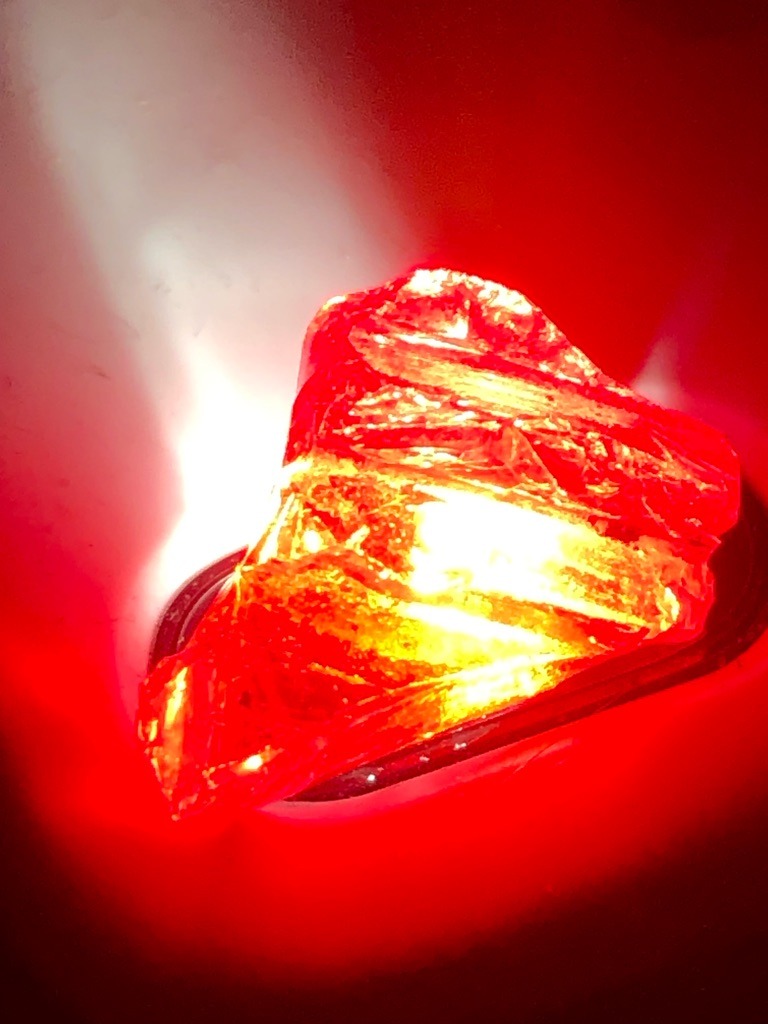
Natural Red Diamond · Rough / Uncut Crystal
Not Applicable (Rough Specimen) Cut
Carat
Estimated 2.5 to 3.5 carats
Color
Fancy Intense Red to Fancy Dark Red
Clarity
Estimated SI1 (Small Inclusions)
Shape
Rough / Uncut Crystal
Overall Assessment
This is an extraordinary and extremely rare specimen of a natural rough red diamond. Its vivid coloration and raw crystal integrity make it a museum-grade treasure with immense value and collector appeal
Cut Quality
Not Applicable (Rough Specimen)
Brilliance
Subdued due to rough, unpolished state
Fire
Limited in raw state, but hints of strong dispersion under direct lighting
Scintillation
Minimal in rough form; dependent on future cutting and faceting
Proportions
Natural uncut morphology showing octahedral and triangular growth features
Symmetry
Natural Crystal Symmetry
Polish
Raw Crystal Surface (Unpolished)
Fluorescence
Medium to Strong Blue (common in natural red diamonds)
Inclusions
Internal cleavage planes, twinning lines, and minor pinpoints characteristic of rough diamond
Blemishes
Natural surface trigons, rough skin, and irregular growth lines
Origin
Likely Argyle Mine (Australia) or African alluvial deposit
Treatment Detection
No signs of treatment detected; appears entirely natural
Estimated Value
Extremely high due to extreme rarity of natural red diamonds, potentially $100,000 to $500,000+ per carat depending on final cut and precise color saturation
Certification Estimate
GIA (Gemological Institute of America) - Natural Fancy Red
Investment Potential
Exceptional. Natural red diamonds are among the rarest gem-grade materials on Earth and consistently appreciate significantly in value
Similar Diamonds
Comparable to famous historical natural red diamonds such as the Moussaieff Red
Setting Suggestions
Custom multi-prong platinum or 18k yellow gold basket to enhance and complement the rare red hue, often accented with colorless side diamonds
Care & Maintenance
Store separately in a lined jewelry box to prevent scratching other stones. Clean gently using warm soapy water and a soft brush; avoid harsh ultrasonic cleaners until faceted and inspected
Interesting Facts
Natural red diamonds derive their color not from chemical impurities like nitrogen or boron, but from plastic deformation of the crystal lattice during formation. Fewer than 30 true fancy red diamonds over 1 carat are known to exist worldwide