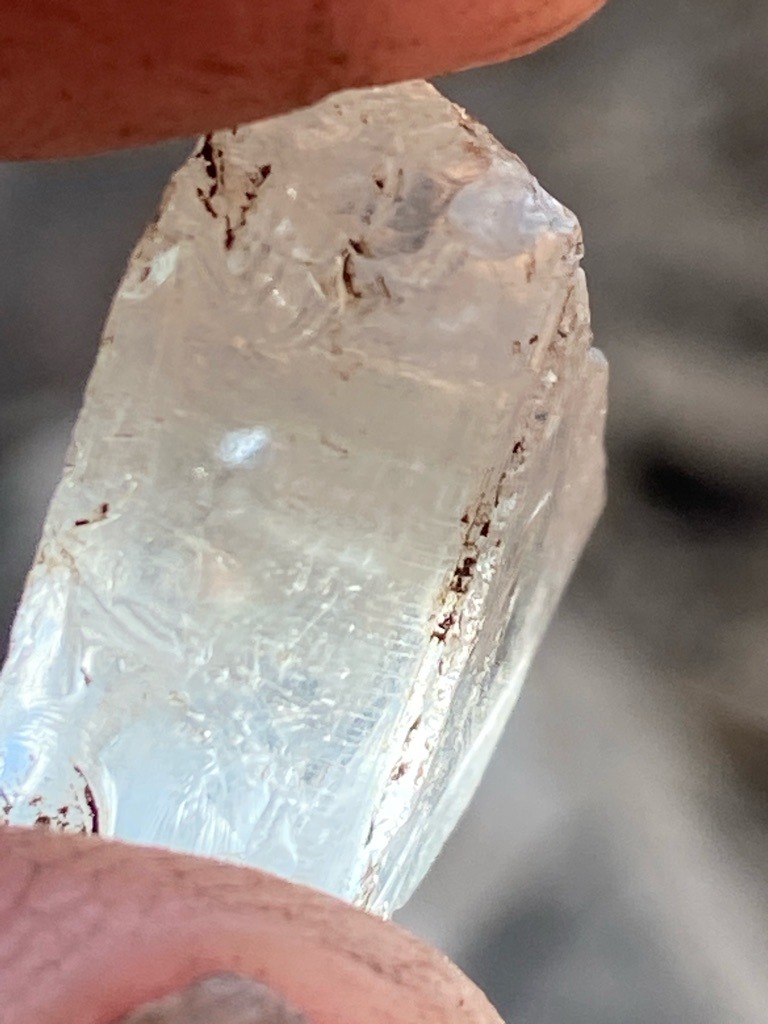
Natural rough diamond crystal
Natural rough diamond crystal · Rough crystal / Irregular octahedral or prismatic form
Not applicable (Rough, un-faceted crystal) Cut
Carat
Estimated 2.5 - 3.5 carats
Color
Near colorless to light brown tint (K-M range)
Clarity
Included (I1-I2)
Shape
Rough crystal / Irregular octahedral or prismatic form
Overall Assessment
An interesting, tactile specimen of a natural rough diamond crystal displaying characteristic growth lines and surface features, ideal either as a collector mineral specimen or for custom raw-diamond jewelry.
Cut Quality
Not applicable (Rough, un-faceted crystal)
Brilliance
Limited due to rough surface and natural crystal texture
Fire
Present in localized transparent windows, but subdued by rough exterior
Scintillation
Minimal to none due to lack of standard facet arrangement
Proportions
N/A for rough crystal
Symmetry
Natural crystal symmetry, distorted octahedron/blocky form
Polish
Natural crystal faces with typical trigons and growth lines
Fluorescence
Indeterminate from visual assessment (typically None to Faint in rough form)
Inclusions
Surface-reaching fractures, mineral inclusions, and dark carbon spots along crystal edges
Blemishes
Natural surface etch channels, triangular growth markings (trigons), and adhering matrix minerals
Origin
Likely alluvial or primary kimberlitic deposit (African or Canadian origin)
Treatment Detection
No treatments detected; completely untreated natural rough
Estimated Value
$400 - $800 depending on cutter yield and final cut grade potential
Certification Estimate
GIA or similar major gemological lab would issue a rough diamond report
Investment Potential
Moderate, primarily valued for its raw aesthetic or potential polished yield by a master cutter
Similar Diamonds
Other alluvial or mine-run rough stones in the 2-4 carat range with included clarity
Setting Suggestions
Can be set raw in a custom organic bezel setting or cut into a cushion or emerald cut to maximize weight retention
Care & Maintenance
Store separately to prevent scratching other gemstones; clean gently with warm soapy water and a soft brush
Interesting Facts
Rough diamonds retain the geological history of the Earth's mantle, often showing natural growth lines and etching patterns formed millions of years ago