Possibly Glass, Slag, or Synthetic Corundum (Not a Diamond)
Possibly Glass, Slag, or Synthetic Corundum (Not a Diamond) · Rough / Uncut / Fractured
Not Applicable (Rough/Fractured) Cut
Carat
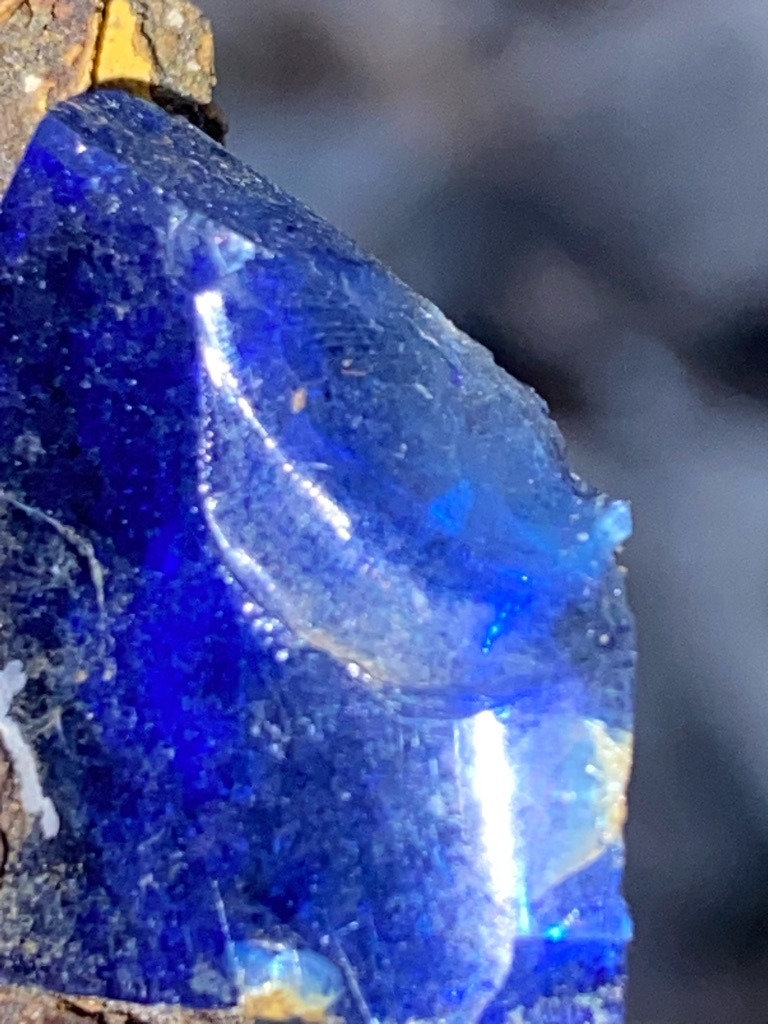
Estimated 5-10 carats based on visible scale
Color
Vivid Electric Blue (Beyond GIA color scale for white diamonds)
Clarity
Translucent to Opaque with significant fractures
Shape
Rough / Uncut / Fractured
Overall Assessment
The specimen is not a diamond. It lacks the crystal structure, adamantine luster, and cleavage of a diamond, appearing instead as a piece of blue glass or industrial slag.
Cut Quality
Not Applicable (Rough/Fractured)
Brilliance
Low (Surface reflections only)
Fire
None visible
Scintillation
None visible
Proportions
Not Applicable
Symmetry
None (Asymmetrical specimen)
Polish
Poor (Natural dull/waxy surface with conchoidal fractures)
Fluorescence
Indeterminate without UV light
Inclusions
Extensive internal fracturing, bubbles, and clouding
Blemishes
Conchoidal fractures, sharp jagged edges, surface pitting
Origin
Likely industrial byproduct (slag) or synthetic waste
Treatment Detection
Likely colored via chemical additives in molten state
Estimated Value
Low (Decorative value only if industrial glass or byproduct)
Certification Estimate
Likely rejected by GIA for diamond grading; identification report only
Investment Potential
None
Similar Diamonds
None; color and fracture pattern do not resemble diamond
Setting Suggestions
Wire wrap or enclosure for mineral enthusiasts only
Care & Maintenance
Avoid impact as it appears brittle and prone to further fracturing
Interesting Facts
The deep blue hue and conchoidal fracture patterns are classic indicators of glass or man-made waste rather than natural diamond crystals.