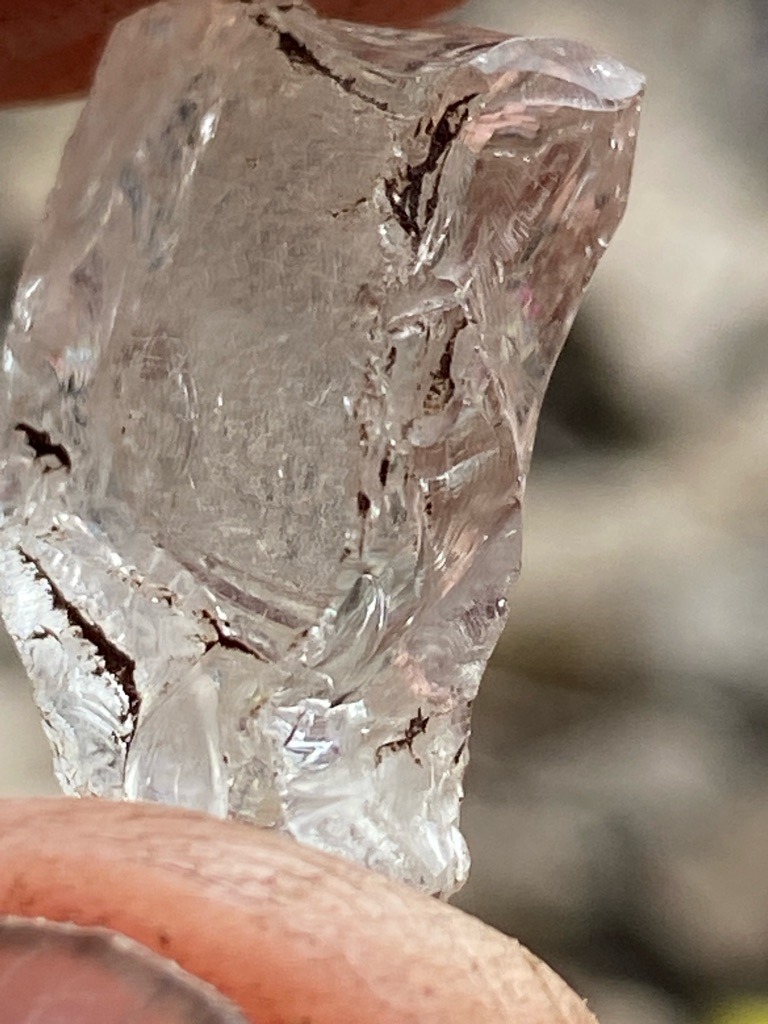
Natural rough crystal
Natural rough crystal · Uncut raw crystal (Irregular/Fragment)
Not applicable (Rough state) Cut
Carat
Estimated 3.5 - 5.0 carats
Color
Near-colorless to light brown tint
Clarity
Included (I1-I2)
Shape
Uncut raw crystal (Irregular/Fragment)
Overall Assessment
An interesting, natural rough diamond specimen exhibiting characteristic surface textures and internal mineral inclusions, best preserved as a mineral specimen or carefully evaluated for potential cutting yield.
Cut Quality
Not applicable (Rough state)
Brilliance
Low due to lack of standard faceting and surface roughness
Fire
Minimal dispersion visible in current unpolished state
Scintillation
Absent prior to cutting and faceting
Proportions
Not applicable to raw rough material
Symmetry
Natural asymmetric rough formation
Polish
Natural unpolished crystal faces and fracture planes
Fluorescence
Cannot be definitively assessed visually without UV light, likely None to Faint
Inclusions
Prominent dark/metallic dendritic or mineral inclusions trapped along cleavage and fracture planes
Blemishes
Natural surface etching, rough growth lines, and conchoidal fracture marks
Origin
Alluvial or primary kimberlitic/lamproitic rough deposit
Treatment Detection
No visible signs of artificial enhancement or treatment; appears completely untreated and natural
Estimated Value
Nominal value based on raw mineral specimens, heavily dependent on final yield if cut
Certification Estimate
GIA or similar major lab for formal origin and authenticity verification
Investment Potential
Collector appeal as a raw mineral specimen rather than standard investment-grade polished diamonds
Similar Diamonds
Other unassorted industrial or jewelry-grade rough diamond crystals of comparable weight
Setting Suggestions
Organic-style raw mineral wire-wrapped pendant or bespoke bezel setting to preserve its raw aesthetic
Care & Maintenance
Handle with care to prevent further fracturing along natural cleavage planes; clean with mild soapy water and a soft brush
Interesting Facts
Raw diamonds show natural crystal growth features like triangular etch marks (trigons) and raw cleavage planes before human intervention