Natural rough diamond
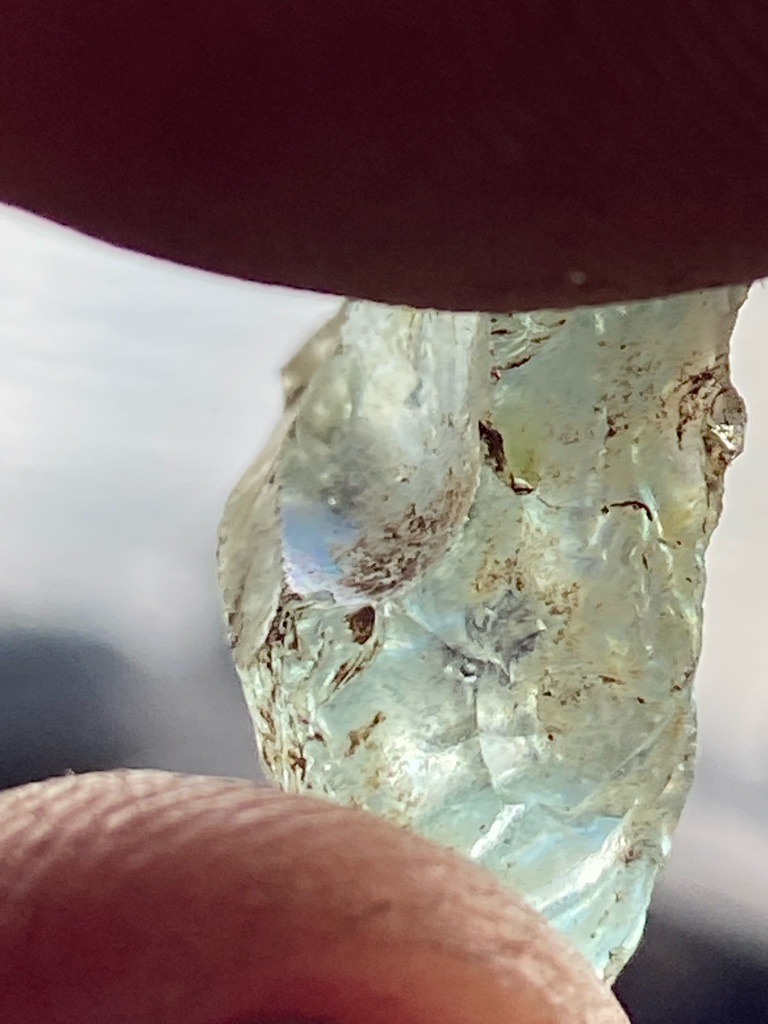
Natural rough diamond · Uncut / Raw crystal fragment
Not Applicable (Uncut rough crystal) Cut
Carat
Estimated 1.5 to 2.5 carats
Color
Light greenish-yellow or fancy light greenish-yellow
Clarity
I1 to I3 (Included, typical for raw unworked crystals with visible inclusions and surface fractures)
Shape
Uncut / Raw crystal fragment
Overall Assessment
An intriguing natural rough diamond crystal fragment presenting a unique pale greenish hue and distinct internal characteristics, best suited for bespoke custom cutting or raw-stone jewelry design.
Cut Quality
Not Applicable (Uncut rough crystal)
Brilliance
Low to moderate due to rough surface and lack of faceting
Fire
Minimal dispersion observed on rough surfaces
Scintillation
Limited or absent due to unfaceted nature
Proportions
Not Applicable for rough stone
Symmetry
Natural irregular crystal symmetry
Polish
Unpolished natural crystal faces
Fluorescence
Indeterminate from visual assessment alone
Inclusions
Visible internal mineral inclusions, dark spots, and internal feather fractures
Blemishes
Natural surface roughness, pits, and minor abrasions
Origin
Alluvial or primary kimberlite/lamproite deposit, indeterminate exact mine location without advanced spectroscopy
Treatment Detection
No obvious signs of artificial treatment; appears completely untreated and natural
Estimated Value
Varies widely based on potential yield after cutting, roughly $300 - $800 depending on final cut weight and clarity retention
Certification Estimate
GIA or IGI (Rough gemstone evaluation report)
Investment Potential
Speculative, as value depends heavily on how it is cut and polished by a master lapidary
Similar Diamonds
Other natural rough gemstone-quality diamonds sold for custom lapidary work
Setting Suggestions
Organic raw-stone style jewelry settings, bezel setting in yellow or white gold to highlight the raw aesthetic
Care & Maintenance
Standard ultrasonic cleaning with caution due to internal fractures; avoid harsh impacts
Interesting Facts
Raw diamonds showcase natural crystal growth marks such as trigons on octahedral faces, though this specimen appears heavily weathered or fractured