Natural Rough Diamond
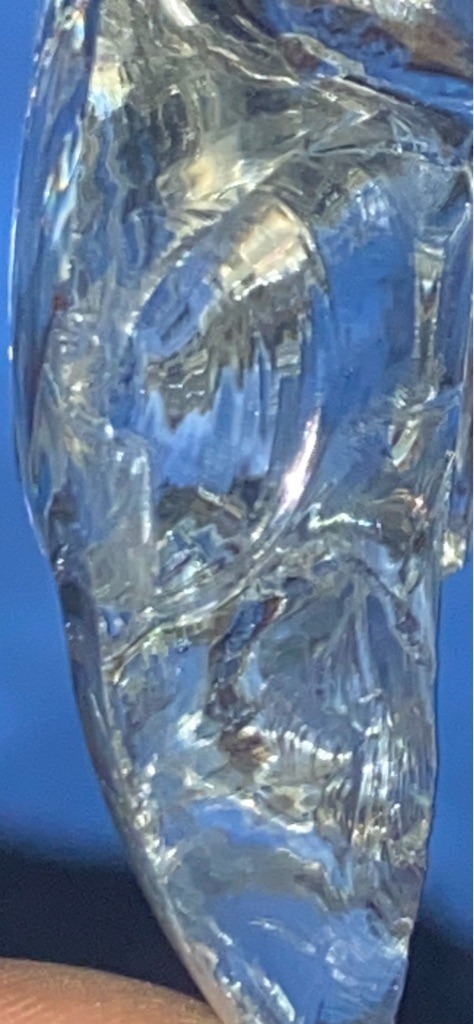
Natural Rough Diamond · Rough / Uncut (Natural Octahedral Fragment)
Not Applicable (Uncut Rough) Cut
Carat
Estimated 2.5 to 4.0 carats based on finger scale
Color
Visual estimate in D-F range (Colorless)
Clarity
Translucent to Transparent (Rough equivalent of VS1-VS2)
Shape
Rough / Uncut (Natural Octahedral Fragment)
Overall Assessment
A high-quality piece of gem-grade rough diamond with excellent potential for a colorless faceted stone.
Cut Quality
Not Applicable (Uncut Rough)
Brilliance
Low (Surface diffusion prevents light return typical of faceted stones)
Fire
None visible in current rough state
Scintillation
None (Requires faceting to produce sparkle)
Proportions
Natural irregular crystal habit
Symmetry
Asymmetrical (Natural Crystal Formation)
Polish
Natural Crystal Faces (Unpolished)
Fluorescence
Cannot be determined without UV light
Inclusions
Visible internal graining and potential feathers near the base
Blemishes
Natural trigons and surface reach features typical of rough stones
Origin
Likely African (e.g., Botswana or DRC) based on morphology
Treatment Detection
None apparent; looks to be a raw, untreated natural specimen
Estimated Value
$1,500 - $4,500 depending on final yield and clarity
Certification Estimate
GIA (Rough Diamond Specimen)
Investment Potential
Moderate (Value depends entirely on the outcome of the cutting process)
Similar Diamonds
Typical of gem-quality rough stones found in primary kimberlite deposits
Setting Suggestions
Rough diamond tension setting or organic claw setting in 18k gold
Care & Maintenance
Ultrasonic cleaning is safe, but avoid high impact as rough can have internal stress
Interesting Facts
Rough diamonds often have 'trigons'—triangular indentations on the surface—that prove their volcanic origin.