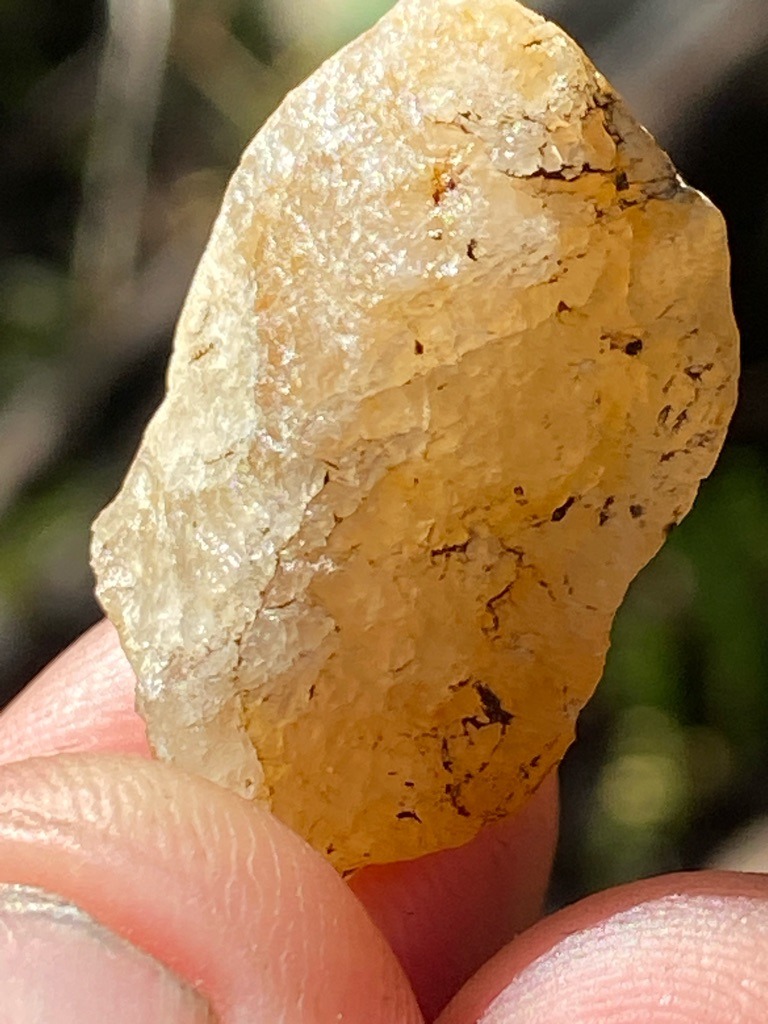
Natural diamond (rough, unpolished)
Natural diamond (rough, unpolished) · Rough crystal / Irregular octahedral fragment
Not applicable (Rough stone) Cut
Carat
Estimated 2.50 to 3.50 carats
Color
Fancy Light Brown to Yellow-Brown
Clarity
Included (I1 to I2 range)
Shape
Rough crystal / Irregular octahedral fragment
Overall Assessment
An interesting, substantial piece of natural diamond rough with noticeable inclusions and a warm brown-yellow body color, offering potential for a skilled lapidary to cut into one or more smaller polished stones.
Cut Quality
Not applicable (Rough stone)
Brilliance
Low due to rough surface and opacity
Fire
Minimal due to unpolished state and body color
Scintillation
Limited flash due to irregular crystal faces
Proportions
Not applicable to rough crystals
Symmetry
Natural crystal symmetry, distorted
Polish
Raw, natural crystal faces and resorption features
Fluorescence
Indeterminate from visual assessment
Inclusions
Heavy internal fractures, dark carbon spots, feather inclusions
Blemishes
Natural surface etch channels, trigons, pitting, and rough skin
Origin
Alluvial or primary kimberlite pipe deposit (African or Australian origin likely)
Treatment Detection
No signs of artificial treatment; appears completely untreated
Estimated Value
$500 - $1,500 depending on cutter yield and final cut grade potential
Certification Estimate
GIA or IGI (would certify as Natural Rough Diamond)
Investment Potential
Moderate value as a collector piece or speculative cutting rough
Similar Diamonds
Industrial or lower gem-quality rough diamond crystals
Setting Suggestions
Can be set raw in a rustic organic bezel setting or cut into multiple polished diamonds
Care & Maintenance
Standard cleaning with warm soapy water and soft brush; avoid harsh impacts due to internal fractures
Interesting Facts
Rough diamonds retain their natural geological history, showing surface features like trigons formed deep within the Earth's mantle