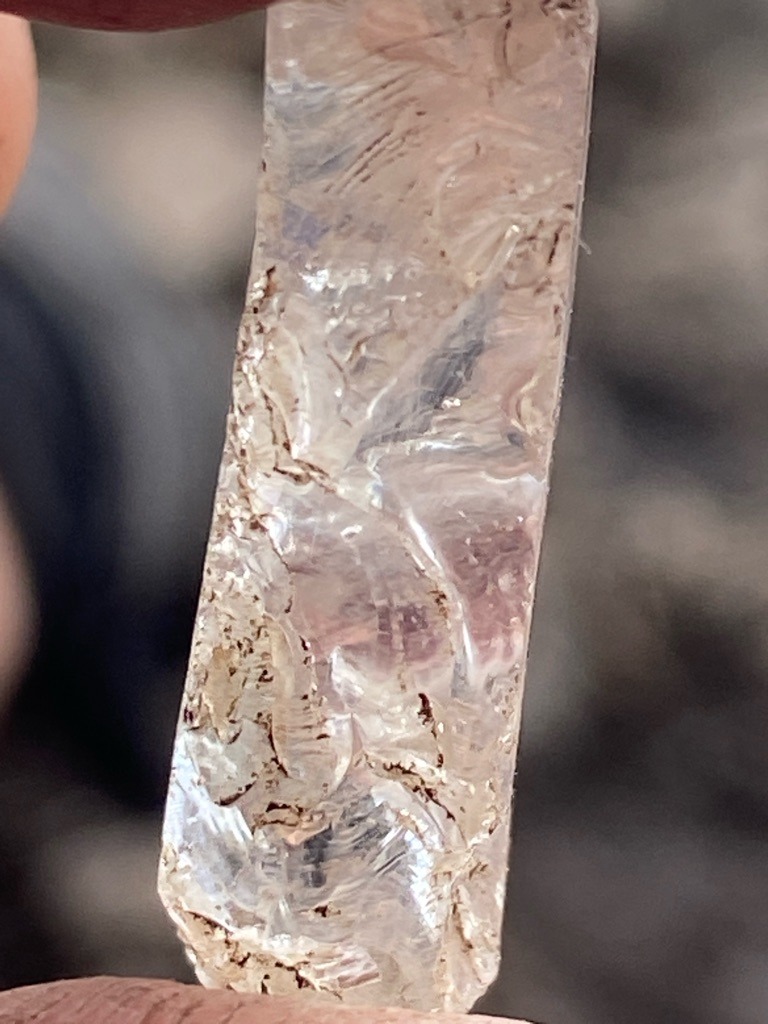
Rough natural diamond crystal (or possibly high-quality quartz crystal/specimen given the conchoidal fracture patterns and brownish matrix inclusions, but assuming gem-grade diamond crystal context)
Rough natural diamond crystal (or possibly high-quality quartz crystal/specimen given the conchoidal fracture patterns and brownish matrix inclusions, but assuming gem-grade diamond crystal context) · Rough elongated crystal / Raw octahedral or distorted crystal form
Not applicable (Rough, unpolished crystal) Cut
Carat
Estimated 3.5 - 5.0 carats based on visual scale
Color
Near-colorless to light brown tint (K-M range)
Clarity
I2 - I3 due to heavy inclusions and surface features (if diamond), or heavily included crystal
Shape
Rough elongated crystal / Raw octahedral or distorted crystal form
Overall Assessment
An interesting and unique elongated crystal specimen with prominent natural surface features and internal inclusions, requiring professional gemological testing to definitively confirm diamond versus quartz or other transparent rough minerals.
Cut Quality
Not applicable (Rough, unpolished crystal)
Brilliance
Low due to rough, unpolished state and internal fractures
Fire
Low to moderate due to surface diffusion and rough facets
Scintillation
Minimal, typical of rough stones before cutting and faceting
Proportions
Natural rough proportions, elongated bar shape
Symmetry
Natural crystal symmetry (elongated prismatic/distorted)
Polish
Raw, unpolished natural crystal faces and fracture surfaces
Fluorescence
Cannot be determined visually without UV testing
Inclusions
Heavy internal feather fractures, mineral inclusions, and dark matrix staining along fissures
Blemishes
Natural surface trigons, etching channels, and rough fracture surfaces
Origin
Natural alluvial or primary kimberlite deposit origin
Treatment Detection
No signs of artificial treatment; completely natural rough state
Estimated Value
Nominal value as a mineral specimen or low due to heavy inclusions if diamond; highly dependent on exact mineral identification
Certification Estimate
GIA or similar major lab would issue a rough diamond report noting natural origin and heavy inclusions
Investment Potential
Collector mineral value rather than commercial investment diamond value
Similar Diamonds
Other alluvial rough diamond crystals with heavy inclusion patterns
Setting Suggestions
Best kept as a raw mineral specimen in a custom organic wire-wrap or bezel setting if jewelry use is desired
Care & Maintenance
Handle with care to prevent breakage along natural cleavage planes and fracture lines; clean gently with warm soapy water and a soft brush
Interesting Facts
Rough diamonds often display natural growth markings like triangular etch pits called trigons on their crystal faces