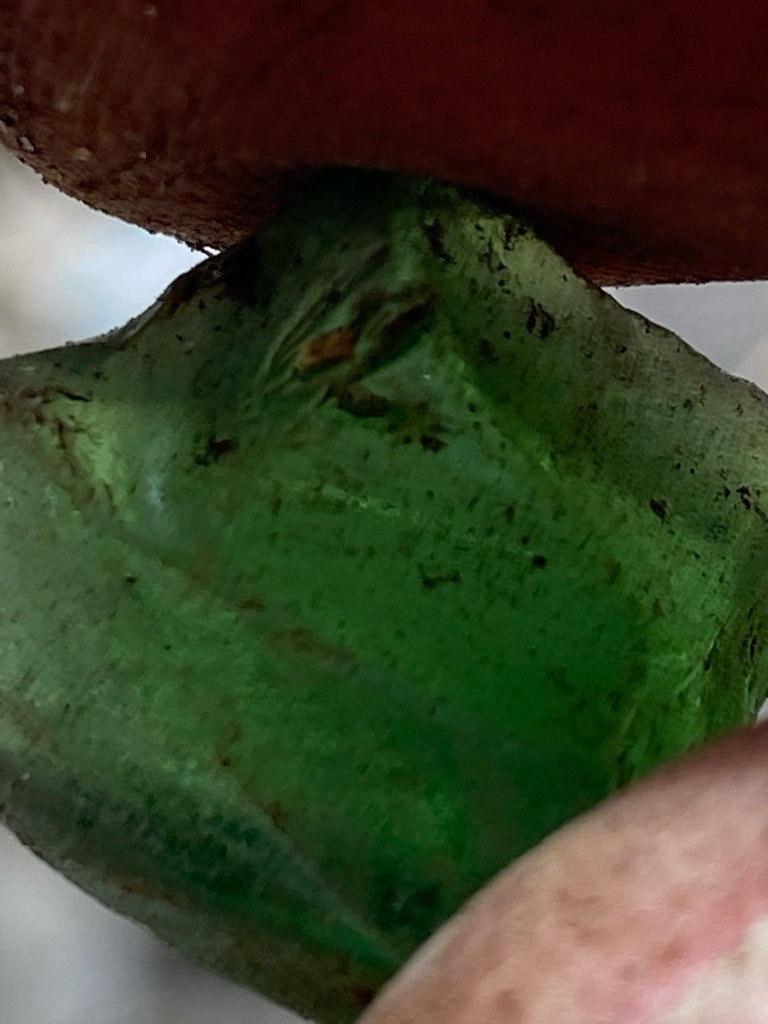
Natural Emerald (Often mistaken or categorized under gemstone inquiries; visually appears as a green beryl/emerald crystal rather than a diamond)
Natural Emerald (Often mistaken or categorized under gemstone inquiries; visually appears as a green beryl/emerald crystal rather than a diamond) · Rough Crystal / Uncut Hexagonal Prism
Not Applicable (Rough Specimen) Cut
Carat
Estimated 15-20 carats based on rough dimensions
Color
Fancy Deep Green
Clarity
Included (I1 equivalent for colored stones, typical 'jardin' internal features)
Shape
Rough Crystal / Uncut Hexagonal Prism
Overall Assessment
An impressive large rough green gemstone specimen, exhibiting characteristic natural inclusions and vivid green coloration typical of raw beryl/emerald
Cut Quality
Not Applicable (Rough Specimen)
Brilliance
Low due to rough and opaque nature
Fire
Minimal to none
Scintillation
Limited due to uncut rough state
Proportions
Natural rough crystal proportions
Symmetry
Natural Crystal Symmetry (Hexagonal)
Polish
Raw/Unpolished Surface
Fluorescence
None to Faint Inert
Inclusions
Typical heavy internal inclusions, fractures, and cloudiness ('jardin')
Blemishes
Natural surface etchings, pitting, and adhering matrix material
Origin
Likely Zambia, Colombia, or Brazil
Treatment Detection
Minor oiling or resin impregnation is common for such material
Estimated Value
Varies widely from $500 to $3,000 depending on exact transparency and origin
Certification Estimate
GIA Colored Stone Report or Gubelin Gem Lab
Investment Potential
Moderate, highly dependent on certified origin and treatment levels
Similar Diamonds
Not applicable; comparable to high-carat raw green emerald specimens
Setting Suggestions
Custom organic bezel setting or wire-wrap to preserve the raw crystal form
Care & Maintenance
Avoid ultrasonic cleaners, harsh chemicals, and extreme temperature changes; oil-treated stones require gentle care
Interesting Facts
Natural green beryl in its rough form displays characteristic hexagonal crystal habits and internal growth tubes