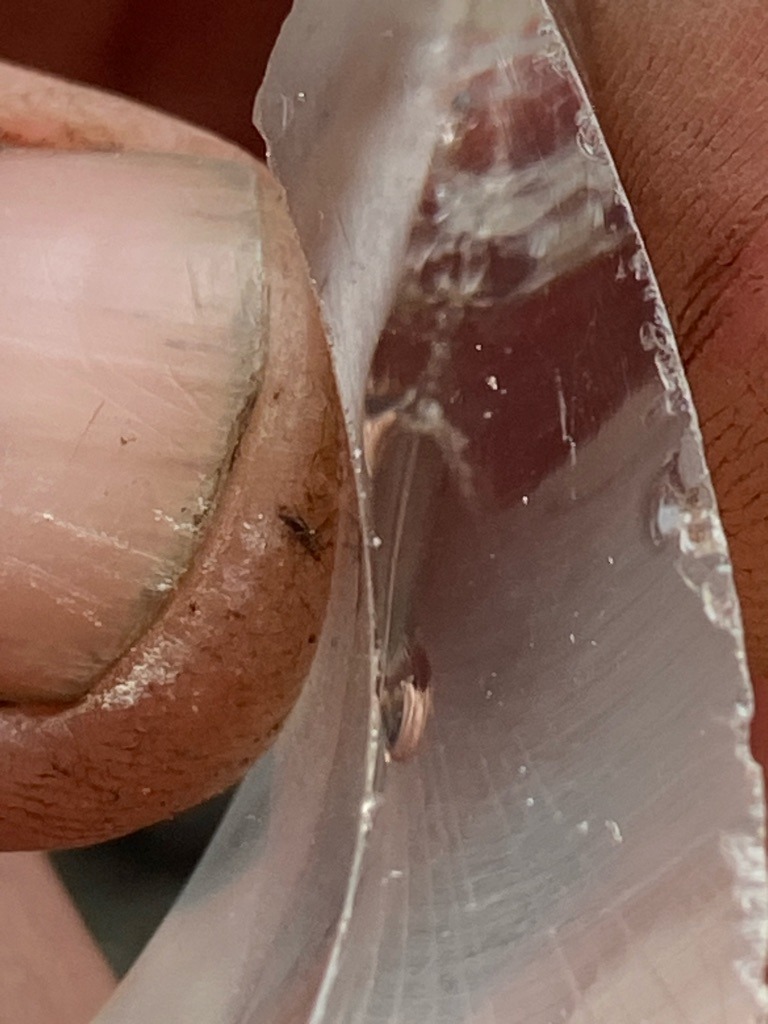
Natural rough diamond specimen / mineral crystal fragment
Natural rough diamond specimen / mineral crystal fragment · Uncut, irregular crystal rough / raw mineral cleavage fragment
Not applicable (Rough uncut stone lacking standard faceted proportions) Cut
Carat
Estimated approximately 1.5 to 2.5 carats based on relative visual proportions
Color
Near colorless to slightly tinted (approximately G-I range on standard color scale)
Clarity
Included / Imperfect (Visible internal fractures, cleavage planes, and inclusions)
Shape
Uncut, irregular crystal rough / raw mineral cleavage fragment
Overall Assessment
An interesting natural rough diamond crystal fragment showcasing raw geological characteristics, cleavage planes, and transparent windows rather than traditional faceted beauty
Cut Quality
Not applicable (Rough uncut stone lacking standard faceted proportions)
Brilliance
Low to moderate due to uncut surfaces, uneven internal light paths, and fracture scattering
Fire
Minimal dispersion visible primarily through irregular raw transparent windows
Scintillation
Poor, lacking precise facet arrangements required to create dynamic sparkle and flash patterns
Proportions
Irregular raw crystal dimensions; no standard table, depth, or pavilion angles
Symmetry
Natural asymmetrical crystal formation
Polish
Natural crystal faces, conchoidal fractures, and rough cleavage planes without gem polish
Fluorescence
Indeterminate from visual assessment alone; requires UV light testing
Inclusions
Internal feather fractures, cleavage cracks, and possible pinpoint inclusions visible through transparent areas
Blemishes
Natural surface etching, trigons, rough edges, and mechanical damage along cleavage lines
Origin
Natural terrestrial geological origin (alluvial or primary kimberlitic deposit)
Treatment Detection
No obvious signs of artificial enhancement or treatment observed; appears completely untreated and natural
Estimated Value
Nominal specimen or industrial mineral value, typically lower than polished gem-grade stones of equivalent weight due to heavy inclusion and raw state
Certification Estimate
Gemological laboratories like GIA or IGI would classify this as an uncertified natural rough diamond or crystal specimen
Investment Potential
Low investment liquidity for commercial resale compared to certified, cut, and polished investment diamonds
Similar Diamonds
Comparable to low-grade industrial rough, uncut mineral specimens, or raw diamond crystal jewelry fragments
Setting Suggestions
Best preserved as a raw mineral specimen, or securely mounted in an organic-style protective bezel setting if worn as raw jewelry
Care & Maintenance
Store separately to prevent scratching other materials; avoid harsh impacts along natural cleavage planes which can easily split the raw crystal
Interesting Facts
Rough diamonds display natural crystal growth marks such as triangular etch pits called trigons and distinct conchoidal fracture patterns typical of carbon crystal structures