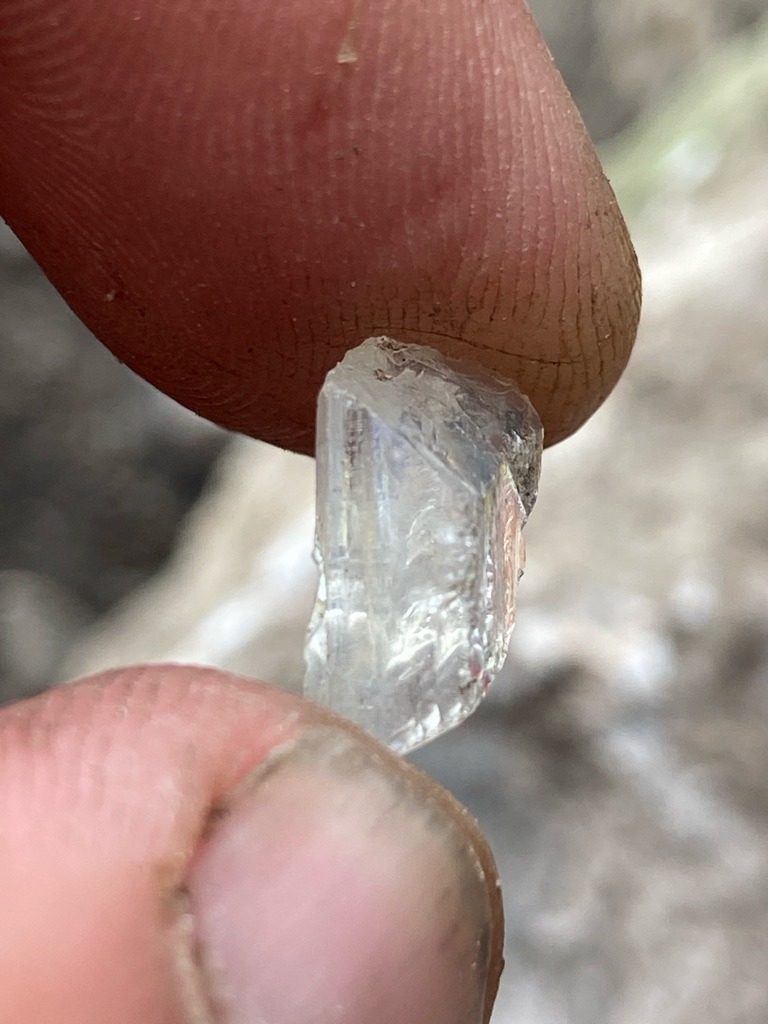
Natural rough crystal
Natural rough crystal · Rough uncut crystal (octahedral/elongated formation)
Not applicable (uncut rough crystal) Cut
Carat
Estimated 1.5 to 2.5 carats
Color
Near-colorless to faint yellow (approx. G-J range)
Clarity
Included (rough stone with visible internal fractures and imperfections)
Shape
Rough uncut crystal (octahedral/elongated formation)
Overall Assessment
An interesting, natural rough diamond crystal displaying raw geological characteristics, requiring professional cutting and polishing to reveal its true gemstone potential
Cut Quality
Not applicable (uncut rough crystal)
Brilliance
Low due to lack of faceted cuts and surface texture
Fire
Minimal dispersion in its current rough state
Scintillation
Poor, light passes through without facet reflection
Proportions
Natural crystal proportions, non-standardized
Symmetry
Natural crystal symmetry, distorted growth
Polish
Raw, unpolished natural crystal faces (trigons potentially present)
Fluorescence
Unable to determine visually (requires UV testing)
Inclusions
Feathers, fractures, and internal crystal stress lines visible
Blemishes
Natural surface etching, rough skin, and growth lines
Origin
Likely alluvial deposit origin (river bed or secondary diamondiferous source)
Treatment Detection
None detected; entirely natural rough state
Estimated Value
Nominal value as a rough specimen; highly dependent on cutting yield (rough value estimation: $200 - $600 USD)
Certification Estimate
GIA would likely issue a Diamond Dossier or Identification Report if requested after cutting
Investment Potential
Speculative, as value depends entirely on how successfully it can be cut and faceted to retain weight
Similar Diamonds
Other alluvial rough diamond crystals from African or South American deposits
Setting Suggestions
Can be set raw in organic, rustic, or claw-style artisan jewelry using yellow gold or platinum
Care & Maintenance
Store separately to avoid scratching other gems; clean gently with warm soapy water and a soft brush
Interesting Facts
Rough diamonds straight from the earth often show natural triangular growth markings called trigons on their faces