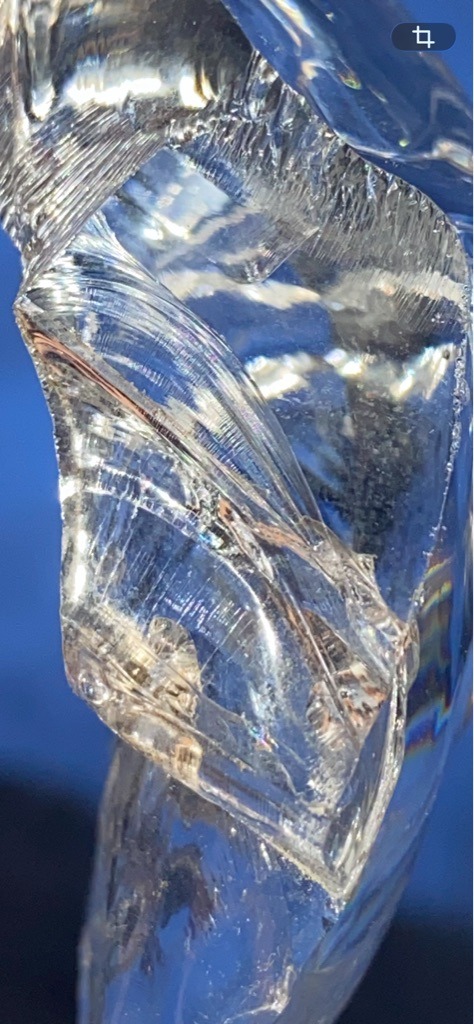
Natural Raw Diamond / Quartz Crystal (Rough Specimen)
Natural Raw Diamond / Quartz Crystal (Rough Specimen) · Rough / Uncut
None (Rough specimen) Cut
Carat
Estimated at 10 to 30 carats based on visible scale
Color
Colorless to Faint Gray (Rough equivalent of D-F)
Clarity
Included (I1-I3 equivalent due to visible internal carbon and fractures)
Shape
Rough / Uncut
Overall Assessment
This is a raw, unpolished mineral specimen. While it exhibits diamond-like luster and inclusions, its value is drastically lower than a faceted gem of the same size.
Cut Quality
None (Rough specimen)
Brilliance
Low (Surface reflections only, lacks geometric facets for internal light return)
Fire
Low to Moderate (Prismatic rainbow effects visible along fracture edges)
Scintillation
Low (Lacks systematic light/dark pattern)
Proportions
N/A (Uneven natural distribution)
Symmetry
None (Natural asymmetric growth)
Polish
None (Natural conchoidal and vitreous surface)
Fluorescence
None visible under ambient light
Inclusions
Prominent dark carbon spots (possibly graphite) and internal cleavage planes
Blemishes
Conchoidal fractures and striations consistent with natural growth or breakage
Origin
Likely of African or Brazilian origin based on crystal habit
Treatment Detection
None apparent; looks to be a raw, untreated specimen
Estimated Value
$100 - $1,500 (Highly dependent on internal purity and yield potential upon cutting)
Certification Estimate
GIA Rough Diamond Report (Specimen documentation)
Investment Potential
Low to Medium; value lies in historical/specimen interest or potential as a cut stone
Similar Diamonds
Uncut alluvial diamonds or clear geological quartz crystals
Setting Suggestions
Rough diamond specimen setting or custom-made tension mount for raw stones
Care & Maintenance
Clean with warm soapy water; avoid high-pressure steam due to visible internal fractures
Interesting Facts
The ridged texture on the surface is typical of conchoidal fracturing, a trait shared by both diamonds and high-quality quartz.