Glass / Slag Glass (Not a Diamond)
Glass / Slag Glass (Not a Diamond) · Rough Uncut / Irregular Fragment
Not Applicable (Raw, unpolished glass slag) Cut
Carat
Estimated very heavy (approx. 50+ carats equivalent in mass, though specific gravity is lower than diamond)
Color
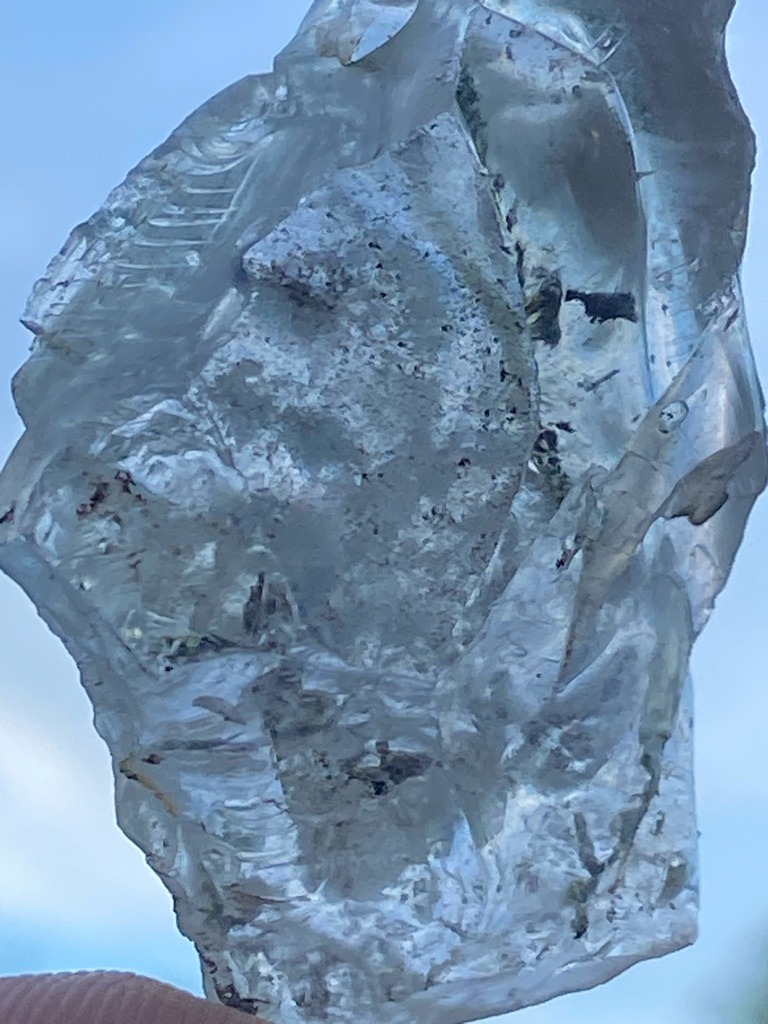
Colorless to light greyish blue
Clarity
I3 (Visible bubbles, internal fractures, and inclusions typical of manufactured glass)
Shape
Rough Uncut / Irregular Fragment
Overall Assessment
The specimen displayed in the image is not a diamond or even a crystalline mineral. It exhibits clear characteristics of man-made glass or industrial slag, featuring distinct conchoidal fracture lines and internal gas bubbles. Gemological testing such as thermal conductivity testing would immediately confirm it is not diamond.
Cut Quality
Not Applicable (Raw, unpolished glass slag)
Brilliance
Low to moderate vitreous luster
Fire
None (glass lacks high dispersion)
Scintillation
Poor
Proportions
Not Applicable
Symmetry
Asymmetrical / Irregular
Polish
Raw fractured surfaces, conchoidal fractures visible
Fluorescence
None observed visually
Inclusions
Gas bubbles and internal swirling patterns typical of glass
Blemishes
Surface chips, conchoidal fracture ripples, and weathering
Origin
Man-made industrial byproduct (slag glass)
Treatment Detection
None (natural state of the material)
Estimated Value
Minimal (decorative or industrial glass slag value, virtually zero gem value)
Certification Estimate
Cannot be certified as a diamond by standard gemological labs (GIA, IGI)
Investment Potential
None as a gemstone
Similar Diamonds
None (completely different chemical composition, made of silica glass)
Setting Suggestions
Not suitable for fine jewelry setting
Care & Maintenance
Standard cleaning with mild soap and water; avoid heavy impacts to prevent chipping
Interesting Facts
Slag glass is often mistaken for rough diamond or quartz by amateur prospectors due to its glassy luster and conchoidal fracture patterns.