Natural rough diamond specimen
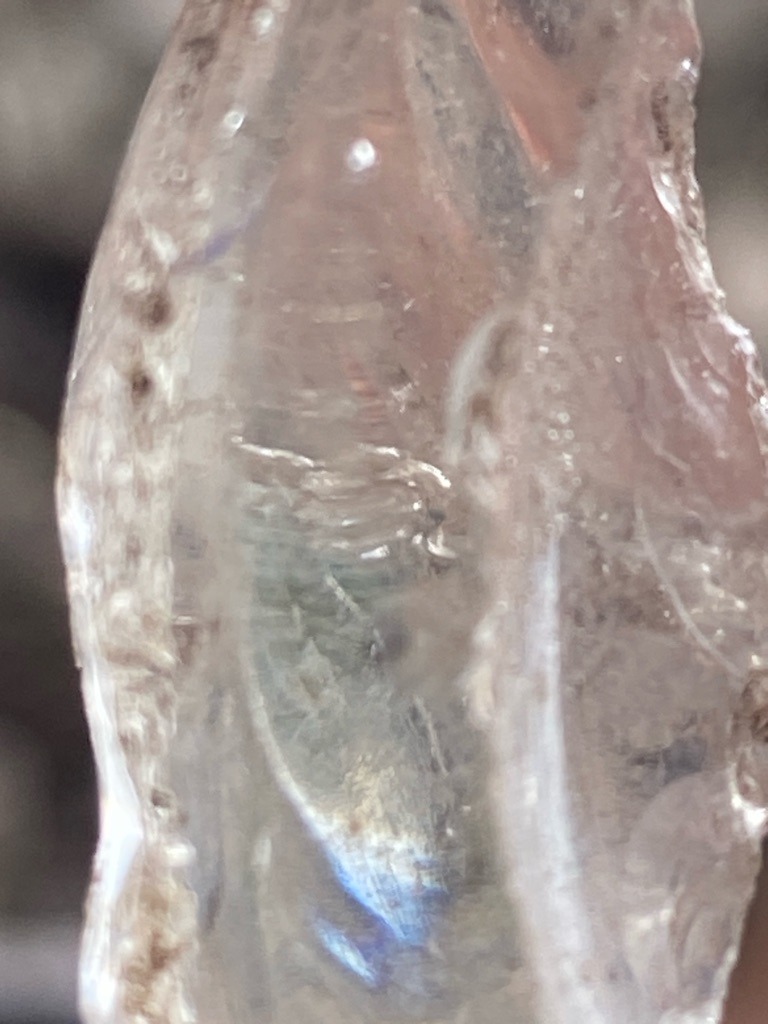
Natural rough diamond specimen · Uncut natural crystal / Irregular rough form
Not applicable (Rough, unpolished crystal) Cut
Carat
Estimated 2.5 - 3.5 carats based on visual scale
Color
Near-colorless to light brown-tinted rough
Clarity
Included (I1-I3) due to visible internal fractures and structural flaws
Shape
Uncut natural crystal / Irregular rough form
Overall Assessment
This is an interesting natural rough diamond specimen exhibiting characteristic crystal growth features. While currently unpolished and heavily included, it represents a genuine earth-mined diamond crystal that could yield a modest polished stone if processed by a skilled lapidary.
Cut Quality
Not applicable (Rough, unpolished crystal)
Brilliance
Low, restricted by rough, unpolished exterior surfaces
Fire
Minimal dispersion visible through raw exterior
Scintillation
Poor due to lack of standard faceted angles
Proportions
Natural rough proportions, deep and unoptimized
Symmetry
Natural asymmetric crystal growth
Polish
Natural rough crystal faces (octahedral and curved striations)
Fluorescence
Cannot be determined without UV testing, likely none to faint
Inclusions
Feather fractures, internal clouding, and carbon spots
Blemishes
Natural surface etching, trigons, and surface pitting typical of rough stones
Origin
Alluvial or primary kimberlite deposit origin (African or Canadian source likely)
Treatment Detection
No signs of treatment; appears completely untreated and natural
Estimated Value
$300 - $800 depending on final yield after cutting and internal purity
Certification Estimate
Uncertified rough specimen; would require cutting and polishing for GIA or IGI grading
Investment Potential
Low as raw specimen unless expertly cut into a high-yield polished diamond
Similar Diamonds
Standard run-of-mine industrial or lower-gem-quality rough stones
Setting Suggestions
Can be set raw in an organic, rustic artisan mounting using yellow gold or platinum
Care & Maintenance
Store separately to prevent scratching other jewelry; clean gently with warm soapy water and a soft brush
Interesting Facts
Rough diamonds retain their natural geological history, showing crystal growth markings like curved faces and striations formed deep within the Earth's mantle.