Natural diamond crystal (rough octahedral/macdle formation)
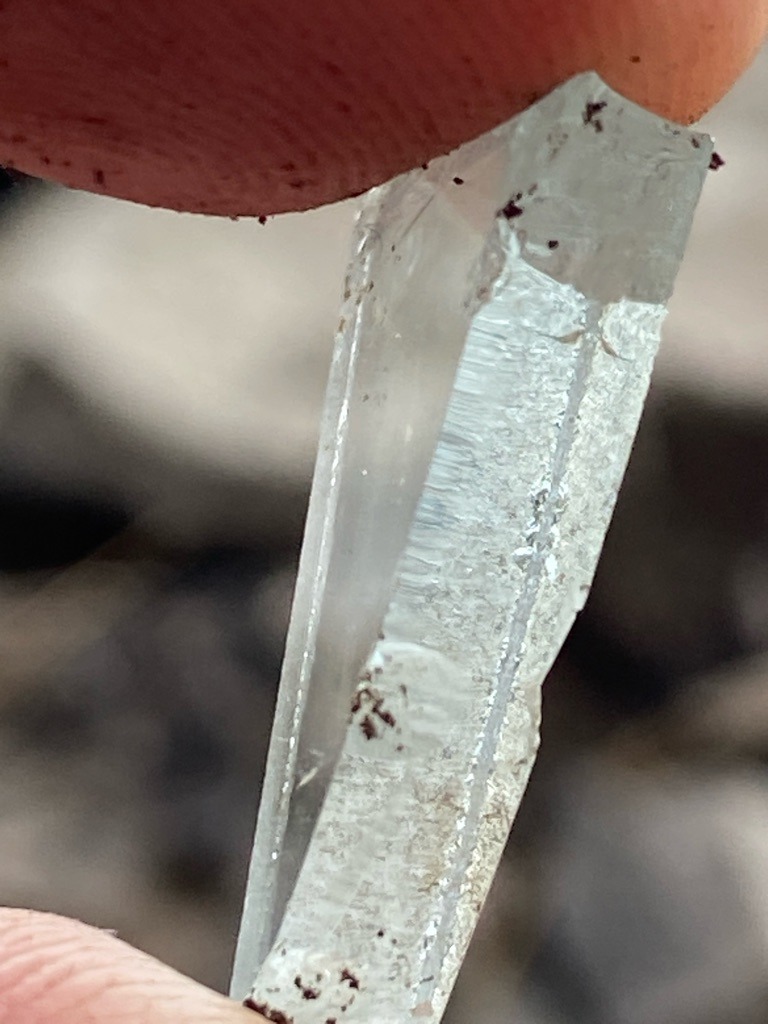
Natural diamond crystal (rough octahedral/macdle formation) · Rough crystal / Uncut elongated crystal structure
Not applicable (Rough, unpolished crystal) Cut
Carat
Estimated 2.5 - 3.5 carats
Color
Near-colorless to light yellow tint (approx. G-I)
Clarity
Included (I1 to I2 range due to surface striations, internal flaws, and matrix residue)
Shape
Rough crystal / Uncut elongated crystal structure
Overall Assessment
An interesting, genuine natural rough diamond crystal displaying classic crystal growth lines and matrix remnants, highly desirable for collectors of raw minerals.
Cut Quality
Not applicable (Rough, unpolished crystal)
Brilliance
Low to moderate due to rough surfaces and raw state, lacks faceted internal reflection
Fire
Minimal dispersion visible on rough, unpolished faces
Scintillation
Limited flash effect primarily from natural crystal faces rather than facets
Proportions
Natural elongated crystal habit, not faceted
Symmetry
Natural asymmetrical crystal habit showing typical elongation and triangular growth features
Polish
Raw, unpolished natural crystal faces with growth lines (trigons/striations)
Fluorescence
Cannot be definitively determined visually without UV testing, likely Faint to Medium
Inclusions
Internal feather fractures, cloudiness, and mineral inclusions visible
Blemishes
Surface trigons, natural pitting, adhering matrix/dirt from the host rock
Origin
Likely alluvial deposit or primary kimberlite pipe origin (Africa or Canada typical)
Treatment Detection
No treatments detected; entirely untreated natural rough diamond
Estimated Value
Valued primarily as a mineral specimen rather than a cut gemstone, roughly $300 - $800 depending on exact weight and purity
Certification Estimate
GIA or EGL would classify it as a rough natural diamond specimen
Investment Potential
Held mostly as a collectible mineral specimen rather than an appreciating financial investment
Similar Diamonds
Other alluvial rough diamond crystals of comparable size and clarity
Setting Suggestions
Best preserved as a raw mineral specimen in a custom wire-wrap pendant or organic raw stone bezel setting
Care & Maintenance
Clean gently with warm soapy water and a soft brush; avoid harsh ultrasonic cleaners due to internal natural fractures
Interesting Facts
The striations visible on the surface are growth lines formed deep within the Earth's mantle under immense pressure and temperature