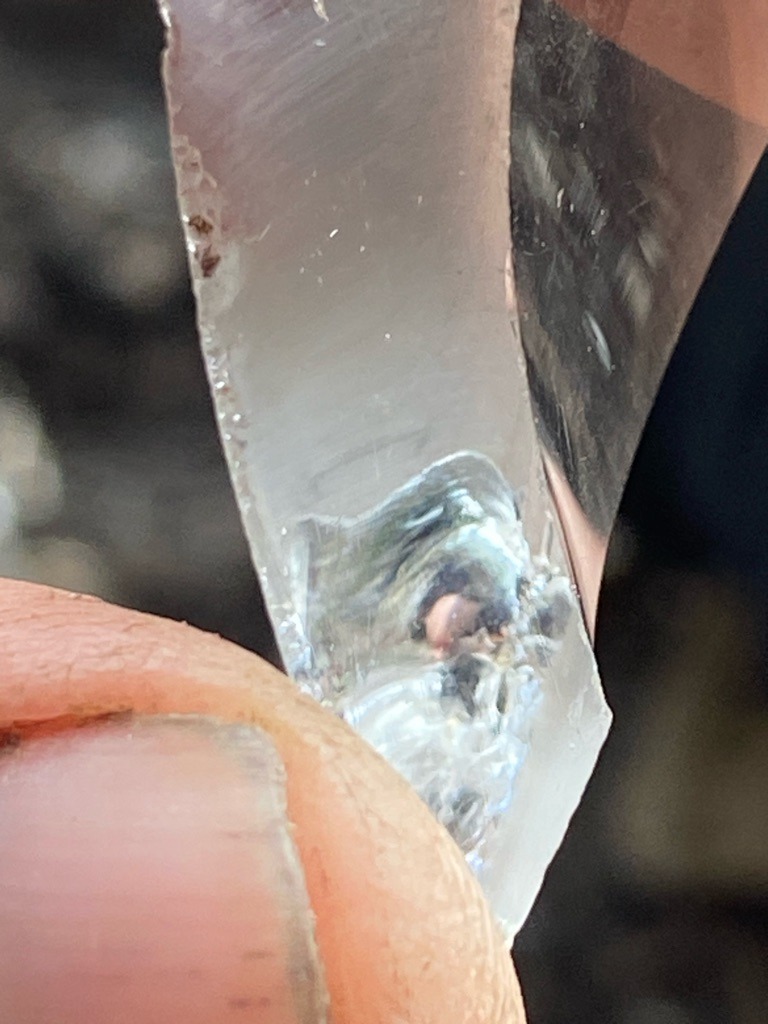
Rough natural diamond or uncut mineral specimen
Rough natural diamond or uncut mineral specimen · Uncut, raw crystal form
Not applicable (uncut rough stone) Cut
Carat
Estimated 0.50 to 1.00 carat based on visual perspective
Color
Near-colorless to light brown tint
Clarity
Included (I1-I3) due to numerous visible internal flaws
Shape
Uncut, raw crystal form
Overall Assessment
This appears to be an uncut, raw diamond crystal or similar mineral specimen displaying natural geological features rather than a cut and polished gemstone.
Cut Quality
Not applicable (uncut rough stone)
Brilliance
Low due to lack of standard facets and raw surface finish
Fire
Minimal dispersion visible on the raw surface
Scintillation
Absent due to lack of facet interaction
Proportions
N/A for rough stones
Symmetry
Natural irregular crystal symmetry
Polish
Raw, unpolished surface
Fluorescence
Cannot be determined without UV light testing
Inclusions
Heavy internal clouding, feathers, and dark mineral inclusions
Blemishes
Natural crystal surface textures, trigons, and rough cleavage planes
Origin
Natural primary or secondary (alluvial) deposit
Treatment Detection
No signs of artificial treatment; completely natural state
Estimated Value
Nominal value as a rough mineral specimen or industrial-grade diamond
Certification Estimate
Gemological reports for rough stones typically provided by GIA Rough Diamond Evaluation services
Investment Potential
Low investment potential for standard commercial resale; valued primarily as a geological specimen
Similar Diamonds
Other unpolished alluvial rough diamonds and industrial grade crystal specimens
Setting Suggestions
Best preserved as a raw mineral specimen or set in organic, bezel-style custom artisan jewelry
Care & Maintenance
Store separately to prevent scratching other stones; clean gently with warm soapy water and a soft brush
Interesting Facts
Rough diamonds show natural crystal growth marks called trigons on their faces before being shaped by lapidaries