Moissanite (Potential)
Moissanite (Potential) · Radiant Cut
Fair to Good Cut
Carat
1.50 - 2.50 carats
Color
Near Colorless (G-H equivalent)
Clarity
SI1 - SI2 (Eye clean internally, surface abrasions visible)
Shape
Radiant Cut
Overall Assessment
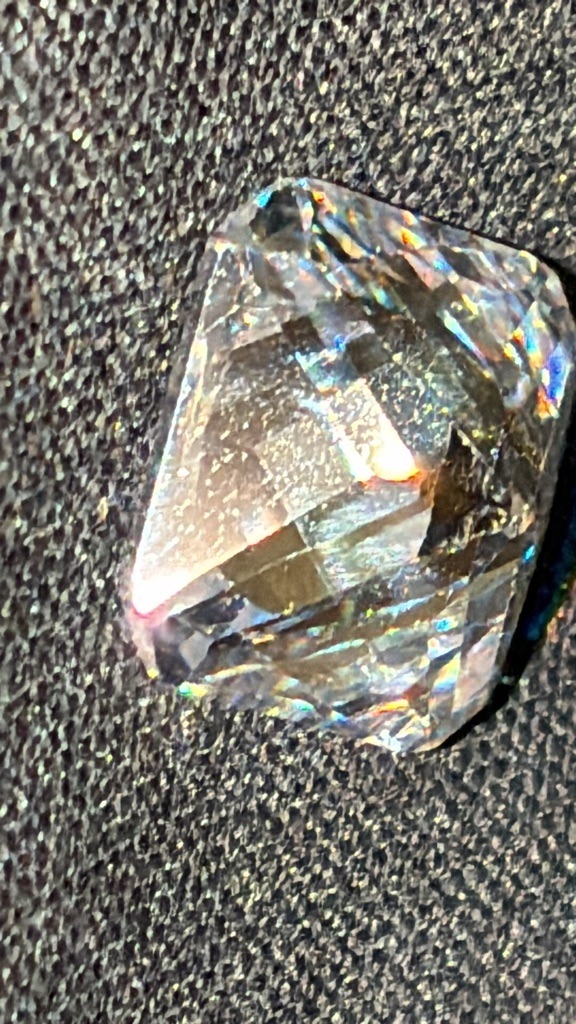
The specimen exhibits extreme fire (double refraction) and facet edge wear inconsistent with a Mohs 10 diamond. It is likely a high-dispersion stimulant such as Moissanite.
Cut Quality
Fair to Good
Brilliance
Moderate
Fire
Extreme (high spectral dispersion across multiple facets)
Scintillation
High (multi-colored sparkle pattern)
Proportions
Deep pavilion, large table percentage consistent with a radiant cut for maximum dispersion
Symmetry
Good (visible table and crown facets)
Polish
Fair (surface scratches and abrasions visible on crown facets)
Fluorescence
None typically, but high dispersion suggests non-diamond material
Inclusions
Difficult to distinguish from surface grime, but appears to have internal graining
Blemishes
Visible scratches and facet edge abrasions, suggesting lower hardness than diamond
Origin
Laboratory Grown (Synthetic Moissanite or high-end CZ)
Treatment Detection
None visible, inherent properties of the synthetic material
Estimated Value
$100 - $300 (Simulated stone value)
Certification Estimate
Likely GRA or non-major lab for moissanite; would not receive a D-Z grade from GIA
Investment Potential
Low (decorative specimen/jewelry use only)
Similar Diamonds
Crushed ice radiant cut natural diamonds (though they would have less fire)
Setting Suggestions
Four-prong cathedral mount in white gold to enhance the high dispersion
Care & Maintenance
Clean with a soft brush and mild soap to remove surface oils which dull its sparkle
Interesting Facts
The 'disco-ball' effect—rainbow flashes—is a primary visual indicator of moissanite over diamond