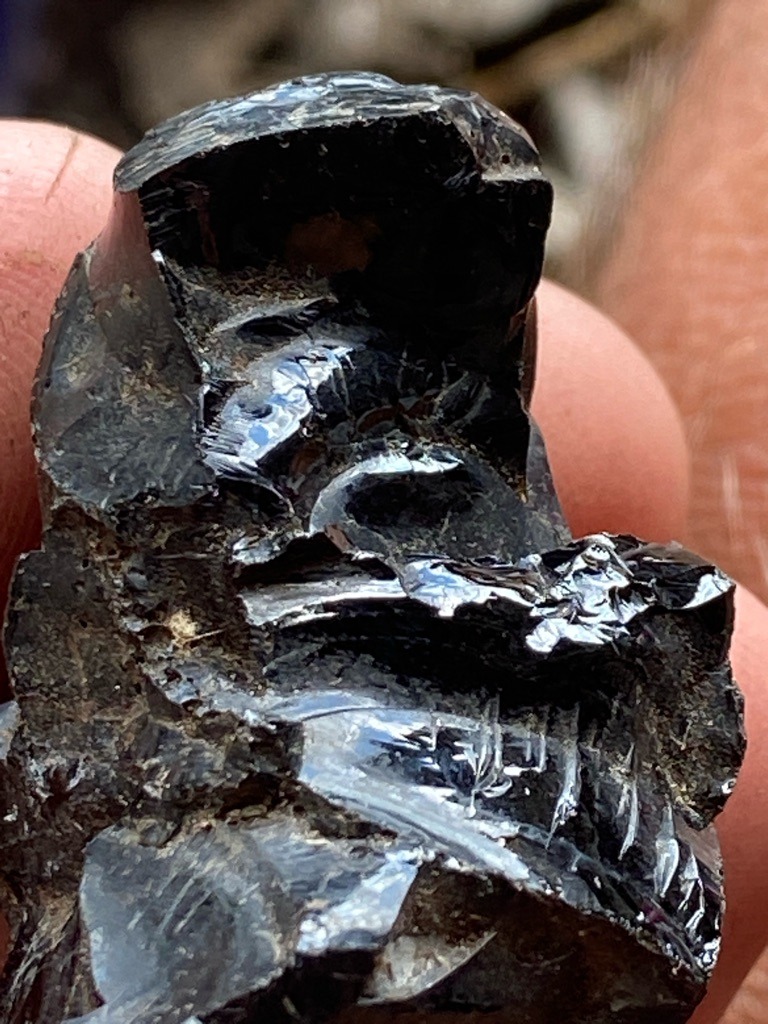
Not a diamond; appears to be raw obsidian or black glass with conchoidal fracture patterns
Not a diamond; appears to be raw obsidian or black glass with conchoidal fracture patterns · Rough uncut nodule / Irregular raw mineral specimen
Uncut / Natural raw form Cut
Carat
Cannot be reliably determined visually for raw mineral specimen (exceeds standard cut diamond ranges)
Color
Opaque black
Clarity
Not applicable (opaque raw mineral with internal fractures)
Shape
Rough uncut nodule / Irregular raw mineral specimen
Overall Assessment
This specimen is a piece of black obsidian (volcanic glass), easily identifiable by its characteristic conchoidal fracture and vitreous luster, and is entirely unrelated to diamond.
Cut Quality
Uncut / Natural raw form
Brilliance
Vitreous (glass-like) reflectivity rather than diamond adamantine brilliance
Fire
None (low dispersion compared to diamond)
Scintillation
Limited to reflective glass-like surface flashes
Proportions
Not applicable for raw mineral specimens
Symmetry
Asymmetrical raw formation
Polish
Natural vitreous luster on fracture surfaces
Fluorescence
None observed
Inclusions
Conchoidal fractures, internal stress lines, and possible gas bubbles
Blemishes
Surface scratches, natural chipping, and rough matrix attachments
Origin
Volcanic glass / Obsidian origin
Treatment Detection
None; natural volcanic glass
Estimated Value
Nominal value as a mineral specimen or decorative rock (low commercial value)
Certification Estimate
Not gradable by diamond grading laboratories (GIA, AGS, etc.)
Investment Potential
None; collector specimen only
Similar Diamonds
None (completely different mineral family)
Setting Suggestions
Wire-wrapping or bezel setting if used for artisan jewelry
Care & Maintenance
Store carefully as obsidian is relatively brittle (Mohs hardness ~5 to 5.5) and prone to scratching
Interesting Facts
Obsidian is naturally occurring volcanic glass formed when felsic lava extruded from a volcano cools rapidly with minimal crystal growth