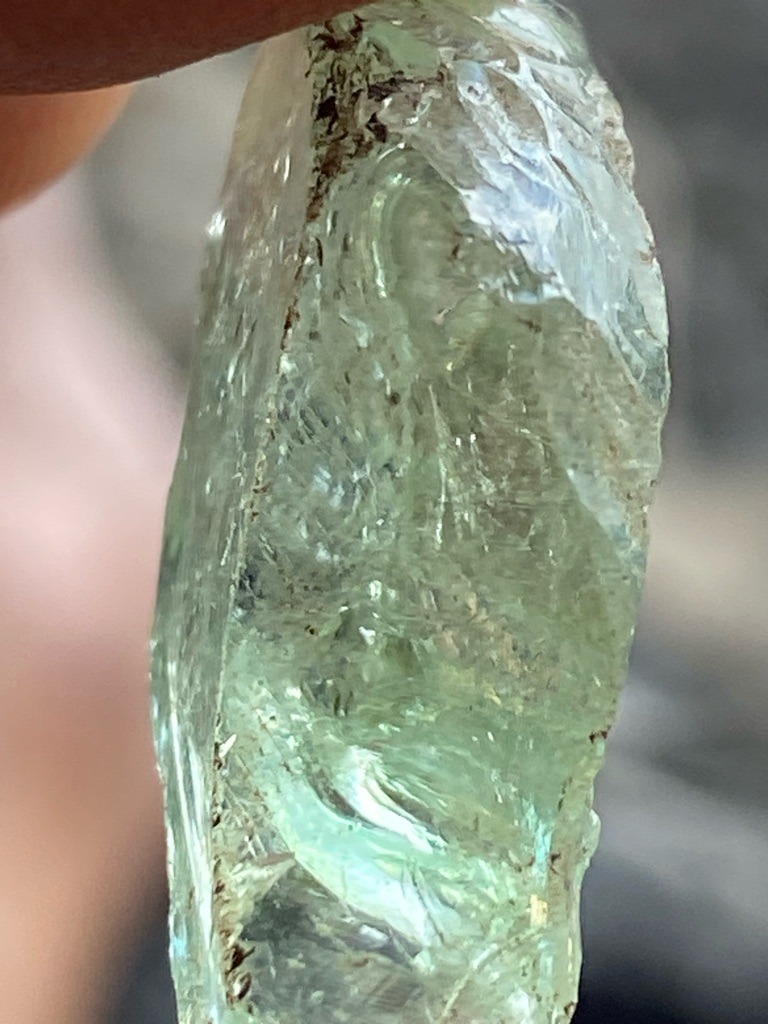
Natural (Rough Mineral Specimen, potentially lower grade industrial diamond or colored mineral crystal)
Natural (Rough Mineral Specimen, potentially lower grade industrial diamond or colored mineral crystal) · Rough Crystal / Uncut
Not Applicable (Uncut Rough Specimen) Cut
Carat
Estimated 3.5 - 5.0 carats based on visual scale
Color
Fancy Light Green / Off-Color Industrial
Clarity
I3 (Included, heavily fractured and opaque)
Shape
Rough Crystal / Uncut
Overall Assessment
This is an uncut, raw mineral specimen displaying natural crystallization rather than a gem-quality faceted diamond, holding value primarily as a geological sample or for industrial application.
Cut Quality
Not Applicable (Uncut Rough Specimen)
Brilliance
Poor due to lack of faceting and heavy internal inclusions
Fire
Negligible in current rough state
Scintillation
None in current uncut state
Proportions
Irregular Rough Proportions
Symmetry
Natural Asymmetric Crystal Formation
Polish
Unpolished Rough Surface with Natural Textures
Fluorescence
Unknown / Untested
Inclusions
Heavy internal fracturing, crystal inclusions, and cloudiness
Blemishes
Natural surface etch channels, trigons, and rough skin
Origin
Alluvial or primary kimberlite deposit rough
Treatment Detection
No obvious artificial treatments observed; appears completely natural
Estimated Value
Nominal value as a mineral specimen or low-grade industrial abrasive ($20 - $100 USD)
Certification Estimate
Industrial evaluation only; major labs like GIA or IGI would not issue standard consumer grading reports for industrial rough of this quality
Investment Potential
None; industrial and specimen stones do not appreciate as investment assets
Similar Diamonds
Industrial grade bort, carbonado, or low-quality uncut diamond fragments
Setting Suggestions
Wire-wrapped rough stone jewelry or raw organic ring setting
Care & Maintenance
Store separately to prevent scratching other materials; avoid harsh ultrasonic cleaners due to internal fractures
Interesting Facts
Rough diamonds often feature natural triangular growth markings called trigons on their crystal faces