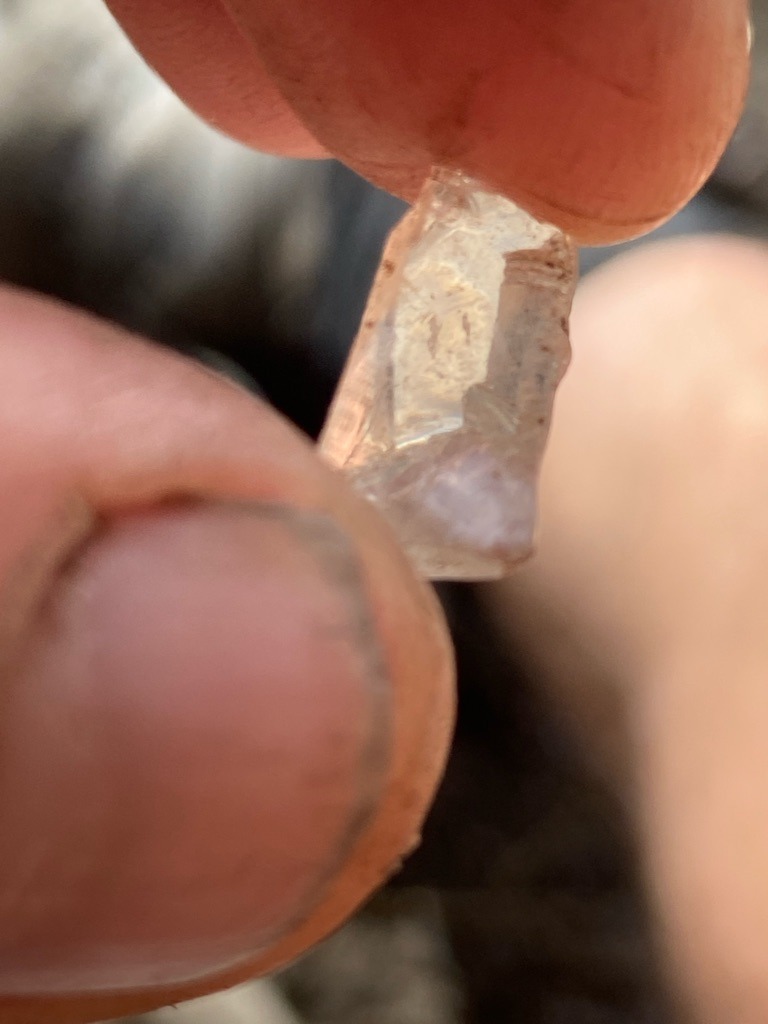
Natural rough crystal
Natural rough crystal · Rough elongated crystal (uncut)
Not applicable (Rough, unpolished crystal) Cut
Carat
Estimated 0.50 to 0.75 carats based on visual scale
Color
Near colorless to faint yellow/brown tint (approx. K-M)
Clarity
Included (I1 to I2)
Shape
Rough elongated crystal (uncut)
Overall Assessment
An interesting, natural rough diamond crystal displaying characteristic crystal habits and surface features, best preserved as a raw specimen or custom organic piece rather than cut for maximum brilliance
Cut Quality
Not applicable (Rough, unpolished crystal)
Brilliance
Limited due to rough nature and inclusions
Fire
Minimal dispersion observed in raw state
Scintillation
Low, masked by rough surface textures and inclusions
Proportions
Natural crystal proportions, uneven depth and girdle thickness
Symmetry
Natural crystal symmetry (elongated octahedral/dodecahedral habits visible)
Polish
Natural crystal faces (trigons and striations visible rather than human polish)
Fluorescence
Indeterminate from visual assessment (typically medium blue in natural rough)
Inclusions
Internal cloudiness, feather fractures, and potential crystal inclusions
Blemishes
Surface cavities, natural pitting, and rough skin adhering to the crystal
Origin
Likely alluvial deposit (riverbed or secondary source given the rounded edges and surface wear)
Treatment Detection
No treatments detected; entirely natural rough state
Estimated Value
$50 - $150 as a raw mineral specimen
Certification Estimate
GIA or local gemological laboratory, grade assigned as rough specimen
Investment Potential
Low investment value as a gemstone; primarily of interest as a mineral specimen or educational piece
Similar Diamonds
Other alluvial rough diamond specimens of industrial or low gem quality
Setting Suggestions
Raw mineral jewelry setting, such as a wire-wrapped pendant or rustic prong setting preserving the natural shape
Care & Maintenance
Standard care for rough stones; avoid harsh chemicals and ultrasonic cleaners if fractures are present
Interesting Facts
Shows natural growth lines (striations) typical of un-cut diamond crystallization