Natural Diamond (Rough Crystal)
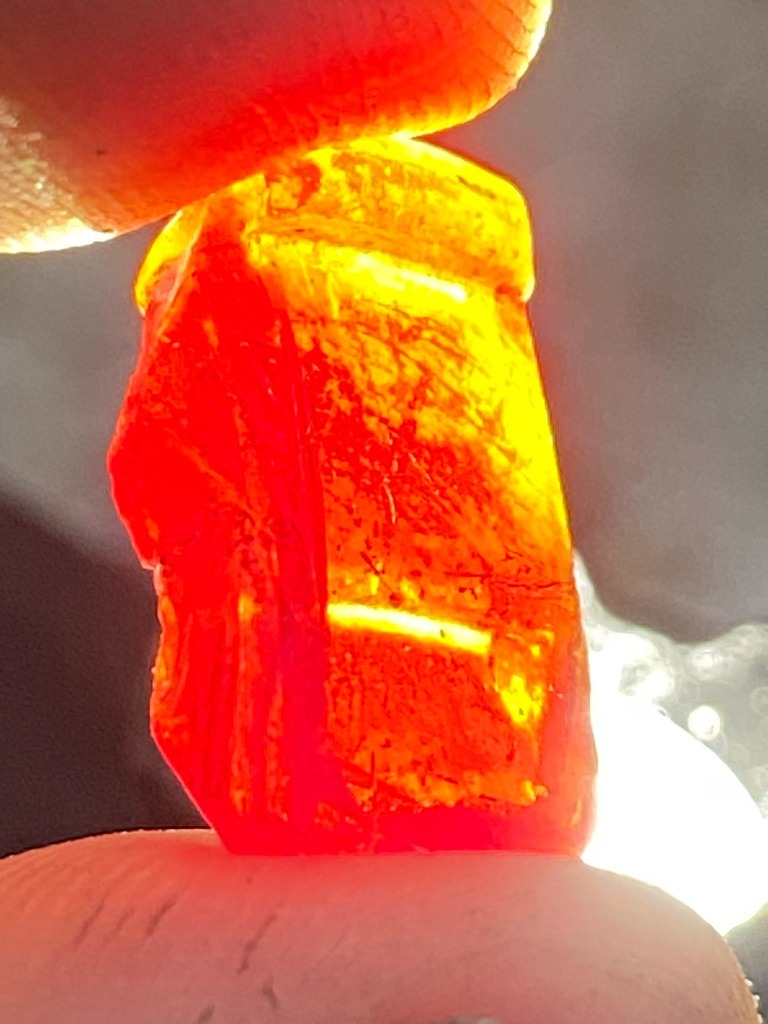
Natural Diamond (Rough Crystal) · Rough Octahedral / Irregular Crystal
Not Applicable (Uncut Rough) Cut
Carat
Estimated 2.50 to 3.50 carats based on visual scale
Color
Fancy Deep Orange / Yellow (strongly backlit appearance)
Clarity
SI1 to SI2 (estimated based on visible internal features)
Shape
Rough Octahedral / Irregular Crystal
Overall Assessment
An intriguing natural rough diamond crystal displaying intense color under backlighting with good potential for cutting or collecting in its raw state
Cut Quality
Not Applicable (Uncut Rough)
Brilliance
Low in rough state; will exhibit high brilliance once properly cut and polished
Fire
Obscured by rough surface; potential for high fire in fancy colored or white faceted stone
Scintillation
None in current rough form
Proportions
Natural rough proportions, requires expert planning for faceting
Symmetry
Natural crystal symmetry, distorted octahedral habit
Polish
Natural crystal faces with growth lines (trigons and striations)
Fluorescence
Cannot be definitively determined without UV testing, likely Inert to Faint
Inclusions
Internal needle-like inclusions, clouds, and potential feather fractures visible
Blemishes
Natural surface etch channels, trigons, and rough skin textures
Origin
Likely alluvial or primary kimberlite pipe deposit (e.g., African or Canadian origin)
Treatment Detection
No obvious signs of treatment; appears entirely natural in rough form
Estimated Value
$5,000 - $15,000 depending on final cut yield and exact color saturation
Certification Estimate
GIA (Gemological Institute of America) Origin Report
Investment Potential
High for rare natural colored rough diamonds with strong collector appeal
Similar Diamonds
Other natural rough fancy colored diamond crystals of comparable weight
Setting Suggestions
Custom designer mounting to preserve raw organic shape, or classic solitaire once faceted
Care & Maintenance
Store separately to avoid scratching other gems; clean gently with warm soapy water
Interesting Facts
Natural rough diamonds often display curved growth steps and surface features called trigons