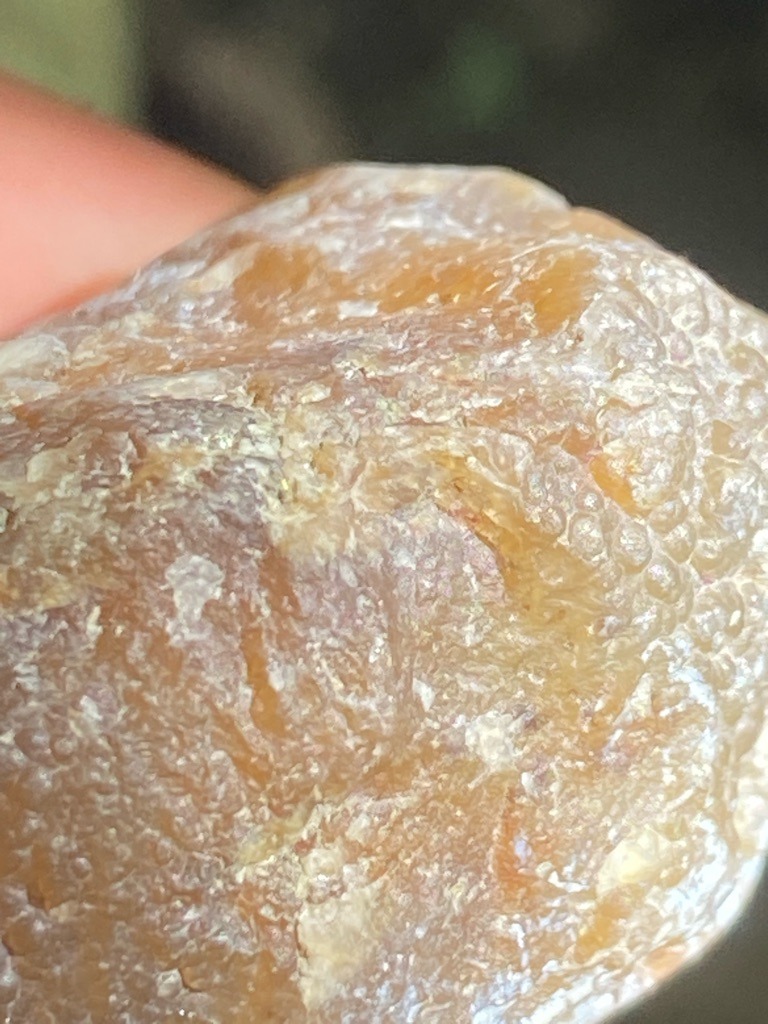
Not a diamond; this specimen appears to be an aggregate microcrystalline quartz such as chalcedony or agate, possibly heavily weathered or heat-treated.
Not a diamond; this specimen appears to be an aggregate microcrystalline quartz such as chalcedony or agate, possibly heavily weathered or heat-treated. · Rough or uncut nodular aggregate mass, unpolished natural form.
Not applicable (uncut raw stone). Cut
Carat
Rough stone; estimated aggregate weight cannot be precisely determined visually without density testing, roughly estimated around 15-25 carats.
Color
Brownish-orange to yellowish-brown, opaque to translucent in thin sections.
Clarity
Not applicable to standard diamond scales; heavily included with microcrystalline structures and internal fractures.
Shape
Rough or uncut nodular aggregate mass, unpolished natural form.
Overall Assessment
The specimen shown in the image is a raw, weathered quartz aggregate (likely chalcedony) rather than a diamond. It displays characteristic botryoidal and granular textures of rough chalcedony and holds no diamond gemological value.
Cut Quality
Not applicable (uncut raw stone).
Brilliance
Low to none due to lack of facets and opaque/translucent nature.
Fire
None.
Scintillation
None.
Proportions
Irregular raw form; standard table and depth percentages do not apply.
Symmetry
Asymmetrical raw mineral nodule.
Polish
Raw, unpolished surface showing natural botryoidal or weathered texture.
Fluorescence
Unknown without UV testing, though typical chalcedony may show weak greenish or brownish fluorescence.
Inclusions
Abundant micro-fractures, mineral impurities, and granular inclusions typical of chalcedony.
Blemishes
Natural surface pitting, rough skin, weathering marks, and uneven texture.
Origin
Natural geological origin, likely sedimentary or hydrothermal deposition in cavities.
Treatment Detection
No obvious signs of artificial enhancement, though heating is common in commercial chalcedony/agate to enhance color.
Estimated Value
Very low commercial value as a raw ornamental or specimen stone (typically under $10-$50 depending on source).
Certification Estimate
Not applicable for standard gemological diamond labs; would require a general colored stone or mineral report (e.g., GIA Identification Report for Gem Materials).
Investment Potential
None; this specimen holds mineralogical or low-end lapidary interest rather than investment value.
Similar Diamonds
None (this is not a diamond; comparable to other low-cost chalcedony, jasper, or agate rough specimens).
Setting Suggestions
Wire-wrapping, bezel setting, or cabochon carving if cut and polished.
Care & Maintenance
Standard care for quartz minerals: clean with warm soapy water and a soft brush; avoid harsh chemicals and extreme thermal shock.
Interesting Facts
Chalcedony is the mother material for many semi-precious stones including agate, onyx, and jasper, formed in ancient volcanic and sedimentary environments.