Natural Diamond (Visual estimation; physical testing recommended)
Natural Diamond (Visual estimation; physical testing recommended) · Round Brilliant
Good to Very Good (standard traditional cut) Cut
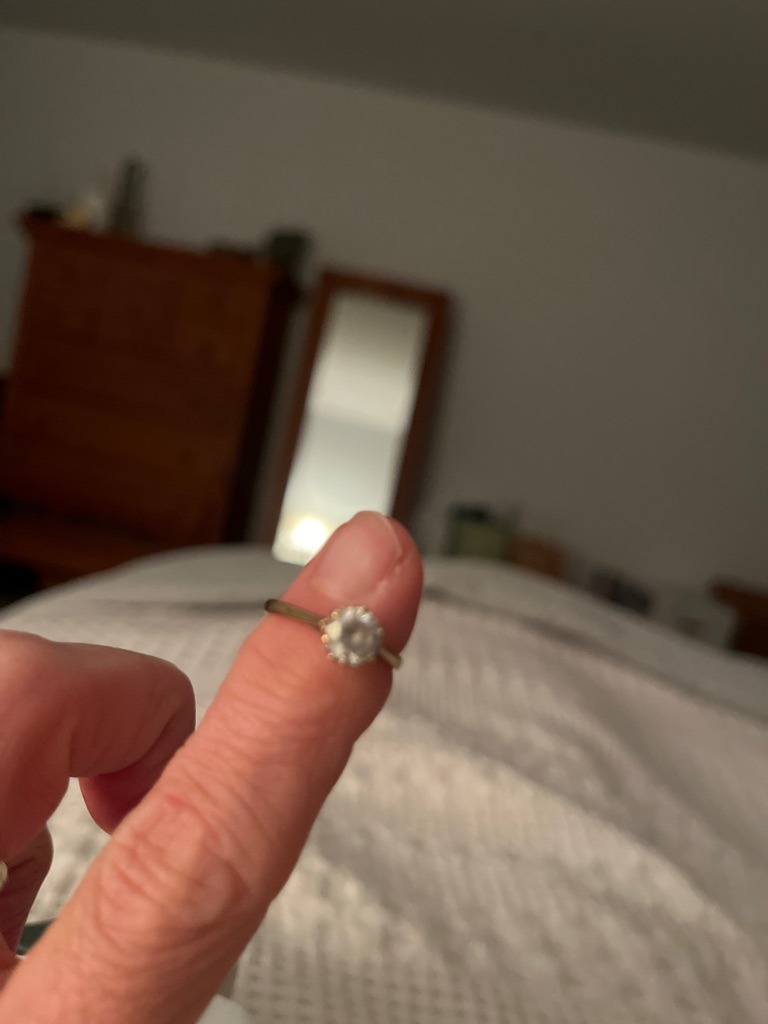
Carat
Approximately 0.50 to 0.75 carats (visual estimate)
Color
Estimated Near Colorless (G-J range)
Clarity
Estimated Slightly Included (SI1-SI2 range)
Shape
Round Brilliant
Overall Assessment
A charming and classic solitaire diamond ring in wearable condition, showing typical characteristics of a cherished estate piece
Cut Quality
Good to Very Good (standard traditional cut)
Brilliance
Good white light reflection, though slightly diffused due to lighting and wear
Fire
Moderate spectral color dispersion visible
Scintillation
Standard sparkle pattern with balanced light and dark areas
Proportions
Traditional standard proportions with medium table and pavilion depth
Symmetry
Good
Polish
Good
Fluorescence
Cannot be definitively determined without UV testing (likely None to Faint)
Inclusions
Minor internal characteristics likely present under magnification (small crystals or feathers)
Blemishes
Minor surface wear consistent with a vintage or frequently worn ring
Origin
Natural mined diamond, likely from traditional sources (e.g., South Africa, Canada, or Australia)
Treatment Detection
No obvious signs of enhancements or treatments detected visually
Estimated Value
$1,000 - $2,500 USD (depending on precise color, clarity, and metal weight)
Certification Estimate
GIA or IGI uncertified estate piece
Investment Potential
Typical consumer jewelry retail value; higher resale value if sold as vintage/estate jewelry
Similar Diamonds
Standard round brilliant estate diamonds with SI clarity and near-colorless grades
Setting Suggestions
Classic yellow or white gold prong setting as currently styled, or a modern six-prong cathedral setting
Care & Maintenance
Regular cleaning with warm soapy water and a soft brush; professional check of the prongs recommended annually
Interesting Facts
The round brilliant cut is the most popular diamond shape, optimized over a century for maximum light return