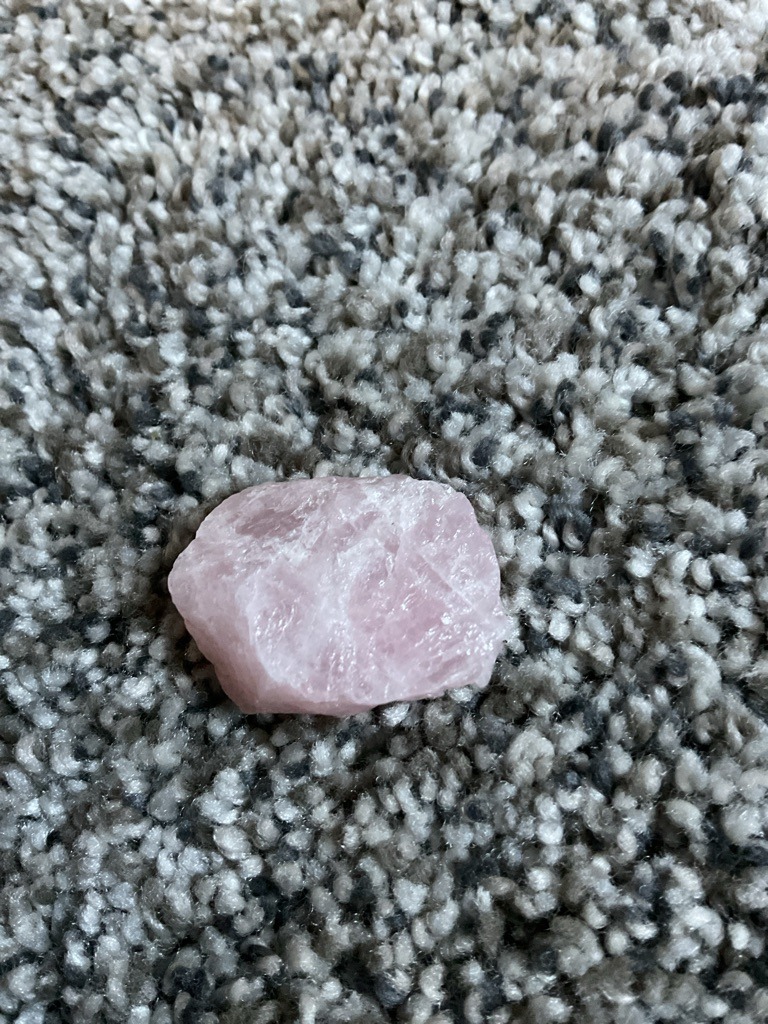
Rough Quartz (Likely Rose Quartz), not a Diamond
Rough Quartz (Likely Rose Quartz), not a Diamond · Rough / Uncut Natural Mineral
None (Raw/Uncut specimen) Cut
Carat
Estimated 15-25 carats (visual size ~20mm)
Color
Translucent Pink (characteristic of Rose Quartz)
Clarity
Opaque to Translucent with heavy internal fracturing
Shape
Rough / Uncut Natural Mineral
Overall Assessment
The specimen is clearly an uncut piece of Rose Quartz, not a diamond. It lacks the crystal structure, luster, and refractive index of a raw diamond.
Cut Quality
None (Raw/Uncut specimen)
Brilliance
Very Low (Sub-vitreous luster common to rough quartz)
Fire
None
Scintillation
None
Proportions
N/A (Irregular volumetric shape)
Symmetry
N/A (Natural jagged form)
Polish
None (Matte/Raw surface texture)
Fluorescence
None typically visible in this specimen type
Inclusions
Dense internal clouding, veining, and structural fractures throughout
Blemishes
Surface abrasions, pits, and rough edges consistent with raw quartz
Origin
Commonly sourced from Brazil, Madagascar, or South Dakota (USA)
Treatment Detection
Natural untreated state; no evidence of heating or dyeing
Estimated Value
$1.00 - $5.00 USD (Common mineral specimen)
Certification Estimate
Not applicable for diamond grading labs; could be identified as Quartz by GIA
Investment Potential
None (Mass-market decorative mineral)
Similar Diamonds
None (This is a silicate mineral, not a carbon-based gemstone)
Setting Suggestions
Wire wrapping for a pendant or display in a mineral collection
Care & Maintenance
Avoid harsh impacts which may split along fracture lines; wash with mild soap
Interesting Facts
Rose quartz gets its color from microscopic inclusions of dumortierite or similar minerals.