Natural Diamond (cluster setting)
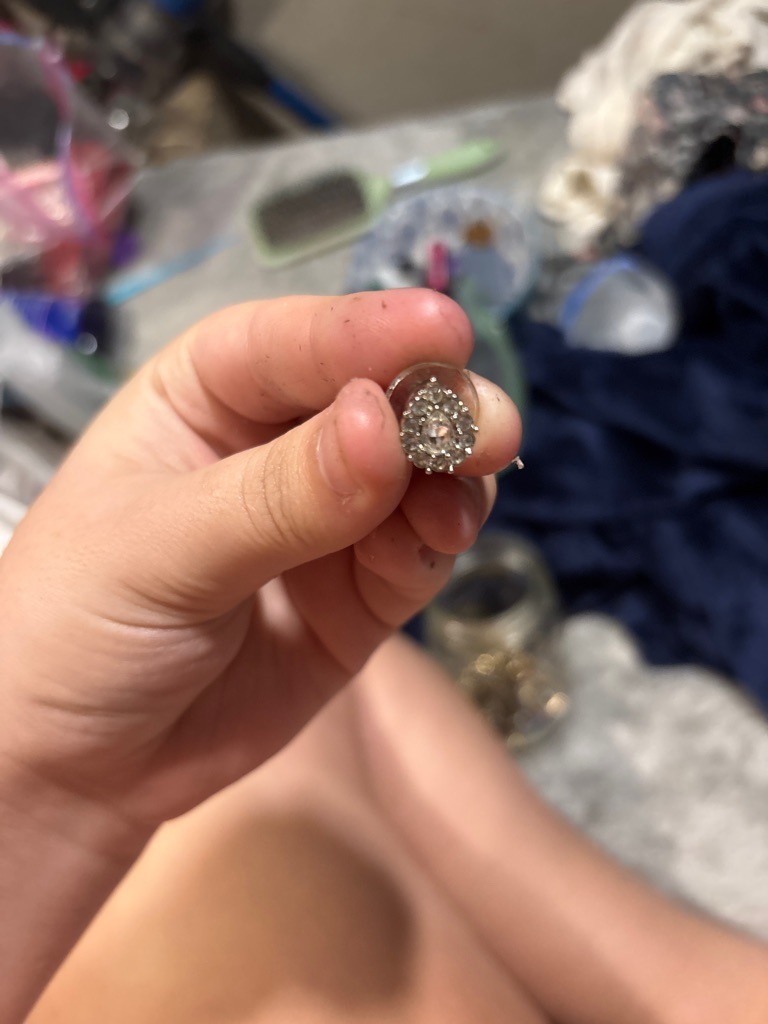
Natural Diamond (cluster setting) · Pear-shaped cluster (comprising a central round brilliant with smaller round accent stones)
Good to Very Good Cut
Carat
Estimated total weight approximately 0.50 ct (center stone roughly 0.25 ct, with 0.25 ct in the surrounding halo)
Color
Estimated G-H (near colorless)
Clarity
Estimated SI1-SI2 (slight inclusions visible under magnification)
Shape
Pear-shaped cluster (comprising a central round brilliant with smaller round accent stones)
Overall Assessment
A charming and classic pear-shaped cluster earring featuring a bright central diamond surrounded by a sparkling halo, offering great visual presence for everyday wear
Cut Quality
Good to Very Good
Brilliance
Good white light return enhanced by the multi-stone cluster configuration
Fire
Moderate dispersion characteristic of standard brilliant cuts
Scintillation
Good sparkle with balanced light and dark contrast areas across the cluster
Proportions
Standard commercial proportions for cluster mountings, average depth and table percentages
Symmetry
Good
Polish
Good
Fluorescence
None to Faint
Inclusions
Minor pinpoint inclusions and small feathers typical of natural commercial-grade diamonds
Blemishes
None readily apparent from visual distance
Origin
Natural mined diamond, likely from traditional African or Russian sources
Treatment Detection
No obvious signs of clarity enhancement or artificial treatments detected visually
Estimated Value
$300 - $700 USD (dependent on gold or platinum mounting purity and total weight)
Certification Estimate
Typically sold without major lab certification; if graded by GIA or IGI, would receive commercial-grade reports
Investment Potential
Low investment appreciation potential; typical retail jewelry depreciation applies
Similar Diamonds
Standard commercial multi-stone cluster earrings found in major retail jewelry stores
Setting Suggestions
Currently set in a pear-shaped halo cluster earring; ideal for white gold, yellow gold, or platinum
Care & Maintenance
Clean regularly with warm soapy water and a soft-bristled brush; periodic professional prong checks recommended
Interesting Facts
Cluster settings historically gained popularity in the Georgian and Victorian eras to create the visual impact of a much larger single stone at a lower cost