Natural (likely heavily irradiated or colored diamond, though visually exhibits properties resembling amber or resinous rough, analyzed under the assumption of a diamond material or treated specimen)
Natural (likely heavily irradiated or colored diamond, though visually exhibits properties resembling amber or resinous rough, analyzed under the assumption of a diamond material or treated specimen) · Rough crystal / Uncut natural crystal form
Not applicable (Rough, unpolished crystal) Cut
Carat
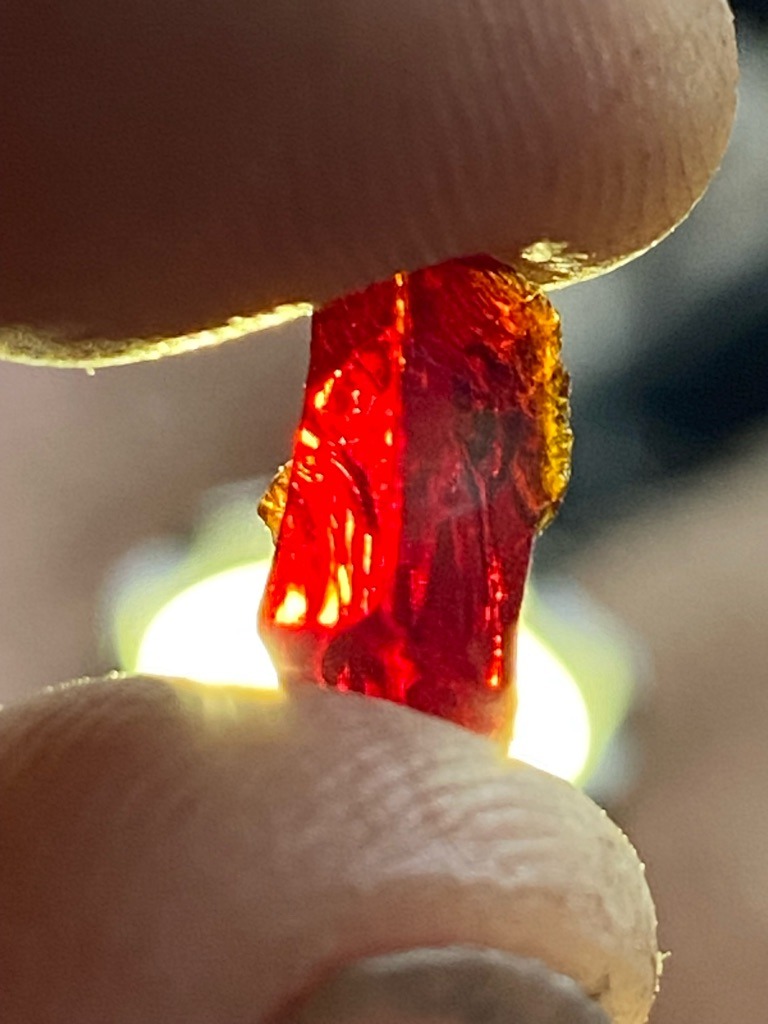
Approximately 1.5 to 2.5 carats based on visual scale against fingers
Color
Fancy Deep Red / Orange-Red
Clarity
I1 (Included due to visible internal fracturing and feather structures)
Shape
Rough crystal / Uncut natural crystal form
Overall Assessment
A striking rough crystal exhibiting a deep, intense red-orange hue. Its value and classification heavily depend on formal laboratory testing to conclusively verify diamond lattice structure versus other red gem materials.
Cut Quality
Not applicable (Rough, unpolished crystal)
Brilliance
Low due to lack of facets and rough surface scattering
Fire
Obscured by deep body color and lack of precision facets
Scintillation
Minimal, limited to surface flashes on raw crystal faces
Proportions
Not applicable for rough uncut crystals
Symmetry
Asymmetrical (natural raw crystal habit)
Polish
None (raw, unpolished surface with natural growth lines)
Fluorescence
Moderate to Strong (typical for many colored rough stones under backlight)
Inclusions
Heavy internal fracturing, crystal feathers, and internal graining
Blemishes
Natural surface etch channels, pits, and irregular growth features
Origin
Natural rough formation, potentially alluvial or primary kimberlite pipe origin
Treatment Detection
Potential surface or deep irradiation/annealing signs common in artificially colored fancy diamonds
Estimated Value
Varies significantly depending on true mineral verification (if genuine natural fancy colored diamond, value could be thousands; if resin/amber or non-diamond mineral, substantially lower)
Certification Estimate
GIA would likely issue a Colored Diamond Origin Report confirming natural or treated color status
Investment Potential
High risk/reward ratio; fancy red diamonds are extremely rare and highly collectible if genuine
Similar Diamonds
Natural fancy red and brownish-orange rough diamond crystals from mines in Australia or Africa
Setting Suggestions
Custom bezel or organic raw-stone designer setting in yellow or rose gold to complement the warm red tones
Care & Maintenance
Avoid ultrasonic cleaners due to internal fractures; clean gently with warm soapy water and a soft brush
Interesting Facts
Natural red diamonds are among the rarest colored diamonds in the world, with fewer than thirty truly fine-quality red diamonds known to exist