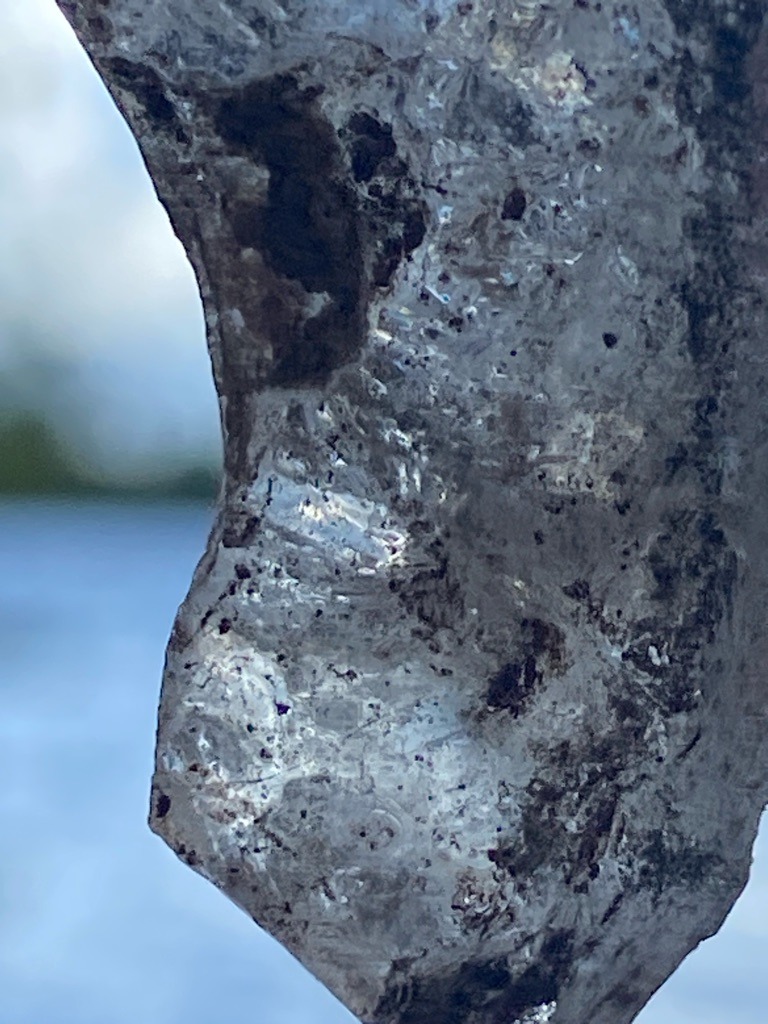
Natural rough diamond / mineral specimen
Natural rough diamond / mineral specimen · Rough uncut crystal / irregular crystal fragment
Not applicable (uncut rough specimen) Cut
Carat
Estimated 2.50 to 3.50 carats based on visual scale
Color
K-M or tinted greyish-brown fancy color
Clarity
I3 / heavily included
Shape
Rough uncut crystal / irregular crystal fragment
Overall Assessment
An intriguing, unpolished natural rough diamond specimen showing high levels of inclusions and structural irregularity, suitable for collection or specialized rustic jewelry rather than traditional gemstone use.
Cut Quality
Not applicable (uncut rough specimen)
Brilliance
Poor due to opacity and rough surface texture
Fire
Minimal to none due to lack of standard facet angles
Scintillation
Negligible
Proportions
Non-standard natural rough proportions
Symmetry
Natural crystal symmetry, highly irregular
Polish
Unpolished natural crystal faces and fracture surfaces
Fluorescence
Indeterminate from visual inspection
Inclusions
Heavy internal clouding, feathers, carbon spots, and mineral inclusions
Blemishes
Natural surface trigons, etch channels, rough girdle, and fracture pits
Origin
Likely alluvial or primary kimberlite deposit origin
Treatment Detection
No evidence of artificial treatment; completely natural state
Estimated Value
Minimal gem value; valued primarily as a mineral specimen or industrial-grade rough ($50 - $200 USD)
Certification Estimate
GIA (Origin Report) or IGI rough diamond report
Investment Potential
Low investment potential for gem value, collectible mineral value only
Similar Diamonds
Other low-grade industrial or uncut alluvial rough diamond crystals
Setting Suggestions
Wire-wrapped pendant, organic rustic bezel setting, or kept as a raw mineral specimen
Care & Maintenance
Handle with care to prevent further fracturing along cleavage planes; clean gently with warm soapy water and a soft brush
Interesting Facts
Shows authentic natural growth features and surface textures typical of unworked crustal diamond formation